
Budget Guide: Jade Harmony Professional Yoga Mat & Ball Sizing
Maximize your home gym budget. We analyze the Jade Harmony Professional Yoga mat value and provide a precise exercise ball size guide for 2026.

The Home Studio Budget Dilemma: Premium Mats vs. Core Equipment
When outfitting a home studio for mind-body and core conditioning in 2026, fitness enthusiasts frequently misallocate their budgets. The most common error? Overspending on premium floor surfaces while severely underfunding dynamic core equipment. Many practitioners are willing to invest $125 in a premium surface like the jade harmony professional yoga mat, renowned for its 3/16-inch thick, open-cell natural rubber and superior traction. Yet, these same buyers will often balk at spending more than $15 on a stability ball, opting for thin-walled, off-gassing PVC that compromises biomechanics and poses a severe burst risk.
True value analysis requires looking at your home gym as an interconnected ecosystem. According to equipment reviews and sustainability reports featured in Yoga Journal, investing in eco-friendly, high-density natural rubber mats provides long-term joint protection and grip reliability that synthetic TPE mats simply cannot match. However, that premium mat investment is entirely negated if your core work is performed on an improperly sized, low-burst-rated exercise ball that forces your spine into misalignment. This guide breaks down the exact budget allocations you need, anchoring on the value of premium mats while delivering a definitive exercise ball size guide and buying framework.
The 2026 Exercise Ball Size Guide: Biomechanics Over Guesswork
The effectiveness of any Swiss ball routine hinges entirely on the 90-degree rule. When seated upright with your feet flat on the floor, your hips and knees should form a perfect 90-degree angle. If your hips dip below your knees, the ball is too small, forcing your pelvis into a posterior tilt and increasing lumbar disc pressure. If your hips are elevated, the ball is too large, reducing your base of support and shifting the workload away from your deep core stabilizers.
Based on biomechanical guidelines endorsed by the American Council on Exercise (ACE), here is the precise sizing matrix for 2026:
| User Height | Ball Diameter | Optimal Knee Angle | Primary Use Case |
|---|---|---|---|
| Under 5'0" (152 cm) | 45 cm | 90° - 95° | Desk seating, light Pilates |
| 5'1" - 5'8" (155 - 173 cm) | 55 cm | 90° | Core crunches, wall squats |
| 5'9" - 6'2" (175 - 188 cm) | 65 cm | 90° - 100° | Heavy dumbbell presses, planks |
| 6'3" and taller (190+ cm) | 75 cm | 90° | Full-body extensions, heavy loading |
Standard height charts assume proportional limb-to-torso ratios. If you have disproportionately long femurs (thigh bones), you will likely need to size up by one tier (e.g., moving from a 55cm to a 65cm ball) to achieve the 90-degree knee angle. Conversely, if you have a long torso and shorter legs, size down. Always test the ball with a physical tape measure from the floor to the bottom of your kneecap before finalizing your purchase.
Material Value Analysis: PVC, TPE, and Anti-Burst Tech
Just as the jade harmony professional yoga mat justifies its price tag through sustainable, open-cell rubber tapping processes, a high-quality exercise ball justifies its cost through advanced polymer engineering and burst-resistance technology. In 2026, the market is flooded with ultra-cheap $12 balls made from recycled, single-layer PVC. These are not just uncomfortable; they are hazardous.
Understanding Burst Ratings: Static vs. Dynamic
When evaluating value, you must scrutinize the manufacturer's burst rating. There are two distinct metrics:
- Static Weight Limit: The maximum weight the ball can hold while stationary. Premium balls offer a 500kg (1,100 lbs) static limit.
- Dynamic Weight Limit: The maximum weight the ball can safely support while in motion (e.g., holding a 40lb dumbbell while doing crunches). A safe dynamic limit should be at least 120kg (265 lbs).
According to safety standards monitored by the Consumer Product Safety Commission (CPSC), products that fail to clearly delineate between static and dynamic loads are often masking poor tensile strength. Premium anti-burst balls feature a 2mm to 3mm thick PVC wall with a honeycomb or ribbed internal texture. If punctured, these balls slowly deflate rather than exploding, preventing catastrophic falls during weighted exercises.
Budget Breakdown: Where to Splurge and Where to Save
To build a highly functional, injury-proof home studio, you need a strategic budget breakdown. Below is a value-optimized allocation framework comparing floor surfaces and core equipment.
| Gear Category | Budget Tier (Not Recommended) | Mid-Tier (Acceptable) | Premium Tier (Optimal Value) |
|---|---|---|---|
| Yoga / Floor Mat | $20 - $35 (PVC, 4mm) Slips when sweaty, degrades in 1 year. |
$50 - $80 (TPE, 5mm) Decent grip, closed-cell, 3-year lifespan. |
$109 - $129 (Natural Rubber, 3/16") Jade Harmony Pro; unmatched grip, 5+ years. |
| Exercise Ball | $12 - $18 (Single-layer PVC) High burst risk, toxic off-gassing. |
$22 - $30 (Standard Anti-Burst) 1mm wall, 300kg static limit. |
$35 - $55 (Commercial Anti-Burst) 2mm+ wall, 500kg static, slow-deflate tech. |
The Value Synthesis: Spending $125 on a premium natural rubber mat and $45 on a commercial-grade anti-burst ball yields a total core-and-flexibility investment of $170. This setup will easily last 5 to 7 years with daily use. By contrast, a $30 synthetic mat and a $15 budget ball ($45 total) will require replacement within 14 months due to seam splitting, material flaking, and loss of air retention, ultimately costing you more while increasing injury risk.
The 24-Hour Rule: Preventing Seam Failure
Even a $55 premium exercise ball will fail prematurely if inflated incorrectly. The most common failure mode for Swiss balls is seam splitting at the equator, which occurs when the cold PVC is stretched to its maximum diameter in a single session.
To maximize the lifespan of your investment, follow the industry-standard 24-hour inflation protocol:
- Day 1 (Initial Expansion): Inflate the ball to only 80% of its recommended diameter. Allow it to sit at room temperature (68°F - 72°F) for 24 hours. This gives the PVC polymers time to acclimate and stretch organically.
- Day 2 (Final Sizing): Inflate the ball to its full, target diameter. Use a tape measure to ensure exact sizing based on the height chart above.
- Day 7 (Top-Off): PVC naturally stretches under the load of gravity and body weight. After one week of use, add a few final pumps to maintain the perfect 90-degree knee angle.
Final Verdict: Building a Cohesive Studio
Building a home gym is an exercise in prioritizing points of contact. Your hands, feet, and spine interact directly with your mats and balls. The jade harmony professional yoga mat remains a benchmark for floor-based value, offering biodegradable, high-traction rubber that justifies its premium price point. By applying that same rigorous value analysis to your exercise ball—prioritizing exact biomechanical sizing, 2mm anti-burst walls, and proper inflation protocols—you create a studio environment that is safe, durable, and optimized for long-term performance.
More gear to consider
All reviews
Block & Strap Guide: Difference Between Yoga Mat and Pilates Mat
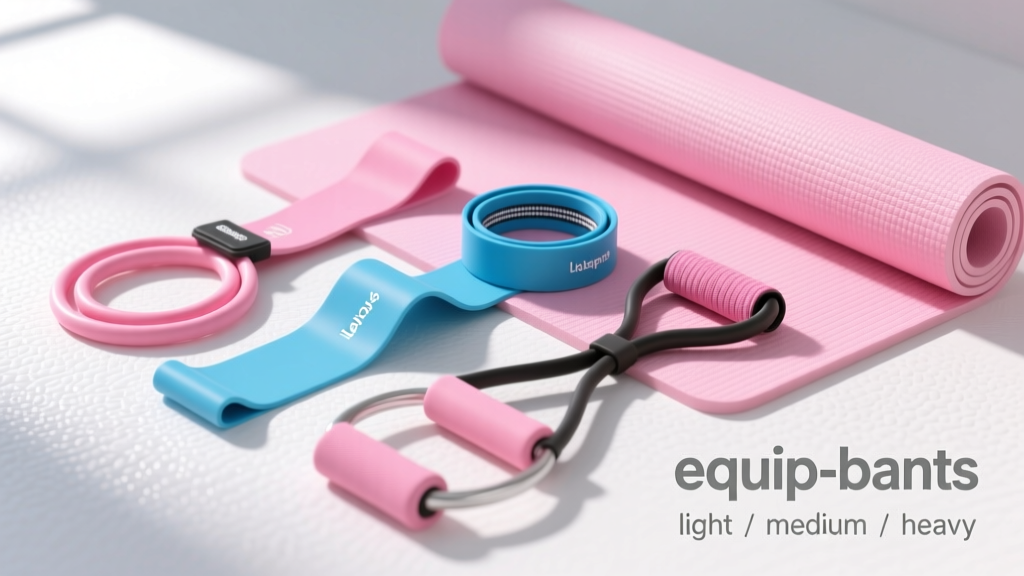
Resistance Band Levels & Types: Baby Pink Yoga Mat Comparison

Beyond a Five Below Yoga Mat: Stability Ball vs BOSU 2026

Exercise Ball Size Guide: Is Washing Yoga Mat in Washing Machine Safe?

Stakt Yoga Mat Review Alternative: 2026 Space-Saving Blocks & Straps
