
Gaiam Cork Yoga Mat Care & Exercise Ball Size Guide
Learn how to clean and maintain your Gaiam cork yoga mat for maximum longevity, plus master our exercise ball size guide and buying tips for safe workouts.

The Dual Approach to Home Gym Longevity
Building a functional home gym requires investing in high-quality core accessories, but purchasing the right gear is only half the battle. The true test of fitness equipment lies in its longevity. Two of the most popular and heavily utilized items in any home setup are cork yoga mats and Swiss exercise balls. However, these items are constructed from vastly different materials—natural plant-based cork and synthetic PVC polymers—meaning they require entirely different maintenance protocols to survive years of daily use.
In this comprehensive guide, we break down the exact maintenance care required to preserve the Gaiam cork yoga mat, preventing the flaking and edge-curling that plagues poorly maintained mats. Simultaneously, we provide a definitive exercise ball size guide and buying tips to ensure you select a burst-resistant ball that supports proper biomechanics and withstands heavy loading.
Gaiam Cork Yoga Mat: Maintenance and Longevity Tips
Cork has surged in popularity due to its natural antimicrobial properties and superior grip when exposed to moisture. However, cork is a natural, porous material harvested from the bark of the cork oak tree. It requires specific care to prevent it from drying out, cracking, or losing its structural integrity.
The Science of Cork: Suberin and Grip
The secret to a cork mat's durability is suberin, a natural waxy substance found in cork cells that makes the material water-resistant and resilient. Many users unknowingly destroy their Gaiam cork yoga mat by using harsh chemical cleaners, alcohol-based sprays, or essential oil blends. These solvents strip the suberin from the surface, leaving the cork brittle and prone to flaking. According to material care guidelines from Gaiam Official, you should only use water or a highly diluted, pH-neutral soap solution.
⚠️ Critical Cork Care Warning
Never use tea tree oil, vinegar, or bleach on a cork mat. While vinegar is a popular natural cleaner, its acidity can break down the natural rubber backing that bonds the cork to the base layer over time, causing delamination. Stick to a damp microfiber cloth with a drop of mild dish soap for post-workout cleaning.
The Golden Rule of Storage: Rolling Direction
The most common failure mode for cork mats is edge curling. When a mat is rolled incorrectly, the top layer compresses while the bottom layer stretches, creating memory tension. To ensure your Gaiam cork yoga mat lays perfectly flat for its entire lifespan, always roll it with the cork side facing OUT. The natural rubber or TPE base wants to curl inward toward the floor; rolling it cork-out counteracts this natural tendency and keeps the edges flush against your floor.
Exercise Ball Size Guide and Buying Tips
Transitioning from the mat to the Swiss ball, proper sizing is not just a matter of comfort—it is a critical safety and biomechanical requirement. Using an incorrectly sized exercise ball forces your spine into improper alignment, reducing core activation and increasing the risk of lumbar strain. The American Council on Exercise (ACE) emphasizes the '90-Degree Rule' for seated stability work: when seated on the ball with feet flat on the floor, your hips and knees should form exact 90-degree angles.
Definitive Exercise Ball Sizing Chart
Use the following matrix to determine the correct ball diameter based on your height. If you fall exactly on the borderline between two sizes, opt for the larger ball and slightly under-inflate it to achieve the 90-degree hip angle.
| User Height | Recommended Ball Diameter | Primary Use Case |
|---|---|---|
| Under 5'0' (152 cm) | 45 cm | Desk chair replacement, light Pilates |
| 5'1' - 5'8' (155 - 173 cm) | 55 cm | Core stability, yoga, general fitness |
| 5'9' - 6'2' (175 - 188 cm) | 65 cm | Weighted exercises, physical therapy |
| 6'3' - 6'7' (190 - 201 cm) | 75 cm | Heavy lifting support, tall user desk seating |
| Over 6'8' (203+ cm) | 85 cm | Specialized athletic conditioning |
Decoding Anti-Burst Ratings and Material Thickness
When buying an exercise ball in 2026, ignore the marketing term 'Burst-Proof.' No PVC ball is entirely impervious to sharp objects. Instead, look for Anti-Burst or Burst-Resistant ratings. This indicates that if the ball is punctured while under load, it will slowly deflate rather than explode like a balloon, preventing catastrophic falls.
- Standard Fitness (2.0mm PVC): Rated for 500–600 lbs of static load. Ideal for bodyweight exercises, Pilates, and desk seating.
- Heavy Duty (2.5mm - 3.0mm PVC): Rated for 1,000+ lbs. Mandatory if you plan to use the ball for dumbbell chest presses, heavy wall squats, or barbell rollouts.
- Eco-Friendly TPE: Thermoplastic Elastomer is an alternative to PVC that is latex-free and recyclable, though it generally offers slightly less tensile strength than high-grade PVC.
The 3-Stage Inflation Protocol for Swiss Balls
The number one reason new exercise balls fail prematurely or lose their shape is improper inflation. PVC is a thermoplastic that requires time to stretch and acclimate to room temperature. According to biomechanics and equipment safety standards outlined by the National Academy of Sports Medicine (NASM), rushing the inflation process causes micro-tears in the seams.
Follow this mandatory 3-stage inflation protocol:
- Stage 1 (The 80% Fill): Unbox the ball and let it sit at room temperature (around 70°F/21°C) for 2 hours. Pump the ball until it is approximately 80% of its maximum diameter. It should feel firm but still have noticeable give.
- Stage 2 (The 24-Hour Rest): Insert the plug and leave the ball alone for 24 hours. This allows the PVC polymers to stretch and relax into their new shape without undue stress on the seams.
- Stage 3 (The Final Top-Off): Remove the plug and pump the ball to its final 100% diameter. Use a tape measure to verify the exact circumference. Insert the plug securely and wait another 2 hours before applying any body weight.
Environmental Factors: Protecting Your Gear
Both cork and PVC are highly susceptible to environmental degradation. Ultraviolet (UV) light and extreme heat are the enemies of home gym longevity.
UV and Heat Damage
Never store your Gaiam cork yoga mat or your exercise ball in direct sunlight or near a radiator. UV rays will bleach the cork, dry out the natural rubber backing, and cause the PVC of the exercise ball to become brittle. A brittle PVC ball loses its anti-burst properties and is highly prone to sudden rupture under load. If your home gym is in a sunroom or near large windows, invest in a UV-blocking equipment cover or store your balls and mats in a climate-controlled closet when not in use.
Routine Inspection Checklist
To ensure your equipment remains safe and functional, perform a quick inspection every 3 months:
- For the Cork Mat: Check the edges for delamination. If the cork is separating from the base, apply a thin layer of flexible, water-based contact cement to the affected area and clamp it flat for 12 hours.
- For the Exercise Ball: Wipe the surface with a damp cloth and inspect for micro-abrasions or deep scratches from pet claws or rough flooring. Check the air plug for dry rot; if the rubber plug feels hard or cracked, replace it immediately to prevent slow leaks.
Expert Verdict: Building a Durable Core Setup
Maximizing the lifespan of your fitness accessories comes down to respecting the materials they are made from. By treating your Gaiam cork yoga mat with gentle, non-acidic cleaners and rolling it correctly, you preserve the natural suberin that gives it its legendary grip. Pairing this with a meticulously sized, heavy-duty anti-burst exercise ball—inflated using the 3-stage protocol—ensures your home gym remains a safe, effective, and durable sanctuary for years to come. Proper maintenance is not just about protecting your financial investment; it is about ensuring your body is supported by reliable, structurally sound equipment during every workout.
More gear to consider
All reviews
Beyond Thick Yoga Mats: Pull Up Assist Band Sizing Guide

Manduka GRP Adapt Yoga Mat vs Liforme: Grip & Thickness Tested

Beyond the Yoga Mat Cartoon: Resistance Band Levels & Types
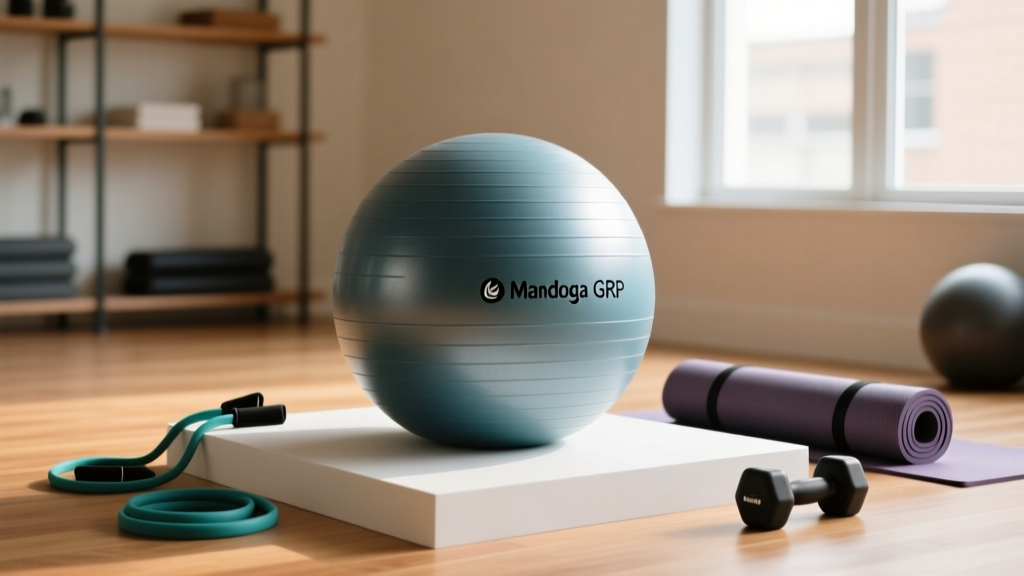
Exercise Ball Size Guide & Buying Tips: Manduka Yoga Mat GRP

Pull Up Assist Band Sizing & DIY Yoga Mat Holder Pattern
