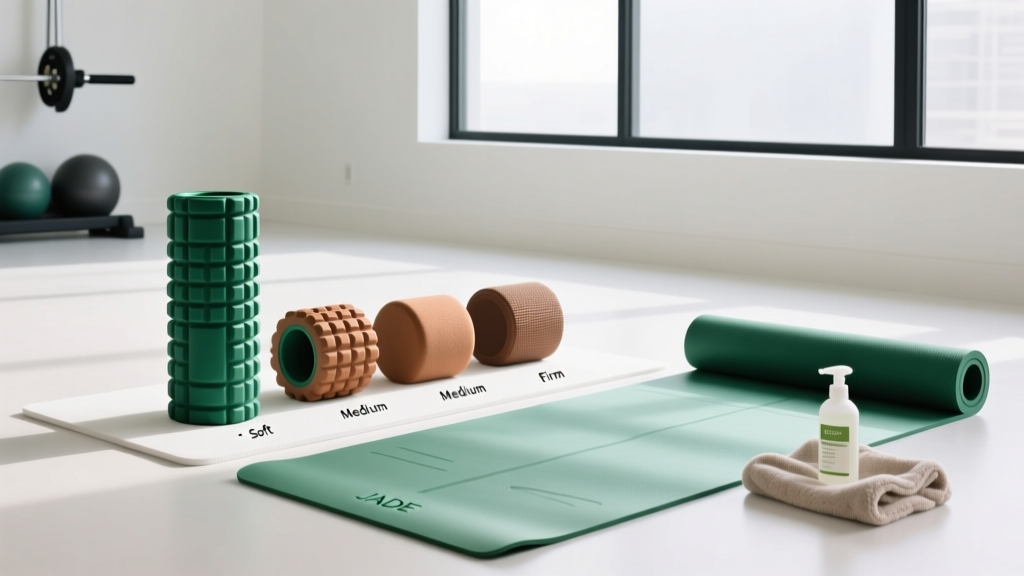
Foam Roller Density & Size Selection for Terracotta Yoga Mat Users
Discover how to select the right foam roller density and size to complement your firm terracotta yoga mat for optimal myofascial release and recovery.

The Biomechanical Reality of Grounding Mats and Recovery
In the 2026 fitness and wellness market, natural grounding props have redefined studio practices. The terracotta yoga mat, prized for its exceptional stability in standing balances and natural earthing properties, features a compressed clay-infused rubber composite with a Shore A hardness rating often exceeding 85. While this ultra-firm surface eliminates the micro-wobbles associated with thick PVC mats, it also provides virtually zero shock absorption for your joints, spine, and fascia during supine transitions or deep lunges.
Because a terracotta yoga mat forces your connective tissues to absorb more ground reaction force, a strategic post-practice recovery protocol is non-negotiable. According to research published in the Journal of Athletic Training, targeted self-myofascial release (SMR) significantly improves range of motion and reduces delayed onset muscle soreness. However, selecting the correct foam roller density and size is critical; the wrong tool can either fail to penetrate deep fascial adhesions or cause defensive muscle guarding.
Expert Insight: When transitioning from an unyielding terracotta surface to a recovery tool, your nervous system is already primed for high-pressure input. Choosing a foam roller that matches your tissue tolerance is essential for down-regulating the sympathetic nervous system post-practice.Decoding Foam Roller Density: Material Science & Compression
Foam roller density is measured in pounds per cubic foot (lb/ft³) and dictates how deeply the tool penetrates the muscle belly before bottoming out. Below is a comprehensive breakdown of the three primary density tiers and how they interact with the heavy-load demands of firm mat practice.
| Density Tier | Material & Rating | Best Application | Lifespan | Avg Price (2026) |
|---|---|---|---|---|
| Soft (Low) | EVA Foam (1.2 - 1.5 lb/ft³) | Beginners, Restorative Yoga, Lymphatic Drainage | 3-6 Months | $15 - $25 |
| Medium | EPP Foam (2.0 - 2.5 lb/ft³) | Daily Maintenance, IT Band, Calves, Glutes | 1-2 Years | $25 - $40 |
| Firm (High) | Grid/Hollow Core (3.0+ lb/ft³ equiv.) | Deep Trigger Point, Thoracic Extension, Psoas | 3-5+ Years | $40 - $75 |
Low-Density (EVA Foam): The Gentle Decompressor
White or light-colored EVA foam rollers are highly forgiving. If your terracotta yoga mat session involved intense, joint-compressing poses like Pigeon or deep Malasana, a low-density roller is ideal for gentle lymphatic flushing without triggering a pain-spasm response. However, EVA foam degrades quickly under the body weight of adult practitioners and will lose its structural integrity within months of daily use.
Medium-Density (EPP Foam): The Biomechanical Sweet Spot
Expanded Polypropylene (EPP) offers the perfect balance of yield and resistance. It is dense enough to separate bound fascial layers in the calves and hamstrings—areas that take a beating on hard terracotta surfaces—yet forgiving enough to allow for diaphragmatic breathing during the release. The Mayo Clinic frequently recommends medium-density tools for sustainable, long-term home recovery routines.
High-Density & Grid-Textured: Deep Tissue Intervention
Hollow-core rollers wrapped in textured EVA (like the TriggerPoint GRID) mimic the pressure of a massage therapist's thumbs. These are necessary for targeting the tensor fasciae latae (TFL) and deep hip rotators, which often become hypertonic when stabilizing on ultra-firm, unforgiving mat surfaces.
Size Selection Matrix: Matching Dimensions to Yoga Poses
Density is only half the equation. The length and diameter of your foam roller dictate which anatomical regions you can safely and effectively target. Using a roller that is too short for spinal work can lead to dangerous lateral shearing forces on the lumbar vertebrae.
| Dimensions (L x D) | Primary Use Case | Yoga Recovery Application | Portability |
|---|---|---|---|
| 36' x 6' | Full Spine, Bilateral Work | Thoracic extension, full-body alignment, Pilates spine work | Low (Studio/Home) |
| 18' x 5' | Limbs, Unilateral Work | Quads, hamstrings, lats, and single-leg calf releases | Medium (Gym Bag) |
| 12' x 3' | Precision Trigger Point | Plantar fascia, suboccipital neck release, TFL targeting | High (Travel) |
Why Diameter Matters for Yogis
Standard rollers feature a 6-inch diameter, which provides a broad, sweeping arc for the thoracic spine. However, advanced practitioners often utilize a 3-inch diameter roller (or a tightly rolled towel) to target the suboccipital muscles at the base of the skull. After holding heavy inversions like Headstand (Sirsasana) on a hard terracotta mat, a 3-inch roller provides the precise, localized cervical traction required to relieve cranial tension without hyperextending the neck.
Post-Practice Protocols: Rolling After Firm Mat Sessions
To maximize recovery after a demanding session on your terracotta yoga mat, follow this sequenced SMR protocol. Spend 60 to 90 seconds per muscle group, pausing on tender points until the perceived pain drops by 50%.
- Plantar Fascia Flush (3' x 3' Roller): The hard clay-composite of a terracotta mat demands intense grip from your feet. Roll the arch and heel of each foot to release the plantar aponeurosis.
- Calf & Achilles Sweep (18' x 5' Roller): Cross one leg over the other to increase the load. Slowly articulate the ankle to target the medial and lateral gastrocnemius.
- Thoracic Extension (36' x 6' Roller): Place the roller horizontally across the mid-back. Support your head with interlaced fingers and gently extend the spine over the roller, counteracting the forward-flexion posture common in desk-bound lifestyles.
- Glute & Piriformis Release (Medium EPP): Sit on the roller, cross the right ankle over the left knee (Figure-4), and lean into the right glute to release deep external rotators strained during wide-legged stances.
Rolling should never cause sharp, shooting, or nerve-like pain. If you experience numbness or tingling, you are likely compressing a nerve bundle against the bone. Shift the roller an inch laterally or medially to target the muscle belly instead.
2026 Market Leaders: Specific Models & Pricing
Based on current durability testing and material integrity, here are the top-tier recommendations for practitioners utilizing firm, natural mats:
- TriggerPoint GRID 13' Original ($39.99): The gold standard for medium-firm, multi-density grid rolling. Its hollow core maintains shape indefinitely, making it ideal for targeting the IT band and glutes after heavy standing sequences.
- OPTP PRO-ROLLER Soft 36' ($58.00): A premium, low-density EVA roller specifically engineered to resist premature flattening. Perfect for restorative Yin practices where the spine needs gentle, sustained support.
- RumbleRoller Original ($69.95): Features aggressive, flexible bumps that act like thumbs. Best reserved for advanced practitioners dealing with chronic, deep-tissue adhesions in the quads and lats.
Expert FAQ
Can I use a foam roller directly on my terracotta yoga mat?
Yes, but with caution. Terracotta-infused mats often have a textured, abrasive top layer designed for grip. Rolling directly on the surface may cause micro-tears in the mat's top layer or leave permanent scuff marks from the roller's friction. It is highly recommended to place a thin cotton towel or a dedicated yoga rug underneath the roller to protect your investment.
How often should I foam roll after practicing on a firm mat?
For practitioners using ultra-firm mats 3 to 5 times a week, daily SMR is recommended. Focus on the lower extremities (calves, hamstrings, feet) which absorb the most ground reaction force when the mat provides zero cushioning.
Is a vibrating foam roller worth the extra cost for yoga recovery?
Vibrating rollers (ranging from $120 to $200) utilize high-frequency oscillation to disrupt the Golgi tendon organ's stretch reflex, allowing for deeper tissue penetration with less perceived pain. If your terracotta mat practice involves intense power yoga or Ashtanga, a vibrating roller can significantly accelerate neural down-regulation post-session.
More gear to consider
All reviews
Resistance Band Set Guide & Manduka Eko SuperLite Yoga Mat Setup

Medicine Ball Weight Guide: Manduka Yogitoes Hot Yoga Mat Towel
Pilates Accessories Guide: Best Yoga Mat Disinfectant for Longevity
Home Gym Setup Essentials: A Practical, Space-Smart Breakdown for Real Results
Stack Yoga Mat & Pilates Accessories: 2026 Budget Guide