Stack Yoga Mat & Pilates Accessories: 2026 Budget Guide
Discover the true cost of building a Pilates setup in 2026. We analyze the stack yoga mat method, accessory value, and exact budget breakdowns.

The Foundation of Floor Work: Why the 'Stack Yoga Mat' Method Dominates Pilates
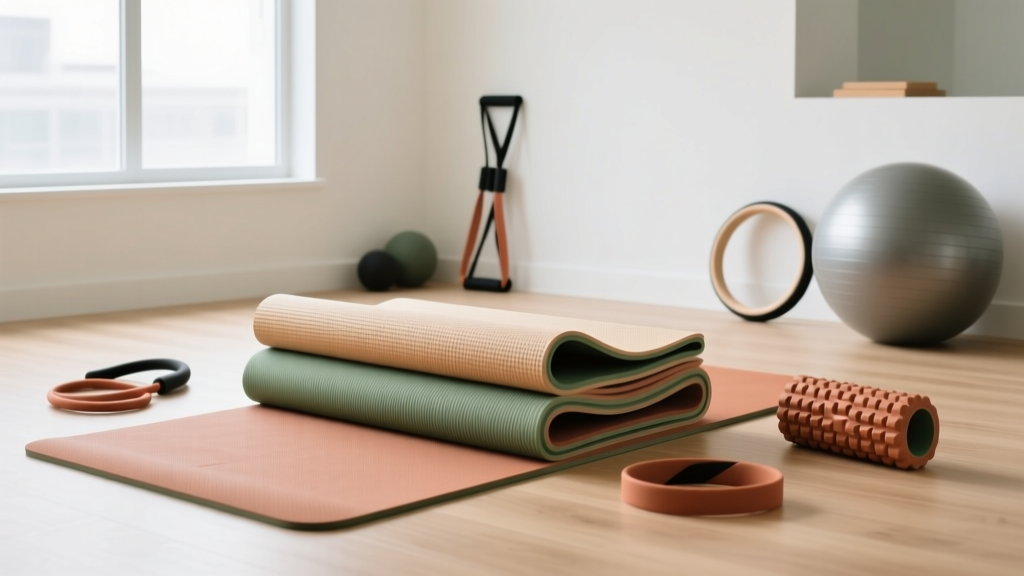
When building a comprehensive home Pilates studio, the most critical investment is not your reformer or your magic circle—it is the surface beneath you. In 2026, the fitness industry has seen a massive shift away from single-layer, ultra-thick foam mats toward the stack yoga mat configuration. This method involves layering two distinct mat materials to achieve the perfect balance of shock absorption and structural stability required for classical and contemporary Pilates.
Standard yoga mats (typically 3mm to 5mm thick) fail during Pilates spinal articulation exercises. Movements like Rolling Like a Ball, The Seal, and the Teaser place immense focal pressure on the spinous processes and the sacrum. Conversely, the ultra-thick 15mm NBR (Nitrile Butadiene Rubber) mats often marketed as 'Pilates mats' are too squishy. They lack the Shore A hardness required to maintain balance during standing series or kneeling arm/leg reaches.
'The ideal Pilates surface requires a dual-density approach. You need a high-friction, firm base to prevent slipping during the Hundred, paired with a softer top layer to protect the vertebrae during roll-downs.' — Biomechanics of Mat Pilates, 2025 Industry Report
This is where the stack yoga mat strategy shines. By stacking a 5mm natural rubber base mat (providing grip and a Shore A hardness of ~65) beneath a 6mm TPE (Thermoplastic Elastomer) top mat (providing targeted cushioning), practitioners create a customized 11mm modular surface. According to Healthline's comprehensive guide on exercise surfaces, understanding the density and material of your mat is paramount for joint health and injury prevention during repetitive floor work.
2026 Budget Breakdown: Building Your Mat Foundation
Let us break down the exact costs of achieving the optimal stack yoga mat setup versus buying a single premium or budget mat. Prices below reflect early 2026 retail averages.
| Setup Strategy | Materials & Thickness | Estimated Cost | Pros & Cons |
|---|---|---|---|
| The Modular Stack (Recommended) | 5mm Natural Rubber Base + 6mm TPE Top Layer (11mm total) | $75 - $95 | Pros: Customizable, washable layers, excellent grip. Cons: Requires storing two mats. |
| Premium Single Mat | 8mm - 10mm High-Density PVC (e.g., Manduka PRO) | $110 - $140 | Pros: Lifetime durability, single piece. Cons: Heavy (7+ lbs), still too firm for sacrum protection. |
| Budget NBR Mat | 15mm NBR Foam | $25 - $35 | Pros: Very cheap, soft on knees. Cons: Terrible for balance, degrades quickly, traps sweat. |
💡 Pro-Tip: The Alignment Hack
When utilizing a stack yoga mat setup, choose a base mat that is slightly wider than your top mat (e.g., a 26-inch base with a 24-inch top). This creates a built-in visual border that helps you maintain perfect center-line alignment during asymmetric movements like the Side Kick Series.
Pilates Equipment Accessories Guide: Where to Spend and Where to Save
Once your mat foundation is secured, the next phase of your budget breakdown involves Pilates accessories. The market is flooded with cheap knockoffs and overpriced studio-grade gear. Here is a value analysis of the essential accessories you need to complement your mat work.
1. The Magic Circle (Pilates Ring)
The Magic Circle is iconic for a reason. It provides bidirectional resistance for the inner thighs, chest, and arms.
- Where to Spend: Do not buy the $15 generic plastic rings found on massive e-commerce sites. They utilize cheap plastic cores that warp and snap under repeated tension. Invest in the Balanced Body Flex Ring or the Merrithew (Stott) Magic Circle (Retail: $38 - $45). As noted by Balanced Body, their rings use a flexible fiberglass or high-grade steel core encased in rubber, ensuring the tension remains consistent for years.
- Where to Save: You do not need the padded, dual-grip luxury versions unless you have specific wrist or ankle sensitivities. The standard single-grip or no-grip rubber-coated rings offer the exact same resistance profile for $10 less.
2. Resistance Bands and Loops
Bands are essential for mimicking the spring tension of a Reformer during mat work, particularly for the Footwork and Arm Spring series.
- Where to Spend: Tubing with handles is generally useless for classical Pilates. Instead, spend your money on TheraBand CLX (Consecutive Loops) or flat, latex-free continuous loop bands (Retail: $15 - $22). The CLX design allows you to wrap the band securely around your feet without the painful friction burns caused by standard flat bands during the Leg Pull Front.
- Where to Save: Brand names matter less here. A high-quality TPE loop band set from a reputable fitness accessory brand ($12 for a set of 3) performs identically to name-brand clinical bands for mat Pilates.
3. Small Toning Balls (Pilates Balls)
Typically 7 to 9 inches in diameter, these soft, slightly deflated balls are placed between the knees or behind the lower back to engage the pelvic floor and transverse abdominis.
- The Value Verdict: Save your money on premium brands. A $25 branded Pilates ball offers zero functional advantage over a $9 generic soft play ball. The only metric that matters is the valve quality (to ensure it stays slightly deflated) and the grip texture. Look for anti-burst PVC materials in the $8 to $12 range.
The $150 Optimal Allocation Framework
If you have a strict $150 budget to build a complete, studio-quality mat Pilates setup in 2026, here is the exact financial blueprint to maximize your ROI (Return on Investment) and biomechanical benefit.
- The Stack Yoga Mat Base ($35): Purchase a 5mm, 72-inch natural rubber mat. Look for open-cell rubber for maximum sweat absorption and floor grip.
- The Stack Yoga Mat Top Layer ($25): Purchase a 6mm closed-cell TPE mat. This provides the necessary spinal cushioning and can be easily wiped down with disinfectant after intense sessions.
- Premium Magic Circle ($42): Buy a studio-grade ring with a metal/fiberglass core. This is your primary resistance tool for upper body and inner thigh work.
- TPE Loop Band Set ($15): Get a 3-pack (Light, Medium, Heavy) for spring-tension mimicry.
- Generic 9-Inch Soft Ball ($10): For pelvic floor engagement and spinal support.
- Microfiber Mat Towel ($12): Essential for placing over your TPE top layer during high-sweat cardio Pilates sessions to prevent slipping.
Total Spend: $139. This leaves you with $11 to spare, which can be allocated toward a digital subscription for guided mat classes or a foam roller for post-session myofascial release.
Frequently Asked Questions: Mat and Accessory Care
How do I clean a stack yoga mat configuration without ruining the grip?
Never use harsh chemical cleaners or essential oil-based sprays on natural rubber base mats; the oils will break down the open-cell structure and destroy the grip. Use a 50/50 mix of distilled water and white vinegar in a spray bottle. Wipe the TPE top layer with a mild, tea-tree-oil-based mat wash. Always let both layers air dry completely before stacking them in your carrying strap to prevent mildew growth between the layers.
Can I use my thick stack yoga mat setup for standing yoga flows?
While the 11mm combined thickness is incredible for Pilates floor work, it may compromise your balance in standing yoga poses like Tree Pose or Warrior III. The beauty of the modular stack method is adaptability: simply remove the 6mm TPE top layer and practice your standing flow directly on the firm, 5mm natural rubber base. This dual-purpose functionality is exactly why the stack method offers superior long-term value compared to buying a single, thick, multipurpose mat.
How often should I replace my Pilates resistance bands?
Even high-quality TPE and latex bands degrade over time due to oxidation and UV exposure. If you practice mat Pilates 3 to 4 times a week, inspect your bands monthly for micro-tears or white stress marks near the anchor points. Plan to replace your loop bands every 8 to 12 months to prevent dangerous snapping during exercises like the Teaser or Roll-Down with tension.
More gear to consider
All reviews
Loop vs Tube Bands: Space Layouts & Light Pink Yoga Mat Pairings

Beyond a Five Below Yoga Mat: Stability Ball vs BOSU 2026

Jump Rope Types: Speed, Beaded, Weighted & Yoga Mat PNG

Jump Rope Troubleshooting: Why a Free Yoga Mat Ruins Speed Ropes
BOSU vs Stability Ball: Market Trends & Manduka Yoga Mat Cleaning
