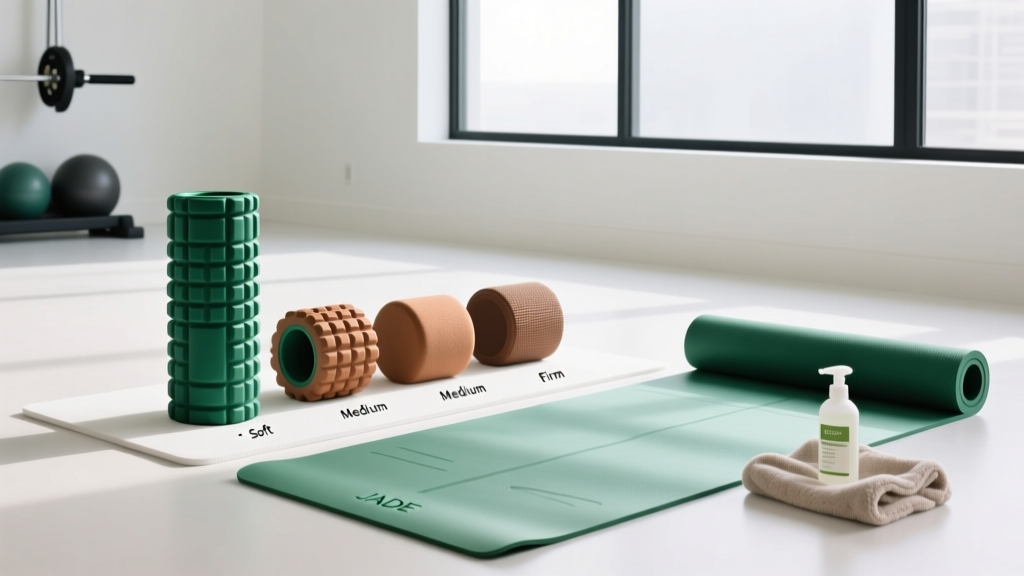
Foam Roller Density Selection & Cleaning a Jade Yoga Mat
Master foam roller density and size selection for optimal recovery, plus expert steps for cleaning a Jade yoga mat to extend your gear's lifespan.

The Biomechanics of Foam Roller Density: EVA vs. EPP
Selecting the correct foam roller density is not merely a matter of pain tolerance; it is a biomechanical decision that dictates how effectively you can modulate fascial tension and stimulate mechanoreceptors. According to research published by the National Center for Biotechnology Information (NCBI), self-myofascial release (SMR) improves range of motion without compromising muscle performance, but only when the tool applies adequate, targeted pressure.
In 2026, the market is dominated by two primary foam materials, each with distinct structural properties:
1. Ethylene-Vinyl Acetate (EVA) - The Standard
- Composition: A closed-cell foam that is lightweight and relatively soft.
- Durometer Rating: Typically falls between 30 and 40 on the Shore OO scale.
- Best For: Beginners, Yin yoga practitioners, and superficial lymphatic flushing.
- Failure Mode: EVA compresses and permanently deforms after 6 to 12 months of heavy use, losing its structural integrity and requiring replacement.
2. Expanded Polypropylene (EPP) - The Professional Standard
- Composition: A rigid, high-density bead foam fused under high pressure.
- Durometer Rating: Ranges from 45 to 60+ on the Shore OO scale.
- Best For: Deep tissue release, heavy athletes, and targeting dense fascial adhesions in the IT band or gluteus medius.
- Longevity: EPP resists permanent deformation and can withstand loads exceeding 350 lbs without bottoming out.
Foam Roller Size Selection Matrix
Diameter and length dictate the tool's utility. A 36-inch roller is useless for travel but essential for Pilates and thoracic extension, while a 12-inch roller is ideal for pinpointing the peroneals but inadequate for bilateral latissimus dorsi release.
| Dimensions | Primary Use Case | Portability | Price Range (2026) |
|---|---|---|---|
| 36" x 6" | Full spinal extension, Pilates, bilateral quad release | Low (Studio/Home only) | $35 - $60 |
| 24" x 5" | General full-body SMR, lats, hamstrings | Medium | $25 - $45 |
| 18" x 5" | Targeted glute/hip work, travel-friendly | High | $20 - $35 |
| 12" x 3" | Pinpoint trigger points, calves, plantar fascia | Ultra-High (Gym bag) | $15 - $25 |
Top 2026 Foam Roller Models Compared
Based on current market durability tests and biomechanical feedback, here are the top performers for the year:
- TriggerPoint GRID 13" ($39.99): Features a multi-density exterior wrapped around a rigid hollow core. The varied surface zones mimic a massage therapist's palm and fingertips. Excellent for targeted IT band work.
- OPTP Pro-Roller Soft Density ($42.00): A premium, low-density EVA roller specifically engineered for clinical rehab and gentle lymphatic drainage. It yields easily under body weight, preventing nervous system guarding.
- RumbleRoller Deep-Tissue ($69.95): Utilizes high-density EPP with aggressive, flexible beast-like bumps. This is strictly for advanced users needing to break up severe fascial adhesions in dense muscle bellies like the vastus lateralis.
Mat Maintenance: The Definitive Guide to Cleaning a Jade Yoga Mat
While optimizing your recovery gear is crucial, maintaining your primary contact surface is equally important. When it comes to studio and home hygiene, cleaning a Jade yoga mat requires a fundamentally different approach than wiping down a closed-cell PVC or TPE mat.
JadeYoga mats are constructed from open-cell, natural vulcanized rubber. This porosity provides the legendary grip the brand is known for, but it also means the mat absorbs sweat, dead skin cells, and bacteria deep into its core. If you treat a Jade mat like a standard plastic mat, you will destroy it.
The Chemistry of Natural Rubber Degradation
The most common mistake practitioners make is using generic yoga mat sprays loaded with essential oils (like tea tree, lavender, or eucalyptus). According to the JadeYoga Official Mat Care Guide, oils of any kind will break down the vulcanization process of natural rubber. Over time, this causes the mat to dry rot, crumble, and lose its structural cohesion.
⚠️ CRITICAL WARNING: Never use products containing bleach, hydrogen peroxide, or essential oils on open-cell natural rubber. Furthermore, never submerge a Jade mat in a bathtub or washing machine; the open cells will trap water, leading to severe mold growth and irreversible warping.Step-by-Step: Properly Cleaning a Jade Yoga Mat
- The Post-Practice Wipe: Immediately after your session, use a microfiber cloth dampened with plain water to wipe away surface sweat. This prevents salt crystals from drying into the pores, which can accelerate rubber degradation.
- The Deep Clean (Weekly): Mix a solution of 1 part water to 1 part white vinegar, or use a few drops of a mild, oil-free dish soap (like Dawn) in a spray bottle of water.
- Application: Lightly mist the mat. Do not soak it.
- Agitation: Wipe the mat down using a soft, non-abrasive cloth in circular motions to lift embedded oils and dirt from the open cells.
- Drying: Hang the mat over a shower rod or drying rack in a well-ventilated area. Never dry it in direct sunlight. UV radiation rapidly oxidizes natural rubber, causing it to become brittle and crack.
"The lifespan of a natural rubber mat is directly correlated to how it is washed. A Jade mat cleaned with oil-free solutions and kept out of the sun will easily last 3 to 5 years of daily practice, whereas one subjected to harsh chemicals will crumble in less than a year."
Frequently Asked Questions (FAQ)
How often should I replace my foam roller?
If you are using a soft EVA foam roller for daily heavy use, expect to replace it every 6 to 9 months once it develops permanent divots. High-density EPP rollers and hollow-core grid rollers can last 3 to 5 years without losing their structural integrity.
Can I use a foam roller on my lower back?
Direct, aggressive foam rolling on the lumbar spine is generally contraindicated by physical therapists, as the lumbar vertebrae lack the protective rib cage of the thoracic spine. Instead, use a 36-inch roller horizontally across the mid-back (thoracic spine) for extension, and rely on a lacrosse ball or peanut for targeted paraspinal release in the lower back.
Why does my Jade yoga mat smell like rubber?
Natural rubber has an inherent earthy scent that off-gasses over time. To accelerate this process without damaging the mat, leave it unrolled in a well-ventilated, shaded indoor area for 48 to 72 hours. Avoid using chemical odor eliminators like Febreze, as the alcohol and synthetic fragrances can dry out the rubber.
More gear to consider
All reviews
Pairing Your Bala Yoga Mat: Exercise Ball Size Guide & Care
Mobility Setup: Foam Roller Sizing & Manduka PRO Lite Yoga Mat

Travelling With a Yoga Mat: Stability Ball vs BOSU Space Guide

BOSU vs Stability Ball Care & Lululemon Yoga Mat Towel with Grip

Resistance Band Sets: Levels, Types & Nike Mastery Yoga Mat Pairings
