
Compact Pilates Layout: Accessories & Yoga and Pilates Mat Guide
Maximize your home studio with our space-saving Pilates accessories guide. Learn layout design, storage hacks, and the best yoga and pilates mat choices.

The 10x10 Foot Challenge: Designing Your Compact Pilates Studio
As urban living spaces shrink and home wellness routines become permanent fixtures in 2026, the demand for intelligent micro-studio design has never been higher. You do not need a sprawling 500-square-foot dedicated room to execute a flawless Pilates repertoire. However, optimizing a small footprint requires a strategic approach to equipment selection, spatial geometry, and vertical storage. This comprehensive Pilates equipment accessories guide focuses entirely on space optimization, helping you transform a cramped spare bedroom or apartment corner into a highly functional movement sanctuary.
📐 The Minimum Viable Footprint:According to spatial guidelines referenced by the American Council on Exercise (ACE), a safe and effective home exercise zone requires a minimum of 3 feet of clearance on all sides of your primary movement surface. For a standard 72-inch by 24-inch mat, this translates to a minimum functional floor space of 12 feet by 8 feet (96 sq. ft.) to allow for full limb extension during exercises like the 'Star' or 'Swimming'.
Foundational Gear: Selecting the Right Yoga and Pilates Mat for Tight Spaces
The centerpiece of any mat-based studio is your ground layer. When shopping for a hybrid yoga and pilates mat, space-conscious buyers must balance thickness, material density, and storage logistics. Pilates demands thicker cushioning (5mm to 8mm) to protect the sacrum and vertebrae during articulation exercises like the 'Roll-Up' or 'Hundred'. Conversely, yoga demands a thinner, denser surface for standing balance.
If you are strictly optimizing for a small space, you need a dual-purpose mat that can be tightly rolled without permanent creasing, or one that folds flat for under-bed storage. Avoid cheap PVC mats; they suffer from 'bottoming out' (compressing to zero thickness under body weight), which leads to spinal bruising on hard floors.
Dimension & Material Matrix: Top Space-Saving Mats
| Model | Dimensions & Thickness | Material & Weight | Est. Price |
|---|---|---|---|
| Manduka PROlite | 71" x 24" | 4.7mm | OEKO-TEX PVC | 4 lbs | $92 |
| Balanced Body EcoSmart | 72" x 24" | 5.5mm | TPE Blend | 2.5 lbs | $65 |
| Liforme Original | 72.8" x 26.8" | 4.2mm | Natural Rubber | 5.5 lbs | $140 |
Pro-Tip: If your studio doubles as a home office, the Balanced Body EcoSmart is exceptionally lightweight (2.5 lbs), making it effortless to roll and stash in a closet or under a sofa between Zoom meetings.
Space-Saving Pilates Accessories Guide
Traditional Pilates apparatus like the Reformer or Cadillac requires 30 to 50 square feet of dedicated floor space. To replicate the resistance and proprioceptive feedback of these machines in a micro-studio, you must curate a high-yield accessory kit. According to educational resources from the IDEA Health & Fitness Association, small props are critical for adding resistance vectors and correcting alignment when heavy machinery is unavailable.
- The Magic Circle (Pilates Ring): The Balanced Body 14-inch Ultra-Fit Circle ($35) is non-negotiable. It provides isometric resistance for the adductors and lats. Storage Hack: Because of its rigid geometry, it cannot be folded. Mount it on the wall using a simple 6-inch stainless steel utility hook.
- Resistance Bands (CLX Loops): TheraBand CLX Loops ($18-$25) eliminate the need to tie knots or wrap bands around your feet, saving time and reducing tripping hazards in tight spaces. They offer 5 progressive resistance levels in a single 5-foot strip.
- Soft Pilates Overball (9-inch): The Tone Fitness 9-inch Anti-Burst Overball ($12) is essential for pelvic floor engagement and spinal support during the 'Pelvic Curl'. When deflated slightly, it compresses to less than 2 inches thick, sliding easily onto a bookshelf.
- Travel Foam Roller: Skip the standard 36-inch roller. The TriggerPoint GRID 13-inch Mini ($35) provides the exact same myofascial release for the thoracic spine and IT bands but takes up 65% less storage volume.
The 'Anchor-Flow-Store' Layout Framework
Designing the layout of a compact studio requires zoning. Do not scatter equipment randomly. Implement the 'Anchor-Flow-Store' framework to maintain a psychological and physical separation between resting, moving, and organizing.
- The Anchor Zone (The Mat): Place your yoga and pilates mat parallel to the longest unbroken wall in the room. This provides a visual boundary and prevents you from kicking furniture during dynamic movements like 'Single Leg Circles'.
- The Flow Zone (Active Reach): Keep your active props (Magic Circle, Overball, Resistance Bands) within arm's reach of the top-right corner of your mat. In a 10x10 room, this means utilizing a small, low-profile rolling cart (like the IKEA Råskog, $39) positioned exactly 2 feet from the top edge of your mat.
- The Store Zone (Vertical Real Estate): The floor is for movement; the walls are for storage. Install a slatwall panel or a pegboard system on the wall opposite your Anchor Zone to hang straps, bands, and towels.
Vertical Storage Solutions & Critical Failure Modes
When optimizing for space, going vertical is mandatory. However, improper installation of storage solutions in small home gyms leads to equipment damage and safety hazards. Below are the most common failure modes and how to avoid them.
⚠️ WARNING: UV Degradation & Drywall AnchorsFailure Mode 1: Storing elastic resistance bands on wall hooks near a sunlit window. UV rays degrade the molecular structure of TPE and latex, causing bands to snap under tension within 3 to 6 months. Solution: Store bands in an opaque drawer or a canvas bin on your rolling cart.
Failure Mode 2: Using standard plastic drywall anchors to mount heavy wall hooks for medicine balls or weighted poles. The dynamic load of pulling a 10lb ball off a hook will rip standard anchors out of 1/2-inch drywall. Solution: Always use toggle bolts (rated for 50+ lbs) or anchor directly into wooden wall studs using a stud finder.
"In micro-studio design, every piece of equipment must earn its floor space. If an accessory cannot be hung on a pegboard, slid under a bed, or nested inside another prop, it is a liability to your layout."
— FitGearPulse Spatial Design Desk
FAQ: Compact Studio Troubleshooting
Can I fold my yoga and pilates mat instead of rolling it?
Only if the mat is explicitly designed for folding (like the Gaiam Travel Mat, which is 2mm thick). Standard 5mm+ Pilates mats made of PVC or natural rubber will develop permanent micro-tears along the fold lines if folded repeatedly, compromising their structural integrity and grip. If you must hide a thick mat, roll it tightly and secure it with a cotton strap, storing it vertically in a narrow corner gap or inside a dedicated cylindrical canvas bin.
How do I handle low ceilings in attic or basement studios?
Low ceilings (under 8 feet) restrict overhead arm extensions and standing exercises. Adjust your repertoire to focus on supine (lying on back), prone (lying on stomach), and seated movements. Avoid exercises that require full vertical jumping or high-reaching arm arcs. Use your resistance bands anchored to a low door-hinge anchor rather than a high wall mount to maintain safe tension vectors.
What is the best flooring underlay if my mat is too thin?
If you are working on concrete or hard tile and your 4mm yoga and pilates mat is not providing enough joint protection, do not buy a thicker mat. Instead, purchase interlocking EVA foam gym tiles (3/8-inch thick, approx. $25 for a 4-pack). Lay down two tiles beneath your primary mat zone. This provides a customizable, shock-absorbent sub-floor that can be disassembled and stacked in a closet in under 60 seconds when the room needs to serve another purpose.
More gear to consider
All reviews
When to Recycle Yoga Mat: Material, Thickness & Grip Mistakes

Fixing Mat Slip: Grip Comparison and Washing Lululemon Yoga Mat

Pilates Accessories Guide: Yogitoes Yoga Mat Towel Review
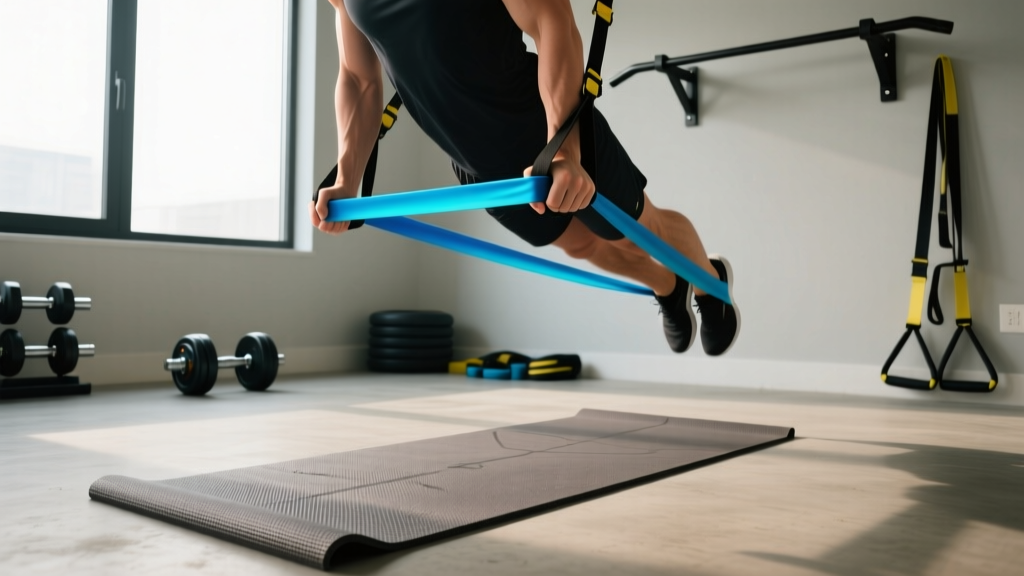
Beyond Thick Yoga Mats: Pull Up Assist Band Sizing Guide
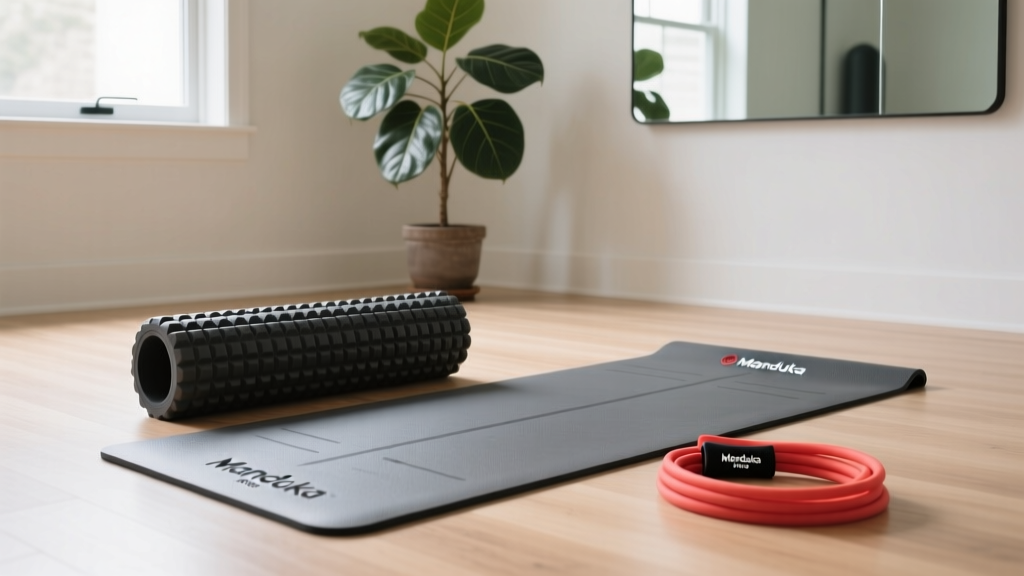
Mobility Setup: Foam Roller Sizing & Manduka PRO Lite Yoga Mat
