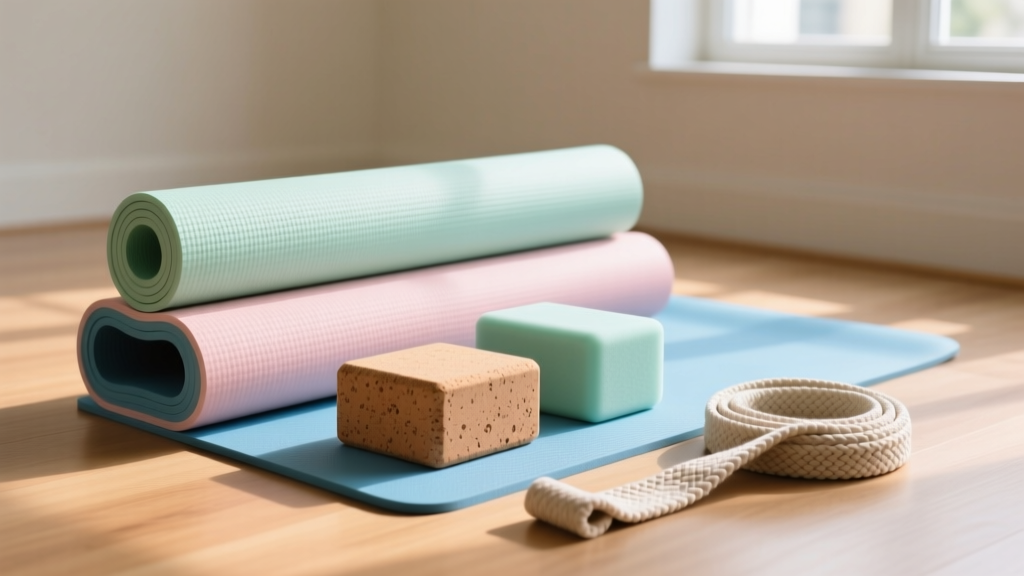
Stability Ball vs BOSU Ball Care + Gaiam Essential Yoga Mat Tips
Compare stability ball vs BOSU ball longevity, maintenance, and failure modes. Learn how pairing them with a Gaiam Essential Yoga Mat prevents wear.

The Material Science of Balance Trainers: PVC vs. Urethane
When building a functional home gym, inflatable balance trainers are indispensable for core activation, proprioception, and rehabilitation. However, the longevity of these tools is entirely dependent on their material composition and how they interact with your environment. As of 2026, the market is dominated by two distinct categories: standard anti-burst PVC stability balls and premium urethane-blend half-spheres like the BOSU. Understanding the molecular vulnerabilities of these materials is the first step in preventing catastrophic failure and extending their lifespan from a mere six months to several years.
Standard stability balls (such as the popular Trideer or TheraBand models, typically priced between $20 and $35) are constructed from eco-PVC with an anti-burst honeycomb coating. This coating is designed to ensure the ball deflates slowly if punctured. Conversely, the BOSU Pro Series (retailing around $159) utilizes a high-grade, latex-free urethane and PVC blend molded over a rigid polycarbonate base. While the BOSU is inherently more resistant to impact, both materials share a common enemy: environmental degradation and micro-abrasions caused by improper flooring surfaces.
Stability Ball vs. BOSU Ball: Durability and Failure Modes
To effectively maintain your equipment, you must understand how and why they fail. The table below breaks down the structural differences and common failure points of standard stability balls versus the BOSU trainer.
| Feature | Standard Anti-Burst Stability Ball | BOSU Pro Series (Half-Sphere) |
|---|---|---|
| Primary Material | Eco-PVC with textured anti-burst coating | Urethane/PVC blend, Polycarbonate base |
| Average Cost | $20 - $40 | $149 - $169 |
| Max Dynamic Load | 300 - 500 lbs (varies by brand) | 350 lbs (Dynamic) / 1,500 lbs (Static) |
| Primary Failure Mode | Seam splitting due to over-inflation or heat | Base cracking or bladder delamination |
| Surface Vulnerability | High (entire surface contacts floor) | Medium (bladder exposed during dome-down use) |
The Surface Factor: Why Your Gaiam Essential Yoga Mat Matters
One of the most overlooked aspects of balance ball longevity is the surface upon which they are used. Hardwood, laminate, and even sealed concrete floors harbor microscopic debris—tiny grains of sand, hardened dirt, and grit. When you perform dynamic movements like stability ball pikes, BOSU mountain climbers, or lateral hops, this debris acts like industrial sandpaper against the anti-burst coating of your equipment. Once the outer textured layer of a PVC stability ball is compromised, the underlying material is exposed to rapid oxidization and tearing.
This is where integrating a Gaiam Essential Yoga Mat into your equipment care routine becomes a critical longevity strategy. Priced accessibly at around $24.99, the Gaiam Essential Yoga Mat (available in 3mm and 5mm thicknesses) is constructed from dense, textured PVC. By deploying this mat as a sacrificial barrier between your floor and your balance trainer, you achieve three vital maintenance goals:
- Abrasion Absorption: The mat takes the brunt of the frictional wear, preserving the anti-burst integrity of the stability ball and the urethane bladder of the BOSU.
- Debris Isolation: The sticky, textured surface of the Gaiam Essential Yoga Mat traps micro-grit that would otherwise be ground into the inflatable bladder during high-impact plyometrics.
- Base Protection: When using the BOSU in the 'dome-down' position, the rigid polycarbonate base can scratch hardwood floors. The 5mm version of the Gaiam mat provides a dense, shock-absorbing buffer that protects both your home flooring and the plastic base from stress fractures.
According to guidelines on equipment safety and environmental setup from the American Council on Exercise (ACE), ensuring a clean, debris-free, and slightly forgiving surface is paramount for both user safety and the structural integrity of inflatable fitness gear.
Step-by-Step Maintenance Protocol for Inflatable Gear
Routine cleaning is non-negotiable, especially if you use your gear in a garage gym or a high-humidity environment where sweat and oils accumulate. However, using the wrong cleaning agents will destroy your equipment faster than neglect.
⚠️ CRITICAL CHEMICAL WARNING
Never use citrus-based cleaners (containing d-limonene), tea tree oil, or quaternary ammonium compounds (found in standard antibacterial wipes) on PVC or urethane fitness gear. These compounds strip the chemical plasticizers out of the material, leading to dry rot, loss of elasticity, and catastrophic seam failure under load.
The Safe Cleaning Method
- Prepare the Solution: Mix 1 teaspoon of mild, pH-neutral dish soap (like Dawn Free & Clear) with 16 ounces of warm distilled water in a spray bottle. Distilled water prevents hard water mineral deposits from drying on the mat and ball surfaces.
- Apply and Agitate: Lightly mist the stability ball or BOSU bladder. Use a microfiber cloth to gently wipe the surface in circular motions. Do not use abrasive sponges.
- Clean the Mat: Spray the same solution onto your Gaiam Essential Yoga Mat. Wipe down thoroughly to remove sweat salts, which can degrade the mat's closed-cell surface over time.
- Air Dry: Allow all equipment to air dry completely in a shaded, well-ventilated area before deflating or storing. Never use direct heat or hair dryers, as localized heat weakens PVC seams.
Inflation Physics, Temperature, and Storage Mechanics
The most common reason stability balls burst is not user weight, but thermodynamic expansion. If you inflate a stability ball to its maximum diameter in a 65°F room and then leave it in a room that reaches 85°F (or near a heating vent), the trapped air expands. Because the PVC has reached its maximum tensile limit, the seams will rupture.
The 24-Hour Inflation Rule: Always inflate your stability ball to 80% of its recommended diameter. Let it rest for 24 hours at room temperature (ideally 68°F to 72°F). This allows the PVC polymer chains to stretch and acclimate. Return the next day to top it off to the final 20%. This simple step increases the lifespan of a $25 ball by years.
For the BOSU, use the included plug and ensure the inflation needle is lubricated with a drop of glycerin or silicone oil before insertion to prevent tearing the internal valve seal. Store both the BOSU and the stability ball away from direct UV sunlight. UV radiation breaks down the molecular bonds in urethane and PVC, causing a chalky, brittle surface that is highly susceptible to punctures.
For comprehensive material care and warranty information, you can always refer to the Gaiam Official Yoga Mat Guide to ensure your foundational mat is also being stored correctly, usually rolled with the textured side facing outward to maintain its grip properties.
Frequently Asked Questions (FAQ)
Can I use my Gaiam Essential Yoga Mat outdoors with my BOSU?
While you can, it is not recommended for long-term longevity. The Gaiam Essential Yoga Mat is made of PVC, which degrades rapidly under direct UV sunlight. Furthermore, outdoor surfaces like concrete or asphalt are highly abrasive and will tear the mat's surface, eliminating its protective qualities for your BOSU bladder. Keep your mat and balance gear indoors or in a shaded, screened-in porch.
How do I know if my stability ball's anti-burst coating is compromised?
Run your hands over the surface of the ball. If you feel smooth, shiny patches amidst the textured honeycomb pattern, or if you notice a white, chalky residue forming on the seams, the plasticizers are leaching out, and the anti-burst coating is failing. It is time to retire the ball to avoid injury.
Does the thickness of the Gaiam mat matter for BOSU stability?
Yes. If you are doing heavy, dynamic movements on the BOSU, the 5mm version of the Gaiam Essential Yoga Mat provides better shock absorption and protects the polycarbonate base from micro-fractures caused by hard floor impacts. However, for slow, controlled rehabilitation exercises, the 3mm version offers a firmer connection to the floor, maximizing the proprioceptive feedback of the BOSU.
More gear to consider
All reviews
Exercise Ball Size Guide: The 'Yoga Mat Bread Ingredient' for Small Spaces

Therabody Yoga Mat & Stability Ball vs BOSU Ball 2026 Trends

Loop vs Tube Bands: Space Layouts & Lululemon Foldable Yoga Mat
Lululemon Yoga Mat Strap vs Pull-Up Bands: Sizing & Selection

Battle Rope Sizing & What to Use to Clean a Yoga Mat