Alo Yoga Mat Warrior: Thickness, Material & Grip Troubleshooting
Troubleshoot common yoga mat mistakes. We compare the Alo Yoga Warrior mat's thickness, polyurethane grip, and natural rubber base against top alternatives.

The Premium Mat Paradox: Why Your Grip and Joints Are Still Suffering
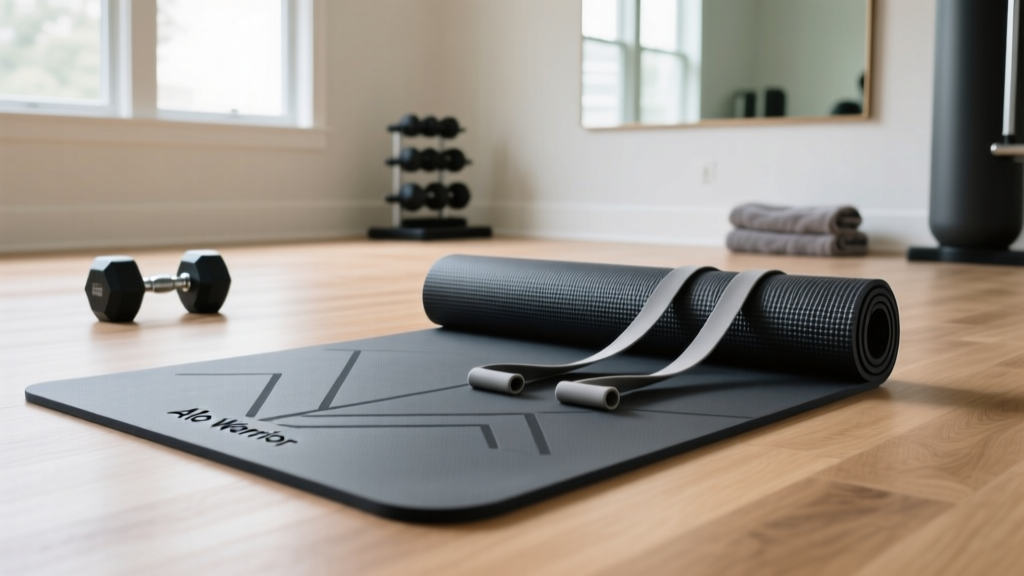
Investing over $100 in a premium yoga mat should theoretically eliminate slipping, joint pain, and mid-flow adjustments. Yet, one of the most common complaints we see in 2026 from practitioners upgrading their gear is that their new mat "doesn't work" for their specific practice. The Alo Yoga Warrior Mat (retailing at $128) is a prime example. It is a beautifully engineered piece of equipment, but when users misunderstand its 5mm thickness, open-cell polyurethane (PU) top layer, and natural rubber base, it leads to severe frustration.
This troubleshooting guide uses the Alo Yoga Warrior Mat as our benchmark to dissect the most common mistakes buyers make regarding yoga mat thickness, material composition, and grip degradation. Whether you are slipping in Downward Dog or experiencing knee pain in low lunges, the root cause almost always traces back to a mismatch between mat engineering and biomechanical demand.
Mistake #1: Misjudging the 5mm Thickness Threshold
The Alo Yoga Warrior Mat features a 5mm thickness profile. Many buyers assume that thicker automatically equals better joint protection. However, in yoga, thickness without density creates a "bottoming out" effect that compromises stability.
The Biomechanics of Mat Compression
When you enter a balancing pose like Warrior III or Half Moon, a highly compressible 5mm or 6mm mat will deform under the concentrated load of your standing foot. This micro-instability forces the stabilizing muscles in your ankles and knees to overcompensate, leading to fatigue and wobbling.
Expert Insight: According to biomechanical analyses of joint loading in yoga, surface deformation greater than 4mm under single-leg stances significantly increases ankle inversion torque. If your balance poses feel shaky, your mat might be too thick or too soft, not your practice.
Thickness & Density Comparison Matrix
| Mat Model | Thickness | Material Core | Best For | Common Failure Mode |
|---|---|---|---|---|
| Alo Yoga Warrior | 5.0mm | Natural Rubber | Vinyasa, Hatha, moderate joint support | Bottoms out during single-leg balances |
| Manduka PRO | 6.0mm | High-Density PVC | Restorative, heavy practitioners, bad knees | Too heavy (7.5 lbs); slick when dry |
| Liforme Original | 4.2mm | Natural Rubber | Alignment-focused, hot yoga, stability | Thinner profile offers less kneeling cushion |
Troubleshooting Your Joint Pain: If you practice Yin or Restorative yoga and your knees hurt on the 5mm Alo Warrior, the issue is not the thickness; it is the density. You need a denser closed-cell mat (like the Manduka PRO) or a targeted 10mm prop cushion for kneeling, rather than a uniformly thick, soft mat that compromises your standing postures.
Mistake #2: Misunderstanding Open-Cell vs. Closed-Cell Materials
The grip of the Alo Yoga Warrior Mat comes from its open-cell polyurethane top layer. This is fundamentally different from the closed-cell PVC used in legacy mats like the Manduka PRO. Misunderstanding this material science is the number one reason users experience sudden grip failure.
How Open-Cell Polyurethane Actually Works
Open-cell PU is engineered with microscopic pores that absorb moisture. When you sweat, the moisture is pulled into the top layer, creating a temporary hydro-grip that prevents slipping. However, these same pores are a magnet for skin oils, lotions, and dead skin cells.
- The Dry Slick Phenomenon: If you have naturally dry skin and practice in a cool room, an open-cell PU mat might actually feel more slippery than a closed-cell mat because there is no moisture to activate the grip.
- The Oil Clog Effect: If you apply body lotion before practice, or if you use essential-oil-based mat sprays, the oils will permanently clog the microscopic pores of the Alo Warrior, destroying its grip within weeks.
Troubleshooting Grip Failure on the Alo Warrior
If your Alo Yoga Warrior Mat has suddenly become slippery, do not buy a new mat. You likely have clogged pores. Follow this exact restoration protocol:
- Mix a solution of 1 part white vinegar to 3 parts warm water.
- Lightly mist the mat (do not soak it, as the natural rubber base can degrade if waterlogged).
- Wipe vigorously with a clean, lint-free microfiber cloth using circular motions to lift oils from the pores.
- Allow it to air dry flat in a shaded area (UV light degrades PU rapidly).
Mistake #3: Using the Wrong Cleaning Agents
A staggering number of practitioners ruin premium mats by treating them like gym floors. Commercial yoga mat wipes and harsh detergents contain surfactants that break down the chemical bonds in polyurethane and natural rubber.
WARNING: The Essential Oil Trap
Many popular "natural" mat sprays feature tea tree, lavender, or eucalyptus oils. While antibacterial, essential oils are lipophilic (fat-loving) and will immediately bind to the open-cell PU of the Alo Warrior Mat, creating a permanent slick spot. Stick to water, white vinegar, or specialized PU-safe enzymatic cleaners.
For a deeper dive into material longevity and safe cleaning practices across different mat categories, Wirecutter's comprehensive yoga mat testing guide highlights how improper cleaning agents accelerate the delamination of polyurethane layers from their rubber bases.
Mistake #4: Ignoring the Weight-to-Portability Trade-off
Natural rubber and dense PU are heavy. The Alo Yoga Warrior Mat weighs approximately 6.5 lbs (2.9 kg). While this provides excellent ground-feel and prevents the mat from bunching up during Sun Salutations, it is a critical failure point for commuters and travelers.
Real-World Carrying Solutions
If you are struggling with the weight and bulk of a 5mm premium mat, the mistake is often in the carrying mechanism, not the mat itself. Standard thin cotton slings dig into the shoulder and cause the mat to unroll.
- The Duffle Sleeve: Invest in a neoprene or canvas mat sleeve with a padded shoulder strap. This distributes the 6.5 lbs evenly across the trapezius muscle.
- The Backpack Strap Hack: If using a sling, ensure it has a minimum 1.5-inch webbing width and secure the bottom loop tightly to prevent the mat from swinging and altering your center of gravity while walking.
Expert Decision Framework: Is the Alo Warrior Right for You?
Before finalizing your gear setup, run your practice through this troubleshooting framework to ensure material alignment. For further reading on how mat thickness impacts joint health over time, refer to Healthline's clinical overview of joint support and yoga surfaces.
Profile A: The Heavy Sweater (Hot Yoga / Power Vinyasa)
- Verdict: Excellent match for the Alo Warrior.
- Why: The open-cell PU thrives on moisture. The more you sweat, the better the grip becomes. The 5mm thickness absorbs the high-impact transitions of Power Vinyasa without feeling like a marshmallow.
Profile B: The Balance Purist (Ashtanga / Iyengar)
- Verdict: Poor match. Look for a 4mm or thinner mat.
- Why: Ashtanga requires rigid stability for jump-throughs, and Iyengar demands precise skeletal alignment. A 5mm compressible surface will absorb the kinetic energy of your jumps and blur your foundational alignment.
Profile C: The Joint-Sensitive Practitioner (Yin / Restorative)
- Verdict: Moderate match, requires supplementation.
- Why: While 5mm provides decent baseline cushioning, it is insufficient for prolonged kneeling or spinal extensions on hard floors. You will need to supplement with targeted cork blocks or a folded blanket rather than relying solely on the mat's thickness.
Final Thoughts on Mat Troubleshooting
The Alo Yoga Warrior Mat is a highly specialized tool, not a universal panacea. By understanding the physics of its 5mm natural rubber base and the chemistry of its open-cell polyurethane surface, you can troubleshoot slipping, eliminate joint pain, and extend the lifespan of your investment well past the 12-month mark. Stop blaming your practice for equipment mismatches, and start aligning your mat's material properties with your biomechanical reality.
More gear to consider
All reviews
Exercise Ball Size Guide: Space Layouts & Alo Yoga Mat Strap Storage

Stakt Foldable Yoga Mat Trends: 2026 Block & Strap Buying Guide

Best Yoga Blocks & Straps for a Free People Yoga Mat (2026)

Resistance Band Setup: Levels, Types & Sanitize Yoga Mat Base
Equip Cardio Essentials Comparison: Treadmill, Bike, and Rower — Real-World Performance, Space, and Value Analysis