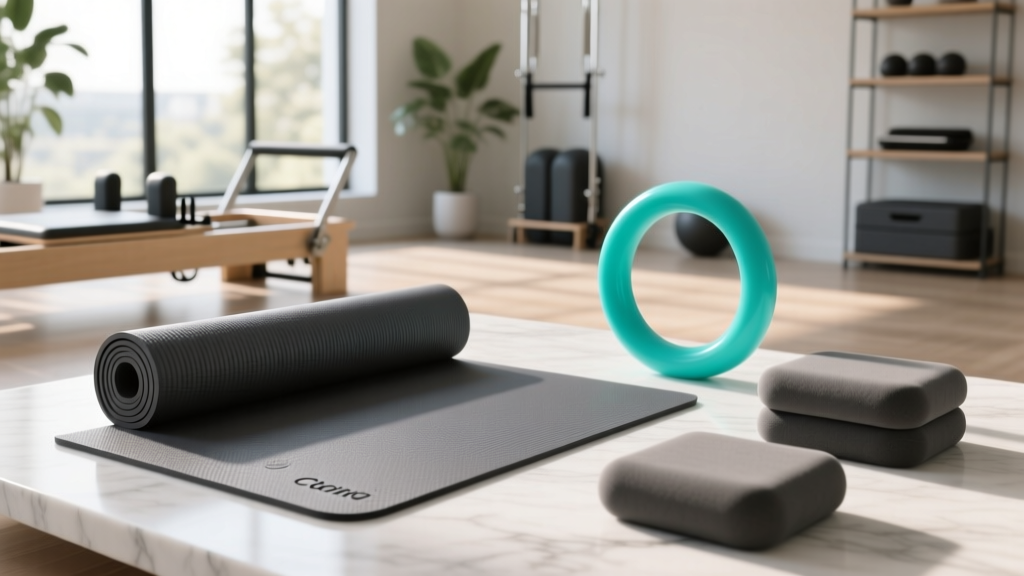
Best Jump Rope Types & Yoga Mat Alternatives (2026)
Compare speed, weighted, and beaded jump rope types. Discover the best yoga mat alternatives to protect joints and gear during high-impact cardio.

The Biomechanics of Jumping: Why Your Tool and Surface Matter
Jumping rope remains one of the most efficient cardiovascular and neuromuscular conditioning tools available. According to the American Heart Association, high-intensity interval training with a jump rope can burn upwards of 10 to 16 calories per minute, rivaling an 8-minute-per-mile run. However, the efficacy and safety of your jump rope workouts depend entirely on two critical variables: the specific type of rope you choose and the surface you jump on.
Far too many home-gym enthusiasts attempt to perform high-impact plyometrics on standard 5mm PVC or TPE yoga mats. This is a biomechanical error. Soft, compressible mats cause energy leaks, destabilize the ankle joint upon landing, and lead to premature tearing of the mat itself. To protect your Achilles tendons and your gear, you must upgrade your flooring. In this 2026 buying guide, we break down the exact specifications of speed, weighted, and beaded jump rope types, and pair them with the most effective yoga mat alternatives for high-impact training.
Decoding Jump Rope Types: Speed, Weighted, and Beaded
Choosing the right rope is not a one-size-fits-all decision. The diameter, core material, and handle mechanics dictate the rope's arc, rotation speed, and feedback loop. Here is the technical breakdown of the three primary categories.
1. Speed Ropes: The Double-Under Specialist
Speed ropes are engineered for minimal air resistance and maximum RPM (rotations per minute). They are the undisputed choice for CrossFit athletes, boxers, and anyone attempting double-unders or triple-unders.
- Material & Dimensions: Typically feature a 1.5mm to 2.5mm bare steel wire cable, sometimes coated in a thin layer of PVC to prevent rust and reduce whip-lash.
- Handle Mechanics: High-quality speed ropes utilize a 90-degree ball-bearing swivel joint where the cable meets the handle. This allows the cable to rotate freely without twisting the handle in your palm.
- Pricing (2026): $18 to $45 for premium models (e.g., Elite Sums, Rx Smart Gear).
- Best For: Advanced footwork, double-unders, and high-speed cardio intervals.
2. Weighted Ropes: Strength and Caloric Torque
Weighted ropes shift the stimulus from pure cardiovascular endurance to upper-body muscular endurance and shoulder stabilization. The added mass requires more torque to swing, engaging the lats, deltoids, and forearms.
- Material & Dimensions: Ranging from 1/4 lb to a massive 2 lbs, these ropes use thick polypropylene cores or dense PVC-coated steel. The thickness usually spans 4mm to 8mm.
- Handle Mechanics: Handles are often weighted themselves or designed with a thicker grip to accommodate the heavier cable drag. Swivels are less common; the rope usually turns on a fixed eyelet to handle the sheer stress of the weight.
- Pricing (2026): $40 to $150, with interchangeable cable systems (like CrossRopes) dominating the premium tier.
- Best For: Strength conditioning, grip endurance, and slow-paced power intervals.
3. Beaded Ropes: The Feedback and Durability Kings
Beaded ropes consist of 1-inch polyurethane or nylon beads strung over a braided nylon cord. They are the ultimate tool for beginners and freestyle trick jumpers due to their unparalleled tactile and auditory feedback.
- Material & Dimensions: The 1-inch segmented beads create a consistent 'click' sound every time the rope strikes the floor, allowing jumpers to time their jumps perfectly without looking down.
- Handle Mechanics: Simple, lightweight plastic or aluminum handles with a basic hole-and-knot tie-off system. No bearings required.
- Pricing (2026): $12 to $28. Highly affordable and easily customizable by removing or adding beads.
- Best For: Beginners learning timing, outdoor jumping on rough asphalt, and freestyle trick routines.
Comparison Matrix: Matching Rope Types to Fitness Goals
| Feature | Speed Rope | Weighted Rope | Beaded Rope |
|---|---|---|---|
| Cable Thickness | 1.5mm - 2.5mm | 4.0mm - 8.0mm | 1-inch Beads |
| Primary Stimulus | Fast-Twitch / Cardio | Muscular Endurance | Timing / Coordination |
| Surface Required | Smooth / Indoor | Any | Any (Highly Durable) |
| Lifespan | 6-12 Months | 1-3 Years | 2-5 Years |
| Avg. Cost | $25 | $95 | $18 |
The Best Yoga Mat Alternatives for Jump Rope Workouts
As noted by Mayo Clinic's guidelines on aerobic exercise, managing joint impact is crucial for long-term fitness longevity. Jumping generates ground reaction forces (GRF) equal to 2.5 to 3 times your body weight. A standard yoga mat bottoms out instantly under this load, transferring the shock directly to your shins and knees. Here are the top yoga mat alternatives engineered to absorb impact while providing a stable, snag-free surface for your rope.
1. High-Density EVA Foam Interlocking Tiles (3/8-inch)
EVA (Ethylene-Vinyl Acetate) foam tiles are the most common home-gym flooring alternative. For jump rope, you must avoid the cheap 1/2-inch puzzle mats found in big-box stores, as they are too soft. Instead, opt for 3/8-inch high-density martial arts tiles.
- Pros: Excellent shock absorption; modular and easy to store; protects bare steel speed ropes from fraying.
- Cons: The interlocking seams can catch beaded ropes during complex crossover tricks.
- Cost: $1.50 to $2.50 per square foot.
2. Vulcanized Rubber Horse Stall Mats (3/4-inch)
If you are using heavy weighted ropes or jumping in a garage gym, 3/4-inch vulcanized rubber stall mats are virtually indestructible. They will not tear, gouge, or compress under heavy loads.
- Pros: Ultimate durability; provides a perfectly flat, seamless surface for speed ropes; heavy enough to stay in place during aggressive footwork.
- Cons: Very low shock absorption. Expert Tip: Pair a stall mat with a plywood subfloor over a thin foam underlayment to create a spring-floor effect that saves your joints.
- Cost: $50 to $75 per 4x6 foot mat.
3. Dedicated TPE Jump Rope Mats
Brands have recognized the failure of standard yoga mats for jumping, leading to the creation of dedicated TPE (Thermoplastic Elastomer) jump mats. These are typically 6mm to 8mm thick, sized around 3x4 feet, and feature a high-friction bottom with a smooth, low-friction top.
- Pros: Specifically engineered for the strike zone of a jump rope; prevents rope abrasion; highly portable for outdoor or travel use.
- Cons: Smaller surface area limits lateral movement and wide stances.
- Cost: $60 to $90.
Pro-Tip for Sizing Your Rope: To measure your rope correctly, step on the center of the cable with one foot. For beginners, the handles should reach your armpits. For advanced speed work, the handles should reach your lower rib cage, creating a tighter, faster arc that requires less overhead clearance.
Real-World Failure Modes: What Ruins Your Gear?
Warning: Common Equipment Killers
- The Concrete Grinder: Using a bare steel speed rope on concrete or asphalt will strip the PVC coating and snap the wire at the swivel joint within 10 sessions. Always use a TPE mat or rubber stall mat outdoors.
- The Cold-Weather Shatter: Polyurethane beads on beaded ropes become brittle in temperatures below 40°F (4°C). If you are jumping outside in the winter, switch to a PVC-coated weighted rope to avoid shattering beads.
- The UV Degradation: Leaving weighted PVC ropes in direct sunlight causes the plasticizers to leach out, resulting in a stiff, cracked cable that will snap under the torque of a heavy swing.
Final Verdict: Building Your 2026 Cardio Station
To build a truly effective and joint-friendly home cardio station, you must view your rope and your floor as a single, integrated system. If your goal is elite conditioning and double-unders, invest in a 1.8mm steel speed rope and pair it with a dedicated TPE jump mat or 3/8-inch EVA tiles. If you want a full-body strength and cardio hybrid, a 1/2 lb weighted rope paired with a vulcanized rubber stall mat will give you the durability and feedback you need. Ditch the squishy yoga mat, respect the biomechanics of your joints, and elevate your jump rope training today.
More gear to consider
All reviews
Speed, Weighted, Beaded Jump Rope Setup & Jade Harmony Yoga Mat Sale

Jump Rope Types & Types of Yoga Mats: A Beginner's Guide

Beyond a Five Below Yoga Mat: Stability Ball vs BOSU 2026

Lululemon Reversible Yoga Mat & Pilates Accessories Longevity Guide
Match Your Cheetah Print Yoga Mat: Resistance Band Set Buying Guide