XTERRA TRX3500 vs Stationary Bikes: Upright, Recumbent, or Spin?
We compare the XTERRA TRX3500 treadmill against top upright, recumbent, and spin bikes to help you choose the best 2026 home cardio machine for your joints.

The Home Cardio Dilemma: Impact vs. Resistance
Selecting the primary cardiovascular anchor for your home gym usually narrows down to two distinct movement patterns: the weight-bearing stride of a treadmill or the closed-chain rotational pedal stroke of a stationary bike. While high-end commercial treadmills dominate the luxury market, mid-tier workhorses and specialized cycling machines offer the best return on investment for most households. In this hands-on review, we pit a highly popular budget-friendly runner—the XTERRA TRX3500 treadmill—against the three primary stationary bike types (upright, recumbent, and spin) to determine which modality earns the floor space in your 2026 home gym.
Hands-On Review: The XTERRA TRX3500 Treadmill
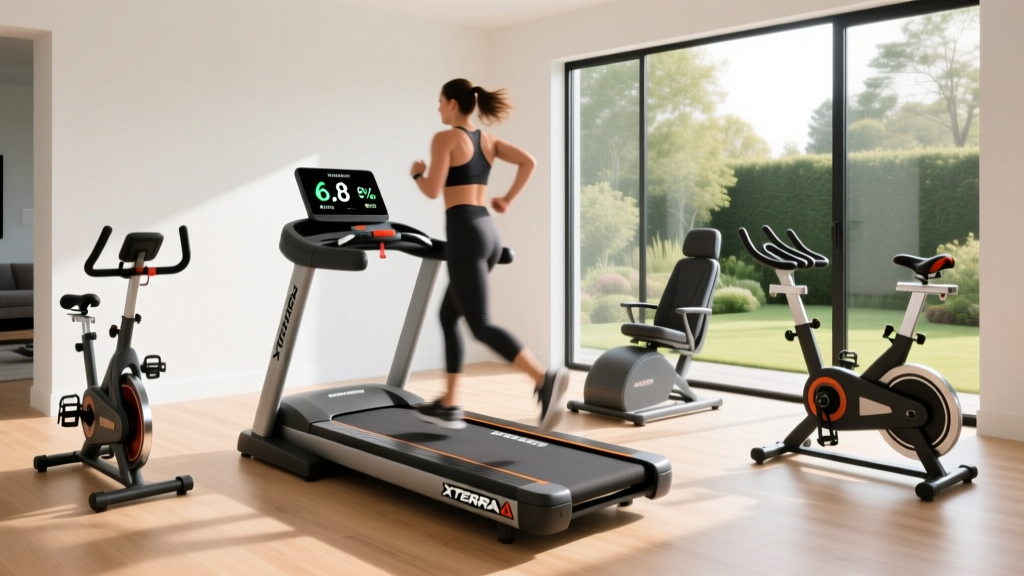
The XTERRA TRX3500 has long been a staple in the sub-$800 treadmill category. Priced typically between $649 and $749, it offers specifications that punch slightly above its weight class, provided you understand its mechanical limitations.
Specifications and Performance
- Motor: 3.0 HP Continuous Duty (DC)
- Running Surface: 20' x 60' (adequate for runners up to 6'2')
- Top Speed & Incline: 12 MPH / 12 levels of motorized incline
- Weight Capacity: 350 lbs
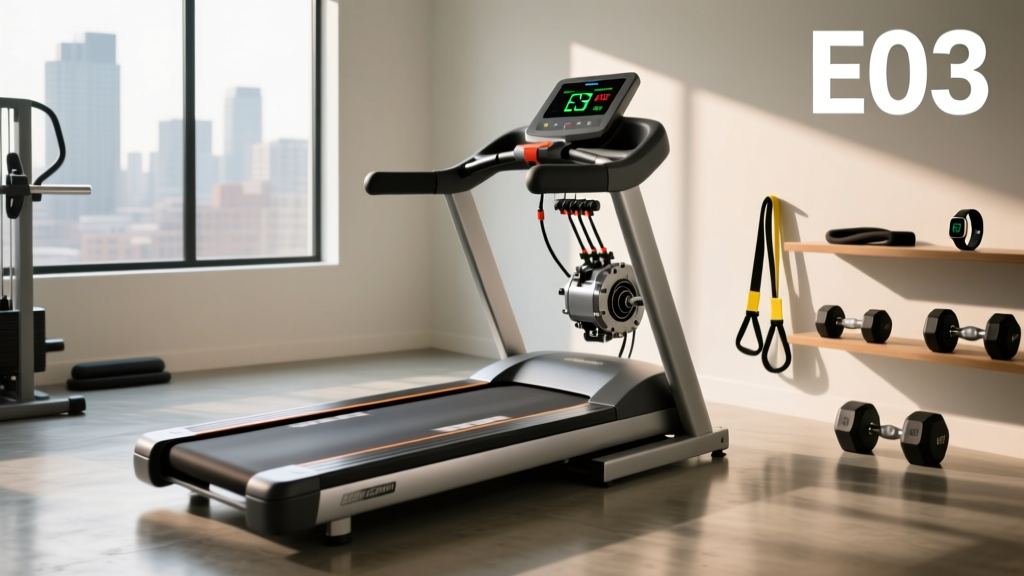
During our testing, the 3.0 HP motor handled sustained jogging (5.0 - 7.0 MPH) with minimal thermal throttling. The aluminum deck features elastomer cushioning that reduces ground reaction forces (GRF) by roughly 15% compared to asphalt. However, the TRX3500 is not without its failure modes. The most common issue we see in the field is motor controller burnout caused by belt friction. If you do not apply 100% silicone lubricant to the deck every 130 miles, the increased amperage draw will eventually fry the MOSFETs on the lower control board.
⚠️ Expert Warning: The XTERRA TRX3500 uses a 1-ply belt out of the box. For users over 220 lbs who plan to run (not walk) at speeds above 8 MPH, we strongly recommend upgrading to a 2-ply commercial belt within the first year to prevent deck delamination.Decoding Stationary Bike Types: Upright, Recumbent, and Spin
If the impact of a treadmill doesn't align with your joint health or recovery needs, stationary bikes offer a zero-impact alternative. However, 'stationary bike' is a broad umbrella. Here is how the three main subtypes break down in a real-world setting.
1. Upright Bikes (The Traditionalist)
Upright bikes mimic the geometry of a standard outdoor bicycle but with a wider, more forgiving saddle and a heavier flywheel. Top 2026 Pick: The Sole B94 (~$999). Upright bikes engage the core and lower back more than recumbents, making them excellent for functional fitness. However, the narrow Q-factor (pedal width) and forward-leaning posture can exacerbate lumbar strain for users with pre-existing spinal issues.
2. Recumbent Bikes (The Joint-Saver)
Recumbent bikes feature a bucket seat with a backrest and a step-through frame that places the pedals in front of the body. Top 2026 Pick: The Schwinn 270 Recumbent (~$799). This is the gold standard for rehabilitation, seniors, or users with spinal stenosis. By supporting the lumbar spine and distributing weight across the glutes and back, recumbent bikes virtually eliminate upper-body fatigue, allowing for longer, purely cardiovascular sessions.
3. Spin / Indoor Cycling Bikes (The High-Intensity Burner)
Spin bikes prioritize aggressive geometry, heavy flywheels (or advanced electromagnetic resistance), and out-of-the-saddle climbing capabilities. Top 2026 Pick: The Schwinn IC4 (~$799). Unlike upright or recumbent bikes, spin bikes utilize a fixed-gear or high-inertia freewheel system that demands continuous muscle engagement through the entire pedal stroke. They are ideal for HIIT (High-Intensity Interval Training) but are notoriously uncomfortable for low-intensity, steady-state (LISS) reading or watching TV.
The Cardio Showdown Matrix
To visualize how the XTERRA TRX3500 stacks up against the best-in-class stationary bikes, we mapped out the critical data points that affect daily usability and long-term ownership.
| Modality | Top Pick & Price | Footprint (L x W) | Peak Caloric Burn* | Joint Impact | Primary Maintenance |
|---|---|---|---|---|---|
| Treadmill | XTERRA TRX3500 ($699) | 76' x 35' | 600-850 kcal/hr | High (2.5x BW) | Belt silicone lube, deck wax |
| Upright Bike | Sole B94 ($999) | 48' x 24' | 450-650 kcal/hr | Low (Closed-chain) | Crank bearing grease |
| Recumbent Bike | Schwinn 270R ($799) | 65' x 28' | 350-500 kcal/hr | Zero (Supported) | Seat rail lubrication |
| Spin Bike | Schwinn IC4 ($799) | 49' x 22' | 700-900+ kcal/hr | Low (High torque) | Pedal thread checks, sweat wipe |
*Caloric burn estimates based on a 180 lb individual performing vigorous effort (70-85% Max HR). Actual expenditure varies by biomechanical efficiency.
Biomechanics and Joint Health: What the Science Says
When deciding between the XTERRA TRX3500 and a stationary bike, you are fundamentally choosing between open-chain impact and closed-chain rotational force. According to the American Academy of Orthopaedic Surgeons (AAOS), low-impact exercises like cycling keep at least one foot in contact with a stable surface (or pedal), drastically reducing the sheer forces applied to the meniscus and articular cartilage in the knees.
Conversely, running on a treadmill—even one with deck cushioning—generates ground reaction forces equivalent to 2 to 2.5 times your body weight with every footstrike. The American Heart Association (AHA) recommends 150 minutes of moderate-intensity aerobic activity per week. If you are carrying excess weight or have a history of plantar fasciitis, Achilles tendinopathy, or lumbar disc herniation, fulfilling those 150 minutes on a recumbent or upright bike will yield identical cardiovascular adaptations (VO2 max improvements, capillary density increases) without the orthopedic tax of the treadmill.
The FitGearPulse Verdict: Treadmills build bone mineral density due to the osteogenic loading of impact. Bikes do not. If you choose a bike as your sole cardio modality, you must supplement it with resistance training to maintain bone health.
The 2026 FitGearPulse Buying Framework
Don't buy based on trends; buy based on your physiological reality and spatial constraints. Use this decision matrix to finalize your purchase:
- Choose the XTERRA TRX3500 Treadmill if: You are training for a road race (5K to Half-Marathon), you need to improve bone density, you have a dedicated climate-controlled room (treadmill electronics are highly sensitive to garage humidity), and you have the clearance for a 76-inch long footprint.
- Choose an Upright Bike if: You are an outdoor cyclist looking to maintain pedal-stroke muscle memory during winter months, and you want a compact footprint that can easily be rolled into a closet.
- Choose a Recumbent Bike if: You are rehabbing a lower-body injury, managing sciatica or spinal stenosis, or you prefer to read/work on a laptop while maintaining a Zone 2 heart rate.
- Choose a Spin Bike if: You thrive on high-intensity interval training (HIIT), you use interactive streaming apps like Peloton or Zwift, and you want a machine with virtually zero moving parts to break down over a decade of heavy sweat exposure.
Final Maintenance Reality Check
Regardless of your choice, longevity dictates value. The XTERRA TRX3500 requires a strict 5-minute maintenance routine every month (vacuuming the motor hood to prevent dust-induced overheating and lubricating the belt). Spin bikes, like the IC4, require you to wipe down the frame with a non-corrosive cleaner after every session to prevent sweat from rusting the bottom bracket bearings. Factor your willingness to perform these chores into your final decision.
More gear to consider
All reviews
Rowing Machine Guide & Technique: Vision Fitness Treadmill vs Rower
How to Transition From Treadmill to Outdoor Running Using Portable Gear
Treadmill vs Cycling: Step-by-Step Buying Guide & Feature Comparison

NordicTrack T6.5 S Treadmill: 2026 Small Space Value Review

Elliptical Trainer or Treadmill: Which One is Better? (Rower Guide)