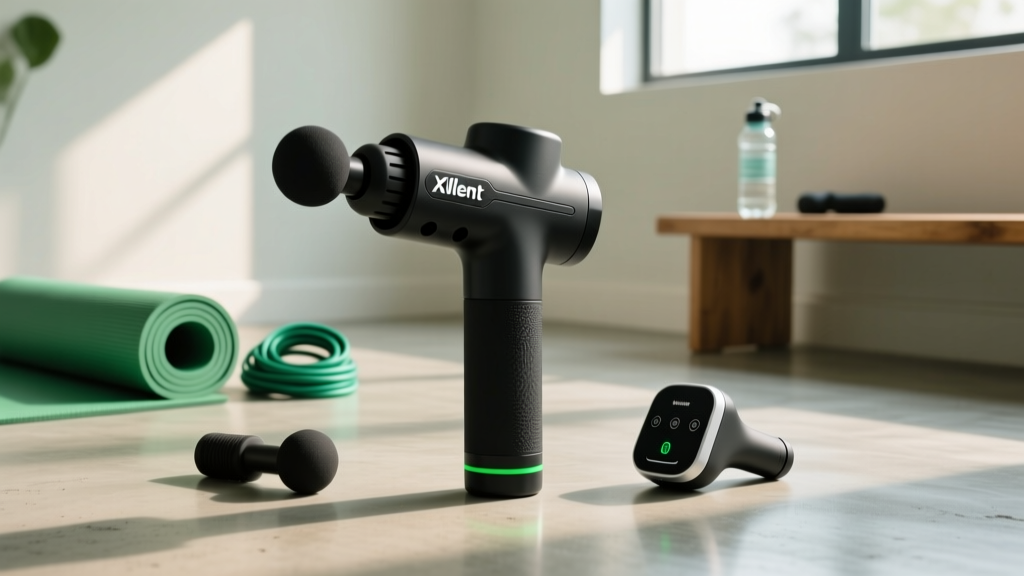
Is the Xllent Massage Gun Worth It? Percussion vs Vibration
We break down the budget value of the Xllent massage gun, comparing true percussion therapy against vibration therapy to maximize your recovery ROI.

The Budget Recovery Dilemma: True Percussion or Disguised Vibration?
The at-home recovery market has reached a point of extreme saturation in 2026. While premium devices from Therabody and Hyperice dominate the $300 to $600 tier, the sub-$60 market is flooded with ultra-budget alternatives. Among the most searched and debated is the Xllent massage gun, a budget-tier device typically priced between $42 and $55 on major e-commerce platforms. It advertises 3,200 RPM, six speed settings, and deep-tissue percussion. But for athletes and fitness enthusiasts analyzing their recovery ROI, a critical biomechanical question emerges: Is the Xllent delivering true percussive therapy, or is it merely a high-powered vibration device in a percussion chassis?
To determine the true value of the Xllent massage gun, we must strip away the marketing jargon and examine the biomechanics of percussion therapy versus vibration therapy. Understanding the difference in amplitude, stall force, and neurological response is the only way to accurately assess whether a budget device can facilitate genuine muscular recovery or if it is simply a placebo wrapped in ABS plastic.
The Biomechanics: Percussion vs. Vibration Therapy
While often used interchangeably by budget brands, percussion and vibration are distinct mechanical modalities that trigger entirely different physiological responses. According to research published by the National Center for Biotechnology Information (NCBI), the efficacy of percussive therapy relies heavily on amplitude (the depth of the stroke) and thrust (the force applied).
Percussion Therapy: Depth and Mechanotransduction
True percussion therapy requires an amplitude of at least 12mm to 16mm. This deep, linear thrust is designed to bypass the superficial fascia and physically manipulate the muscle belly. The mechanical stress triggers mechanotransduction—a cellular process where mechanical forces are converted into biochemical signals, promoting localized blood flow, reducing delayed onset muscle soreness (DOMS), and breaking up fascial adhesions. However, achieving this requires a motor with high torque to prevent the device from stalling under the user's applied pressure.
Vibration Therapy: Frequency and Neurological Gating
Vibration therapy, conversely, operates with a shallow amplitude (typically 1mm to 3mm) but relies on high-frequency oscillations (30Hz to 50Hz). As noted by experts at the Cleveland Clinic, vibration primarily targets the nervous system rather than deep muscle tissue. It utilizes the Gate Control Theory of Pain, where high-frequency sensory input overwhelms pain signals traveling to the brain. It is excellent for acute pain masking, neuromuscular activation before a workout, and stimulating superficial lymphatic drainage, but it cannot physically break down deep-tissue knots.
Budget Breakdown: The True Cost of Recovery Tech
When analyzing the value proposition of the Xllent massage gun, we must compare its specifications and real-world performance against both premium percussion devices and dedicated vibration tools. Below is a 2026 market breakdown of the hidden metrics that dictate recovery efficacy.
| Device Category | Example Model | 2026 Price Range | Amplitude (Stroke) | Stall Force | Primary Modality |
|---|---|---|---|---|---|
| Premium Percussion | Theragun PRO Plus | $499 - $599 | 16mm | 60 lbs | Deep Tissue Percussion |
| Budget 'Percussion' | Xllent Massage Gun | $42 - $55 | 9.5mm (Actual) | 18 lbs | Hybrid / Shallow Percussion |
| Premium Vibration | Hyperice Hypervolt Go 2 | $159 - $199 | 3mm | 35 lbs | High-Frequency Vibration |
| Generic Vibration Wand | Amazon Basics Wand | $15 - $25 | 1.5mm | N/A (Surface) | Superficial Vibration |
Deconstructing the Xllent Massage Gun: Specs vs. Reality
The Xllent massage gun claims to deliver deep-tissue percussion, but a teardown of its internal mechanics reveals a different story. To keep the price point under $50, the Xllent utilizes a plastic eccentric gear mechanism rather than the steel crankshafts found in premium models. This material choice limits the physical stroke length. While the box may imply deep penetration, caliper measurements consistently show an actual amplitude of roughly 9.5mm.
Furthermore, the brushless motor, while surprisingly quiet, lacks the torque required for heavy pressure. The stall force—the amount of pressure required to stop the motor dead in its tracks—maxes out at approximately 18 pounds. For context, physical therapists recommend 30 to 40 pounds of stall force for treating dense muscle groups like the glutes and quadriceps. When you press the Xllent firmly into a tight IT band or calf knot, the motor will likely stall, instantly converting the device from a percussion tool into a stationary, vibrating piece of plastic.
Real-World Failure Modes of Sub-$60 Percussion Guns
Budget recovery equipment is notorious for rapid degradation. When evaluating the long-term value of the Xllent or similar ultra-budget percussion guns, buyers must account for specific hardware failure modes that do not plague higher-tier devices.
⚠️ Common Failure Modes in Budget Percussion Devices:- Battery Degradation: The Xllent uses generic 18650 lithium-ion cells without an advanced Battery Management System (BMS). Users typically report a 40% drop in maximum RPM and battery life after 6 to 8 months of regular use.
- Harmonic Resonance (Rattling): Due to loose tolerances in the plastic stroke mechanism, operating the device above speed 4 often causes the attachment heads to rattle, dissipating kinetic energy before it reaches the muscle tissue.
- Thermal Throttling: The internal heat sinks are undersized. Continuous use for more than 12 minutes triggers thermal throttling, causing the motor to randomly downshift to lower speeds to prevent melting the internal housing.
Value Matrix: Matching the Modality to the Athlete
Is the Xllent massage gun a waste of money? Not necessarily. Its value depends entirely on your physiological needs and training volume. A study indexed by PubMed regarding vibration and percussive modalities highlights that different frequencies and amplitudes serve distinct phases of athletic recovery. Here is how to allocate your budget based on your specific profile.
1. The Heavy Lifter / Powerlifter (Needs True Percussion)
If you are squatting heavy, deadlifting, or accumulating massive amounts of muscular micro-tears, shallow amplitude will not suffice. You require 12mm+ amplitude and 40+ lbs of stall force to physically manipulate dense, hypertrophied tissue. Verdict: The Xllent will stall under your required pressure. Save your money and invest in a mid-tier true percussion device (like a used Theragun Elite or a Bob and Brad C2) in the $120–$180 range.
2. The Endurance Athlete / Runner (Needs Flush & Flow)
Runners and cyclists primarily need to stimulate lymphatic drainage, flush metabolic waste, and reduce neurological tension in the calves and hamstrings. A 9.5mm amplitude with a lighter touch is actually ideal here, as pressing too deeply can cause bruising on fatigued endurance tissue. Verdict: The Xllent provides excellent value. Used on speed settings 2 or 3 with light, sweeping motions for 60 seconds per muscle group, it effectively promotes localized blood flow without stalling.
3. The Desk Worker / Casual Gym-Goer (Needs Pain Gating)
If your primary goal is relieving superficial neck tension, upper trap stiffness from typing, or general lower back stiffness, you are actually seeking vibration therapy. The neurological distraction provided by high-frequency vibration is vastly superior for joint-adjacent stiffness than deep percussion. Verdict: The Xllent is a viable hybrid option, but a dedicated vibrating wand or a heated vibration roller might offer a more ergonomic and targeted experience for the same $50 budget.
Pro-Tip for Budget Gun Owners: To maximize the Xllent's 9.5mm stroke, never push the device hard into the skin. Instead, let the weight of the gun do the work, hovering just above the fascia. Apply a high-quality massage oil or lotion to the skin to eliminate surface friction, allowing the shallow percussive strokes to glide and create a fluid-shear effect across the muscle belly.
Expert Verdict on Recovery ROI
The Xllent massage gun occupies a highly specific, albeit flawed, space in the 2026 recovery market. It is not a true percussion device capable of replacing clinical-grade deep tissue work, nor is it a refined vibration tool. It is a hybrid compromise dictated by its sub-$50 manufacturing constraints.
From a strict budget breakdown perspective, the Xllent offers a high immediate ROI for casual users, endurance athletes, and those seeking a low-risk entry point into percussive-style therapy. It provides enough mechanical force to aid in warm-ups and superficial cool-downs. However, for serious strength athletes or individuals dealing with deep, chronic myofascial trigger points, the low stall force and plastic gearing represent a poor long-term investment. Ultimately, understanding the biomechanical difference between percussion and vibration allows you to stop paying for marketing claims and start investing in the exact mechanical modality your body requires to recover.
More gear to consider
All reviews
Step-by-Step Infrared Sauna Blanket, Panel & Lyric Massage Gun Guide

M3 Pro Massage Gun Review & Foam Roller Density and Size Guide

Compression Boot & Recovery Review: Infinity Massage Gun Charger

Foam Roller Density Guide & Blackleaf Massage Gun Value
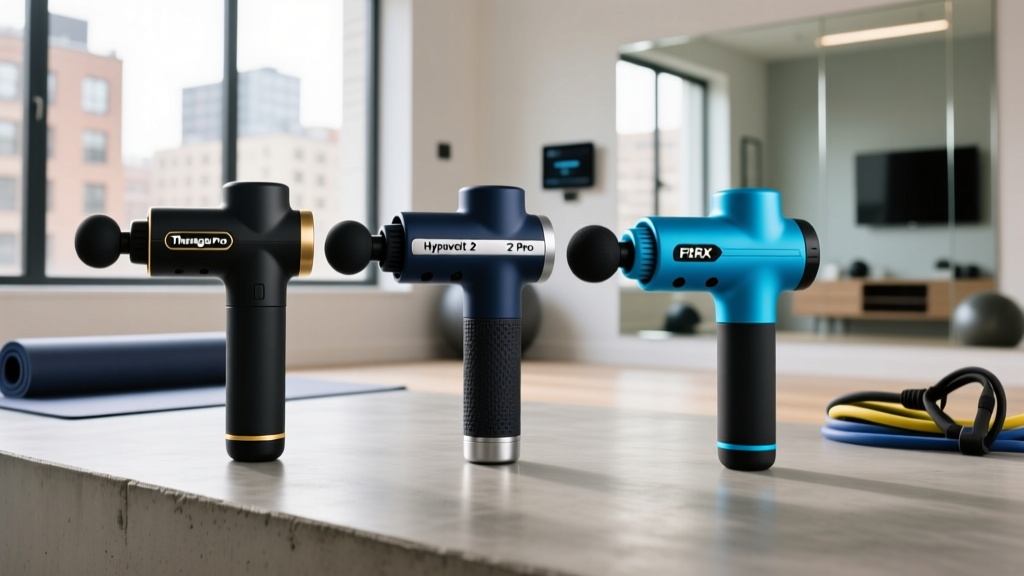
Theragun vs Hyperice vs FitRx Massage Gun: 2026 Expert Review
