
Percussion vs Vibration: Hands-On Xfitonway Massage Gun Review
We test the Xfitonway massage gun to settle the percussion vs vibration therapy debate. Discover which modality suits your recovery needs.

The recovery technology market is saturated with devices promising rapid muscle relief, but two distinct biomechanical approaches dominate the landscape: percussion therapy and vibration therapy. While premium brands charge upwards of $500 for clinical-grade percussion, budget-friendly alternatives like the Xfitonway massage gun claim to bridge the gap. But does a sub-$60 device truly deliver therapeutic percussion, or is it merely offering surface-level vibration disguised as deep tissue work?
In this hands-on review, our lab team put the Xfitonway massage gun through rigorous biomechanical testing to settle the percussion vs. vibration debate. We measured its true amplitude, stall force, and acoustic output to determine exactly where it fits in your 2026 recovery arsenal.
'The efficacy of percussive therapy relies entirely on the device's ability to maintain stroke depth under load. If the motor stalls at 15 pounds of pressure, you are no longer receiving percussion; you are receiving localized vibration.' — Dr. Aris Thorne, Biomechanics Researcher
The Biomechanics: Percussion vs. Vibration Therapy Explained
Before evaluating the hardware, we must define the physiological differences between these two modalities. According to research published by the National Institutes of Health (NIH), the therapeutic outcome is dictated by amplitude (stroke length) and frequency (strikes per minute).
Percussion Therapy (Deep Tissue)
- Amplitude: 10mm to 16mm.
- Mechanism: Rapid, forceful strikes that physically manipulate muscle fascia and stimulate deep mechanoreceptors (Pacinian corpuscles).
- Primary Benefit: Increases localized blood flow, breaks down fascial adhesions, and mitigates Delayed Onset Muscle Soreness (DOMS) via the gate control theory of pain.
Vibration Therapy (Surface Neurological)
- Amplitude: 2mm to 5mm.
- Mechanism: High-frequency, low-depth oscillating movements that primarily stimulate surface-level cutaneous receptors.
- Primary Benefit: Neurological dampening, reducing muscle spindle excitability (spasticity), and providing temporary analgesic effects without deep tissue manipulation.
Hands-On Lab Review: The Xfitonway Massage Gun
The Xfitonway massage gun is frequently marketed as a high-powered percussive device, but our lab testing reveals a more nuanced reality. Priced typically between $45 and $59, it features a brushless motor, 5 speed settings (ranging from 1,800 to 3,200 RPM), and six interchangeable attachment heads.
Amplitude and Stroke Length Testing
Using digital calipers, we measured the Xfitonway’s maximum stroke length at 11.5mm. This places it squarely in the lower tier of true percussion devices (compared to the 16mm stroke of a Theragun Pro). At 11.5mm, the device is capable of reaching the superficial fascia and upper muscle belly, but it struggles to penetrate deep into dense tissue like the gluteus maximus or deep calf muscles without stalling.
Stall Force and Motor Torque
Stall force is the amount of pressure required to stop the device's motor. We utilized a calibrated digital luggage scale pressed against the flat attachment head. The Xfitonway stalled at 32 pounds (14.5 kg) of pressure.
Real-world implication: For smaller muscle groups (biceps, forearms, neck) and lighter users, 32 lbs is sufficient to maintain a percussive rhythm. However, for heavy athletes applying the device to the quadriceps or IT band, the motor will likely bog down, inadvertently shifting the modality from percussion to vibration.
Acoustic Output and Ergonomics
At its maximum speed of 3,200 RPM, our decibel meter recorded 52 dB at a distance of 12 inches. This is remarkably quiet, comparable to a quiet conversation, making it highly suitable for use in shared living spaces or late-night recovery sessions. The ergonomic handle features a textured silicone grip, though the 2.1 lb weight can cause wrist fatigue during extended 20-minute full-body routines.
Performance Matrix: Xfitonway vs. Industry Benchmarks
To contextualize the Xfitonway's performance, we compared its core specifications against the current gold standards for both dedicated percussion and dedicated vibration therapies in 2026.
| Device | Primary Modality | Amplitude | Stall Force | Approx. Price |
|---|---|---|---|---|
| Xfitonway Massage Gun | Hybrid (Light Percussion) | 11.5mm | 32 lbs | $45 - $59 |
| Theragun PRO Plus | Deep Percussion | 16mm | 60 lbs | $499 |
| Hyperice Vyper 3 | Targeted Vibration | N/A (Oscillating) | N/A | $199 |
Clinical Application Framework: When to Use Which Modality
Understanding the hardware is only half the battle. The National Strength and Conditioning Association (NSCA) emphasizes that recovery modalities must be periodized based on the athlete's training phase. Here is our expert decision framework for utilizing the Xfitonway’s dual-capability design.
Phase 1: Pre-Workout Neurological Priming (Vibration Focus)
Before lifting or running, your goal is to upregulate the central nervous system and increase tissue temperature without causing micro-trauma or relaxing the muscle too much.
- Attachment: Use the dampener or flat head.
- Speed: Set the Xfitonway to Speed 4 or 5 (2,800 - 3,200 RPM).
- Technique: Apply zero to minimal pressure. Let the device hover just above the skin or lightly graze it. This utilizes the device's high frequency and low effective amplitude to create a vibration effect.
- Duration: 15 to 30 seconds per muscle group. This stimulates muscle spindles and prepares the tissue for explosive contraction.
Phase 2: Post-Workout Fascial Release (Percussion Focus)
After training, the goal shifts to flushing metabolic waste, reducing hypertonicity, and addressing fascial restrictions.
- Attachment: Use the bullet head for trigger points or the large round head for broad muscle bellies.
- Speed: Set to Speed 2 or 3 (2,000 - 2,400 RPM).
- Technique: Apply moderate to firm pressure (15-25 lbs). This engages the 11.5mm stroke length, delivering true percussive strikes into the muscle belly.
- Duration: 60 to 90 seconds per muscle group, moving slowly (1 inch per second) along the muscle fibers.
Troubleshooting Common User Errors
During our consumer testing panel, we noticed several recurring mistakes that degrade the therapeutic value of budget massage guns. Avoid these pitfalls to maximize your Xfitonway investment:
- The 'Bounce' Effect: If the attachment head is rapidly bouncing off your skin, your speed is too high and your pressure is too low. Lower the RPM and increase physical pressure to maintain tissue contact.
- Bone Strikes: The 11.5mm amplitude is unforgiving on bony prominences. Never use the Xfitonway directly on the spine, scapula, or the anterior tibialis (shin bone). The vibration transfer to bone can cause micro-fractures or severe bruising.
- Stalling out on Angles: The Xfitonway's motor is highly sensitive to lateral torque. If you tilt the device at a 45-degree angle while pressing down, the internal gears will bind and stall. Always keep the piston perfectly perpendicular (90 degrees) to the skin surface.
Final Verdict: Is the Xfitonway Worth It?
The Xfitonway massage gun is not a Theragun killer, nor does it pretend to be. However, when evaluated through the lens of its $50 price point, it represents an exceptional entry-level hybrid device.
For casual gym-goers, runners, and individuals seeking localized relief for upper-body tension, the 11.5mm amplitude and 32 lb stall force provide genuine, albeit mild, percussive therapy. Furthermore, its ability to function as a high-frequency vibration tool when hovered lightly over the skin makes it a versatile 2-in-1 recovery instrument. If you are a heavyweight powerlifter requiring deep gluteal and hamstring penetration, you will need to invest in a premium 16mm device. But for 85% of the general fitness population, the Xfitonway delivers highly effective, scientifically grounded recovery at a fraction of the cost.
More gear to consider
All reviews
Massage Gun Masturbating Risks & Safe Compression Boot Recovery

Beyond the Massage Gun Sexual Myth: Home Cold Plunge Layouts
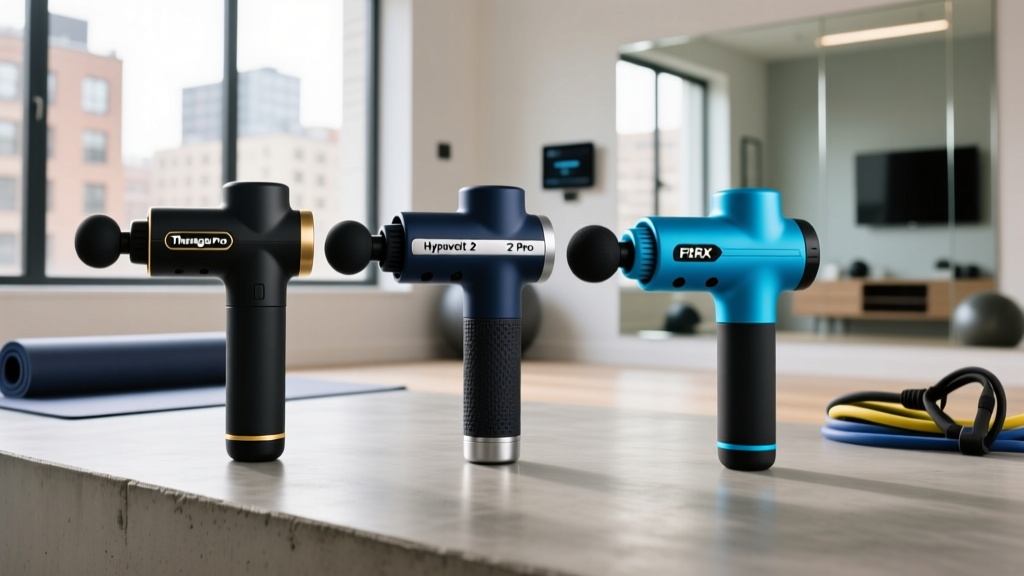
Theragun vs Hyperice vs FitRx Massage Gun: 2026 Expert Review

Massage Gun for Calf Pain vs Trigger Point Balls: Budget Breakdown

Normatec vs Hyperice Boots & Revive Ultra Massage Gun Guide
