EZ vs Straight Bar Care: Longevity & Dumbbell Curl Technique Form
Compare EZ and straight curl bars for longevity. Learn maintenance care, sleeve lubrication, and how dumbbell curl technique impacts bar wear.

The Transition: From Dumbbell Curl Technique to Barbell Torque
For many lifters, the journey to heavier bicep development begins with mastering the dumbbell curl technique. Dumbbells allow for natural wrist supination and independent arm stabilization, making them a staple in any hypertrophy program. However, as you progress and seek to overload the biceps and brachialis with heavier absolute loads, the transition to a barbell becomes inevitable. This is where the debate between the EZ curl bar and the straight barbell begins.
While most buying guides focus solely on joint angles and muscle activation, very few address the long-term maintenance, structural longevity, and care protocols required to keep these specialized bars in pristine condition. A barbell is a precision instrument. Whether you are using a fixed-wrist straight bar or an angled EZ bar, improper maintenance will lead to seized sleeves, degraded knurling, and permanent shaft deflection. In this guide, we break down the structural differences between EZ and straight curl bars, provide exact maintenance protocols, and explore how your foundational dumbbell curl technique influences equipment wear and tear.
Biomechanics & Wear: How Form Impacts Equipment Lifespan
When lifters transition from a strict dumbbell curl technique to a straight barbell, they often encounter medial elbow pain (golfer's elbow). The straight bar forces the wrists into full supination, placing immense torque on the forearm flexors and the medial epicondyle. To compensate, lifters often develop a 'cheat' curl, using momentum and asymmetric hip thrusts to move the weight.
This sloppy transition does more than just cause tendinopathy; it actively damages your equipment. Asymmetric loading and violent dropping of the barbell place uneven sheer forces on the bar's internal bushings and snap rings. The EZ curl bar was specifically engineered to mitigate this by offering semi-supinated grip angles (usually between 45 and 60 degrees), reducing joint strain and encouraging stricter, more controlled repetitions that ultimately reduce violent wear on the bar's sleeves.
'Proper joint mechanics don't just save your elbows; they save your gear. A controlled eccentric phase, a hallmark of good dumbbell curl technique, prevents the micro-fractures and snap-ring failures common in lifters who drop heavy straight bars onto steel J-cups.' - Biomechanics and Equipment Longevity Report, 2025
EZ Curl Bar vs. Straight Bar: Construction & Wear Profiles
To understand how to maintain your bar, you must understand how it is built. The straight curl bar is essentially a shortened, lighter Olympic barbell with a uniform shaft. The EZ bar features multiple bends, which introduces structural weak points and complicates the manufacturing process. Below is a comparison of three popular 2026 models to illustrate construction differences.
| Feature | Titan Fitness 47' EZ Curl Bar | Rogue Ohio Curl Bar (Straight) | Eleiko EZ Curl Bar (Premium) |
|---|---|---|---|
| Bar Type | Angled EZ | Straight | Angled EZ |
| Current Price (2026) | $129.99 | $235.00 | $415.00 |
| Shaft Material | Chrome-plated Steel | Bare Steel / Cerakote | Stainless Steel |
| Bushing/Bearing | Bronze Bushings | Bronze Bushings | Self-Lubricating Sintered |
| End Cap Style | Snap Ring | Bolt-on / Welded | Precision Pressed |
| Primary Failure Point | Snap ring dislodgement | Sleeve oxidation (if bare) | Knurling chalk buildup |
As noted by experts in BarBend's comprehensive barbell maintenance guide, the bends in an EZ bar make it more susceptible to permanent deformation if left loaded with heavy plates over long periods. Straight bars distribute weight evenly across a linear shaft, making them inherently more resistant to warping, provided the tensile strength exceeds 165,000 PSI.
Sleeve & Bushing Maintenance: Preventing Seizure
The most common failure mode for both EZ and straight curl bars is sleeve seizure. When chalk, sweat, and iron oxide penetrate the gap between the sleeve and the shaft, the bronze bushings grind to a halt. If you are used to the independent rotation of dumbbells during your dumbbell curl technique, a seized barbell sleeve will feel incredibly jarring and can lead to wrist sprains.
Step-by-Step Sleeve Lubrication Protocol
- Clear the Debris: Use a nylon bristle brush to sweep out the gap between the sleeve and the shaft. Never use a wire brush here, as it will scratch the shaft and create grooves where rust will permanently anchor.
- Apply the Correct Lubricant: Do NOT use WD-40. WD-40 is a solvent and water displacer, not a long-term lubricant. It will strip away existing factory grease. Instead, use a specialized barbell oil, 3-in-One oil, or a light synthetic 10W-30 motor oil.
- The Drop Method: Stand the bar vertically against a wall. Apply 3-4 drops of oil directly into the seam where the sleeve meets the shaft.
- Work the Sleeve: Spin the sleeve vigorously for 30 seconds. You should hear the oil working its way into the bushing. Wipe away any excess oil that seeps out with a microfiber cloth to prevent dust attraction.
- Frequency: Perform this every 3 to 4 months for home gyms, or monthly for commercial facilities.
Knurling Preservation: Chalk, Sweat, and Oxidation
The knurling on a curl bar is shallower than a power bar, designed for high-rep comfort rather than heavy deadlift grip. However, this shallower knurling is highly susceptible to clogging. When lifting chalk and acidic sweat pack into the knurling valleys, they create a poultice that accelerates oxidation, even on zinc-plated bars.
⚠️ Warning: Match Your Brush to Your Finish
Using the wrong brush will destroy your bar's protective coating in a single cleaning session.
- Bare Steel & Zinc: Use a brass wire brush. Brass is softer than steel, so it cleans the knurling without scratching the shaft.
- Cerakote & Stainless Steel: Use a stiff nylon brush. Wire brushes will strip Cerakote and leave unsightly grey streaks on stainless steel.
- Chrome: Use a nylon brush and a mild degreaser. Chrome flakes easily if scratched by metal bristles.
After every heavy arm session, take 30 seconds to brush the knurling and wipe the shaft with a microfiber towel lightly dampened with a 50/50 mix of water and white vinegar. This neutralizes the acidic pH of human sweat, which is the primary catalyst for rust formation. For deeper insights on protecting specialty finishes, the Rep Fitness barbell care guide offers excellent visual breakdowns of finish-specific maintenance.
Storage Deflection: The Silent Bar Killer
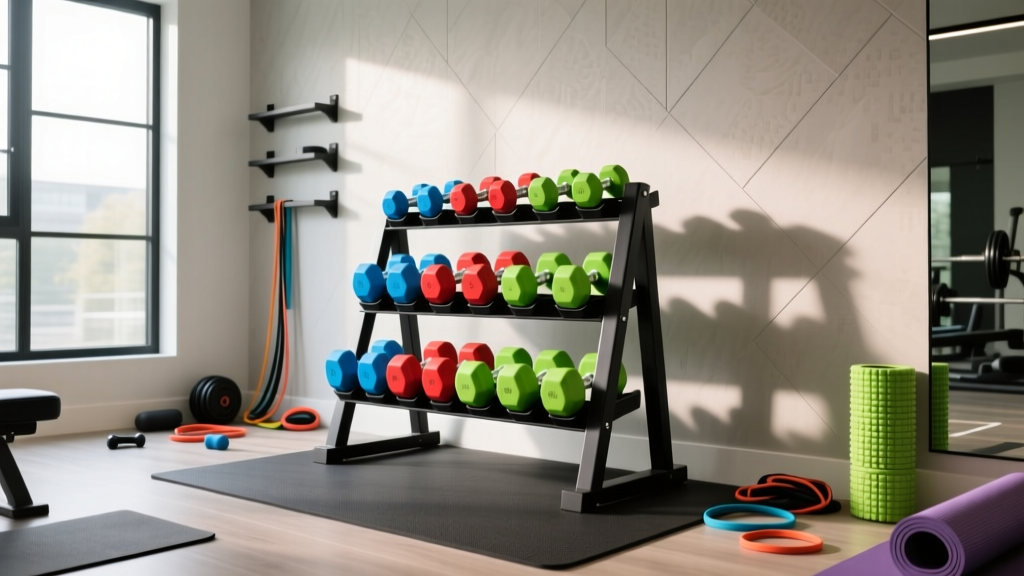
A major advantage of the dumbbell curl technique is that dumbbells are easily stored on a rack without risking shaft deformation. Barbells, however, are highly vulnerable to gravity when left loaded.
If you leave 45-pound plates on a standard 35-pound EZ curl bar and store it horizontally on a rack for several weeks, the bar will experience continuous downward deflection. Because many budget EZ bars (priced under $150) utilize lower-grade steel with tensile strengths around 130,000 to 150,000 PSI, this constant stress will cause permanent plastic deformation. The bar will literally bend in the middle, ruining the alignment of the angled grips.
The Rule of Thumb: Never store a loaded barbell. If you must leave it on a rack for a few hours, ensure it is a high-quality straight bar with a tensile strength of 190k PSI or higher. For EZ bars, always strip the plates and store them vertically in an A-frame barbell holder or horizontally on a dedicated multi-bar rack where the shaft is fully supported across its entire length.
Expert FAQ: Curl Bar Longevity
Can I drop an EZ curl bar like an Olympic barbell?
No. Most EZ bars, especially those utilizing snap-ring end caps, are not rated for dropping. The violent deceleration can cause the snap ring to dislodge, sending the sleeve and plates flying. Always lower the bar under control, a habit that translates perfectly from strict dumbbell curl technique.
Does Cerakote really prevent rust better than Zinc?
Yes. Cerakote is a ceramic-polymer coating that offers superior corrosion resistance compared to standard zinc plating. However, it is not impervious. If the coating is chipped or scratched down to the bare steel (often caused by improper brushing or dropping on steel J-cups), that specific spot will rust rapidly.
How do I fix a loose end cap on my straight curl bar?
If your straight bar features a bolt-on end cap (common on premium bars like Rogue or Eleiko), you can simply use an Allen wrench to tighten the bolt. If it uses a snap ring, you will need to purchase a replacement snap ring and use snap-ring pliers to reseat it. Never use a flathead screwdriver to pry a snap ring, as this will bend the ring and compromise its tension.
More gear to consider
All reviews
Master Oblique Side Bends with Dumbbells: Adjustable Set Comparison

Cast Iron vs Competition Kettlebells & Dumbbell Safety Rack Guide

Loadable Dumbbells for Single Arm Dumbbell Overhead & Small Gyms

Best Neoprene Sets to Curl 50 lb Dumbbells at Home (2026 Guide)

Olympic vs Standard Plates: Beyond the Dumbbell Hammer Curl GIF