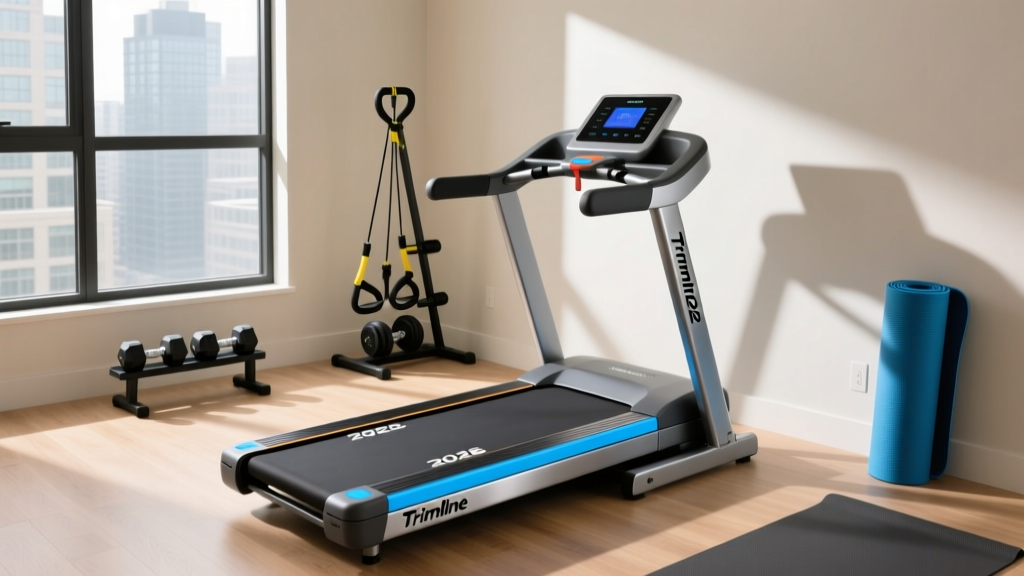
Why Are Treadmills So Expensive? Curved vs Motorized Guide
Discover why are treadmills so expensive with our beginner guide. Compare curved manual vs motorized models, costs, and biomechanics to choose wisely.

The Sticker Shock: Why Are Treadmills So Expensive?
If you have recently started shopping for home gym equipment, you have likely asked yourself: why are treadmills so expensive? It is a common point of frustration for beginners. You are essentially looking at a metal frame with a spinning belt, yet price tags routinely range from $1,500 to over $6,000. The reality is that modern cardio machines are complex pieces of engineering designed to absorb thousands of pounds of repetitive impact while maintaining precise biomechanical alignment.
When navigating the market, the biggest fork in the road is choosing between a curved manual treadmill and a traditional motorized treadmill. Both serve the purpose of indoor running and walking, but their engineering, cost structures, and physical demands are vastly different. This step-by-step guide will break down the mechanics, the true costs, and how to choose the right machine for your home gym in 2026.
Beginner's TL;DR: Motorized treadmills cost more due to high-torque continuous duty motors, electronic incline systems, and interactive touchscreens. Curved manual treadmills bypass motors entirely but require expensive aerospace-grade bearings, vulcanized rubber slat-belts, and heavy-duty tensioning systems to safely support self-powered sprinting.Step 1: Decode the Engineering (Where the Money Goes)
To understand the pricing, you must look under the hood. The cost disparity between budget and premium models—and between motorized and manual—comes down to the drive system and the running surface.
The Motorized Cost Factor
In a motorized treadmill, the most expensive component is the motor. Beginners often fall for the "Peak Horsepower" marketing trap. What you actually need to look for is Continuous Duty Horsepower (CHP). A reliable running treadmill requires a minimum of 3.0 CHP to prevent the motor from overheating during a 45-minute run. According to Consumer Reports, machines with under 2.5 CHP are strictly for walking and will burn out quickly if used for running. Add in a secondary motor for automated incline, a multi-ply belt, and shock-absorption elastomers, and the manufacturing costs add up quickly.
The Curved Manual Cost Factor
Curved treadmills have no motor, so why do models like the TrueForm Runner cost upwards of $5,495? The answer lies in the belt. Instead of a single loop of PVC, curved treadmills use a "slat belt" consisting of over 100 individual vulcanized rubber slats. These slats ride on precision ball bearings along a curved track. The engineering required to ensure these slats do not slip under the extreme torque of a sprinting athlete requires rigorous R&D and high-grade materials.
| Component | Motorized (e.g., Sole F80) | Curved Manual (e.g., AssaultRunner Elite) |
|---|---|---|
| Drive System | 3.5 CHP Motor & Drive Belt | 100+ Rubber Slats & Precision Bearings |
| Top Speed | 12 MPH (Motor-limited) | Unlimited (User-limited, 20+ MPH) |
| Power Requirement | 120V Dedicated Outlet | None (100% Self-powered) |
| Average 2026 Cost | $1,199 - $2,500 | $3,299 - $5,500+ |
Step 2: Analyze the Biomechanics & Calorie Burn
Your choice should not be based on price alone; it must align with how your body moves. The biomechanics of curved versus motorized treadmills are fundamentally different.
On a motorized treadmill, the belt pulls your foot backward. This encourages a heel-strike running pattern and relies heavily on your hip flexors. The machine sets the pace, meaning your cognitive load is lower—you can zone out, watch TV, and let the motor do the pacing work.
On a curved manual treadmill, you are the engine. To move the belt, you must push down and back with your midfoot or forefoot, actively engaging your glutes, hamstrings, and calves to pull the heavy slat belt around the curve. This results in a significantly higher metabolic demand. Studies published in sports science journals consistently show that running on a non-motorized curved treadmill can increase calorie expenditure by up to 30% compared to a motorized treadmill at the exact same speed.
"The curve of the treadmill naturally promotes a forefoot strike and forces the runner to maintain an upright posture with a slight forward lean. This mimics outdoor sprinting mechanics far better than a flat, motorized belt, making it an elite tool for athletic conditioning."
— Biomechanics Insight, Assault Fitness Performance Guidelines
Step 3: Map the Hidden Costs (Maintenance & Footprint)
When calculating why are treadmills so expensive, beginners often forget the long-term ownership costs. The maintenance profiles for these two machines are entirely different.
- Motorized Maintenance: You must lubricate the deck with 100% silicone oil every 3 months or 150 miles. Failure to do so creates friction, which forces the motor to draw excess amperage, eventually frying the motor control board (a $300+ replacement part). You also need to purchase a surge protector to protect the sensitive electronics from power spikes.
- Curved Manual Maintenance: There is no motor to burn out and no deck to lubricate. However, the slat belt requires periodic tensioning. If a slat cracks or a bearing seizes, replacing individual slats or the entire belt assembly can cost between $400 and $800. Furthermore, curved treadmills are incredibly heavy (the AssaultRunner Elite weighs 280 lbs) and lack folding mechanisms, requiring a permanent, dedicated footprint in your home.
Step 4: Match the Machine to Your Budget and Goals
Now that you understand the engineering and the hidden costs, it is time to match the machine to your specific fitness profile.
Who Should Buy a Motorized Treadmill?
If your primary goals are long-distance steady-state cardio, walking, incline hiking, or physical rehabilitation, a motorized treadmill is the superior choice. Machines like the Sole F80 (priced around $1,199) offer a 3.5 CHP motor, a 22" x 60" running surface, and motorized inclines up to 15%. The cushioning systems on premium motorized decks are also much more forgiving on the joints for older adults or those recovering from impact-related injuries.
Who Should Buy a Curved Manual Treadmill?
If you are an athlete focused on High-Intensity Interval Training (HIIT), sprint mechanics, CrossFit, or maximizing calorie burn in under 30 minutes, the curved manual treadmill is unmatched. Because there is no motor lag, you can transition from a dead stop to a full sprint in a single stride. The lack of electronic components also makes them ideal for garages or outdoor patios where dust, humidity, and temperature fluctuations would destroy a motorized treadmill's motherboard.
Step 5: Final Decision Framework
Follow this quick checklist before pulling out your credit card to ensure you are investing in the right equipment for your 2026 fitness journey:
- Check Your Space: Do you have a dedicated 3x7 foot space with a 120V outlet? If yes, motorized is viable. If you lack outlets or want to place the treadmill in a garage, go curved manual.
- Assess Your Joints: Do you have a history of shin splints or knee pain? The active pulling motion of a curved treadmill can aggravate tight Achilles tendons and calves. A well-cushioned motorized deck is safer for joint rehabilitation.
- Define Your Workouts: If your workouts consist of 5K to Marathon training plans where pacing is critical, a motorized treadmill's automated speed control is essential. If your workouts are 20-second sprint / 40-second rest intervals, the self-powered curve is vastly superior.
- Verify the Warranty: Because treadmills are expensive, never buy a machine with less than a lifetime warranty on the frame and at least a 3-year warranty on the motor/parts. Budget brands that offer only 1-year coverage are signaling that they expect the machine to fail shortly after purchase.
Ultimately, the reason treadmills carry a high price tag is that they must safely manage extreme kinetic energy. Whether you choose the high-tech electronics of a motorized model or the raw, mechanical brilliance of a curved slat-belt runner, investing in a premium machine ensures safety, longevity, and a better running experience.
More gear to consider
All reviews
How Long Walking on Treadmill to Lose Weight vs Stair Climbers

Elliptical vs Treadmill: 2026 Trends & Treadmill Pickup Near Me

How Many Miles on the Treadmill to Lose Weight? 2026 Cycling Trends
Cherokee D'Ass Treadmill Review & Office Care Guide

NordicTrack Commercial 2450 Treadmill: Setup & Feature Comparison