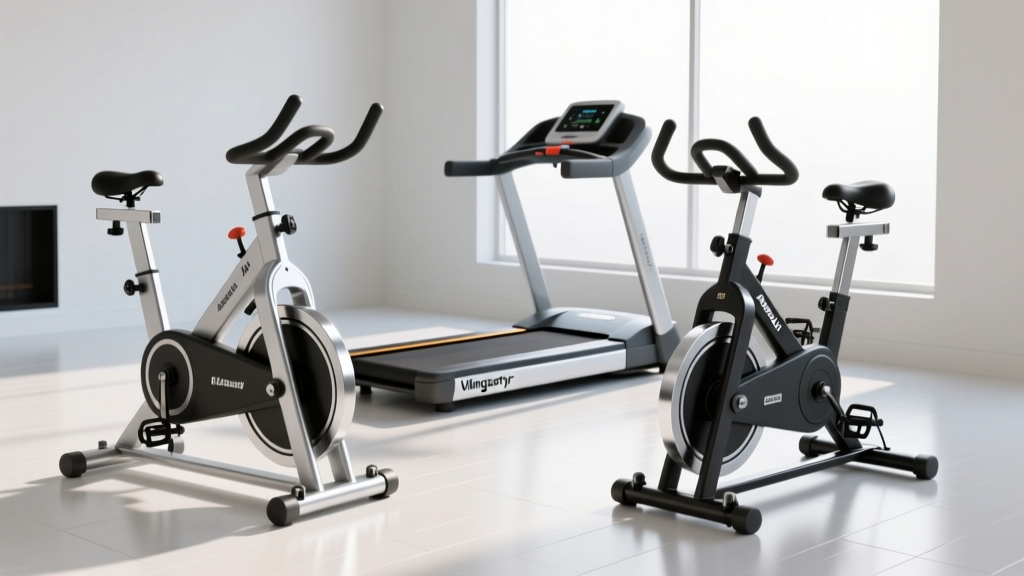
Weslo Treadmill Troubleshooting: Curved Manual vs Motorized Mistakes
Compare curved manual and motorized treadmills. Learn common mistakes and expert troubleshooting tips for your Weslo treadmill and manual runners.

As we navigate the home fitness landscape in 2026, buyers are increasingly caught in a polarizing debate: should you invest in a budget-friendly motorized machine like a Weslo treadmill, or splurge on a premium curved manual treadmill? Both serve the fundamental purpose of indoor cardio, but their biomechanical demands, mechanical failure points, and maintenance protocols are worlds apart. According to a biomechanical analysis published in the National Center for Biotechnology Information (NCBI), curved non-motorized treadmills alter stride mechanics and increase physiological demand by up to 30% compared to traditional motorized belts. However, this doesn't automatically make them the superior choice for every home gym.
This guide dissects the most common buyer mistakes when choosing between these two distinct cardio machines and provides an expert-level troubleshooting manual for when your equipment inevitably requires maintenance.
The Core Matrix: Curved Manual vs. Motorized (Weslo) Treadmills
Before troubleshooting, you must understand the mechanical architecture of your machine. Budget motorized treadmills rely on continuous duty horsepower (CHP) motors and friction-heavy PVC belts, while curved manual treadmills rely on user-generated kinetic energy, gravity-assisted curved decks, and vulcanized rubber slat belts.
| Feature | Budget Motorized (e.g., Weslo Cadence G 5.9i) | Curved Manual (e.g., TrueForm Trainer / AssaultRunner) |
|---|---|---|
| Drive System | 2.25 HP DC Motor (Belt-driven) | User-powered, gravity-assisted curved deck |
| Running Surface | Single-ply PVC/Nylon (16" x 50" typical) | Vulcanized rubber slats on UHMWPE rails |
| Average Price Range | $300 - $550 | $2,500 - $5,500 |
| Primary Maintenance | 100% Silicone lubrication, belt tensioning | Bearing checks, PTFE dry rail lubrication |
| Common Failure Mode | Motor control board overheating, belt slip | Slat bearing seizure, guide rail friction |
Top 3 Buyer Mistakes When Choosing Your Cardio Engine
Mistake 1: Underestimating the Physical Toll of a Curved Deck
Many runners purchase curved manual treadmills assuming they are 'easier' on the joints. While the slat belt provides excellent shock absorption, the curved architecture requires the user to actively pull the belt backward using their hamstrings and glutes. If you are recovering from a hamstring strain or primarily want a low-intensity walking pad for a standing desk, a curved manual treadmill is a costly biomechanical mistake. A motorized Weslo is vastly superior for passive walking and steady-state jogging.
Mistake 2: Expecting Commercial Motor Longevity from a Budget Weslo
The Weslo Cadence series is a staple in budget home gyms, but buyers frequently mistake 'Peak HP' for 'Continuous Duty HP' (CHP). A 2.25 HP motor on a sub-$500 treadmill is not designed to sustain a 200 lb runner at 7.5 mph for 60 minutes. Pushing a budget motorized treadmill beyond its thermal limits will rapidly degrade the motor windings and fry the motor control board (MCB).
Mistake 3: Ignoring Ceiling Height and Footprint Clearance
Curved treadmills sit significantly higher off the ground than flat motorized decks. A TrueForm Trainer adds roughly 8 to 10 inches of deck height at the apex of the curve. If your home gym is in a basement with a 7-foot ceiling, tall users will experience head-strike risks during sprint intervals. Always measure your ceiling clearance minus the user's height plus 10 inches before purchasing a curved manual model.
Expert Warning: Never use petroleum-based lubricants like WD-40 on ANY treadmill. On a motorized Weslo, it will dissolve the PVC belt backing and destroy the deck. On a curved manual treadmill, it will degrade the UHMWPE (Ultra-High-Molecular-Weight Polyethylene) guide rails, causing permanent slat-binding.Weslo Treadmill Troubleshooting: Motorized Issues & Fixes
Budget motorized treadmills share a universal DNA, often manufactured under the Icon Health & Fitness umbrella. According to diagnostic data from Fitness Repair Parts, 80% of motorized treadmill service calls stem from two highly fixable user-maintenance errors.
Issue 1: Belt Slippage, Jerking, and Hesitation
The Symptom: You are running at 5.0 mph, and the belt momentarily stops or 'jerks' under your foot, even though the motor continues to spin.
The Root Cause: The walking belt has stretched, or the deck lacks 100% silicone lubrication, creating excess friction that overpowers the motor's torque.
The Expert Fix:
- Unplug the treadmill from the wall.
- Locate the two rear roller adjustment bolts at the back of the machine.
- Using a 3/16-inch Allen wrench, turn both the left and right bolts clockwise by exactly one-quarter (1/4) turn.
- Plug the machine in and test at 3.0 mph. If slipping persists, repeat with another 1/4 turn.
- Crucial Step: Lift the edge of the belt. If the deck feels dry, apply 15ml of 100% pure silicone treadmill lubricant in a zig-zag pattern across the deck. Over-tightening a dry belt will snap the drive belt or burn out the motor.
Issue 2: The Dreaded E1 or E2 Error Code
The Symptom: The console powers on, but the moment you press 'Start', the belt twitches and the screen flashes an E1 or E2 error code.
The Root Cause: The console is not receiving a signal from the speed sensor, or the motor is drawing too many amps due to a seized roller bearing.
The Expert Fix:
- Remove the motor hood (usually 4 to 6 Phillips head screws).
- Locate the speed sensor (a small black plastic piece with a wire) pointing at the front roller.
- Check the magnet on the front roller pulley. Ensure the gap between the magnet and the sensor is exactly 1/8 to 1/4 inch. If it has vibrated out of place, loosen the sensor bracket, realign it, and retighten.
- If the alignment is correct, use a multimeter to test the reed switch for continuity. If dead, order a replacement speed sensor (typically under $15).
Curved Manual Treadmill Troubleshooting & Maintenance
Curved treadmills eliminate the motor and electronic board, but they introduce complex mechanical friction points. As highlighted in Consumer Reports' treadmill buying and maintenance guides, manual machines require strict adherence to rail and bearing maintenance to preserve their premium price tag.
Issue 1: Slat Belt Squeaking or 'Sticking' on the Apex
The Symptom: A rhythmic squeaking noise, or a feeling of 'dead spots' where the belt resists your footstrike at the top of the curve.
The Root Cause: Dust and microscopic rubber debris have accumulated on the UHMWPE guide rails, or the internal bearings inside the rubber slats have dried out.
The Expert Fix:
- Wipe down the entire length of the left and right plastic guide rails with isopropyl alcohol and a microfiber cloth to strip away oxidized rubber dust.
- Apply a specialized PTFE (Teflon) dry lubricant spray directly to the rails. Dry lube is mandatory; wet lubes will attract dust and create a grinding paste.
- Manually rotate the belt and apply a single drop of lithium grease to the exposed slat bearing pins if your specific model (like older AssaultRunner generations) features serviceable external pins.
Issue 2: Asymmetrical Belt Drifting
The Symptom: The slat belt slowly drifts to the left or right, eventually rubbing against the side frame and shaving rubber off the slats.
The Root Cause: Uneven tension on the rear axle, or a user biomechanical imbalance (e.g., consistently pushing harder off the right leg).
The Expert Fix: Locate the tensioning bolts on the rear axle. If the belt is drifting to the left, tighten the left adjustment bolt by 1/4 turn, or loosen the right bolt by 1/4 turn. Make micro-adjustments and walk on the belt at a slow pace to allow the heavy rubber slats to self-center.
Expert Verdict: Matching the Machine to Your Biomechanics
The decision between a curved manual treadmill and a motorized Weslo ultimately hinges on your training intent, budget, and willingness to perform mechanical maintenance.
'If your goal is high-intensity interval training (HIIT), sprint mechanics, and maximizing caloric expenditure without being tethered to a motor's speed limits, the curved manual treadmill is an unparalleled biomechanical tool. However, if you require programmed inclines, long slow-distance (LSD) pacing, or a budget-friendly walking pad for daily step goals, a motorized Weslo remains the most pragmatic, cost-effective choice.'
By avoiding the common purchasing mistakes outlined above and adhering to the precise troubleshooting protocols—whether you are tensioning a PVC belt with an Allen wrench or applying PTFE to a curved UHMWPE rail—you can extend the lifespan of your cardio equipment well past its factory warranty.
More gear to consider
All reviews
Stationary Bike Types: Budgeting to Improve Treadmill Times (2026)
NordicTrack X24 Treadmill Review: Belt Maintenance Market Trends
Treadmill Belt Maintenance to Delay Donation Pick Up
Plae Treadmill Showdown: Curved Manual vs Motorized
Matrix Ultimate Deck Treadmill vs. Top Cardio Machines: Noise Guide