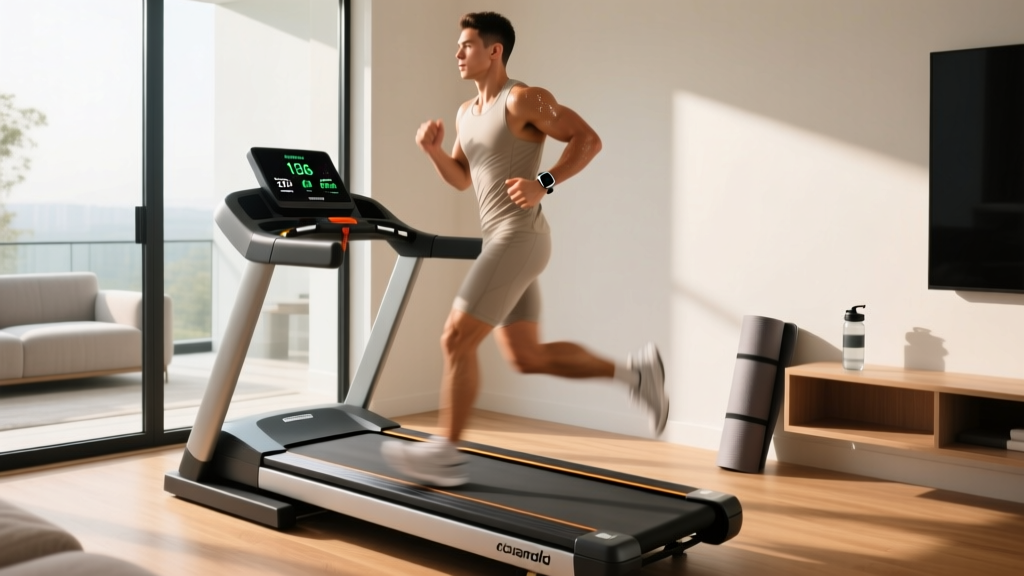
Walking Pad vs Treadmill: Are Treadmills Bad for You?
We answer 'are treadmills bad for you' by comparing joint impact, biomechanics, and specs of top 2026 walking pads vs traditional treadmills.

The Biomechanics Debate: Are Treadmills Bad for Your Joints?
As home fitness setups evolve in 2026, the rise of the under-desk walking pad has sparked a renewed debate in the physical therapy and sports science communities: are treadmills bad for you? The short answer is no, but the nuanced truth depends entirely on the machine's deck construction, your biomechanics, and how you use the equipment. Traditional treadmills and modern walking pads serve vastly different physiological purposes, and treating them as interchangeable is a primary cause of user discomfort and joint strain.
Expert Insight: The phrase 'treadmills are bad for your knees' usually stems from improper use—such as holding onto the handrails, which alters pelvic tilt—or using ultra-thin, non-cushioned walking pads for prolonged, high-mileage sessions. Ground Reaction Forces (GRF) must be properly dispersed to protect cartilage.According to the American Council on Exercise (ACE), treadmill belts assist with leg pullback, slightly reducing hamstring activation compared to overground walking. However, when paired with proper shock absorption, this assisted pullback can actually reduce the braking forces applied to the knee and ankle joints, making high-quality treadmills exceptionally safe for joint health.
2026 Comparison Matrix: Walking Pads vs. Traditional Treadmills
To understand the physical impact on your body, we must look at the hardware. Below is a direct comparison of the structural differences between a heavy-duty traditional treadmill, a standard compact walking pad, and a dedicated under-desk office treadmill.
| Feature | Traditional Treadmill (e.g., Sole F85) | Compact Walking Pad (e.g., WalkingPad R2) | Under-Desk Treadmill (e.g., LifeSpan TR1200) |
|---|---|---|---|
| Deck Dimensions | 22" x 60" | 17" x 47" | 20" x 50" |
| Shock Absorption | High (Elastomer cushions) | None (Rigid MDF/Steel base) | Medium (Compression shocks) |
| Motor Type | 4.0 CHP | 2.5 HP (Peak) | 2.5 HP Continuous |
| Incline Capability | 0% - 15% | 0% (Flat only) | 0% (Flat only) |
| Price Range (2026) | $1,500 - $2,500 | $300 - $600 | $800 - $1,500 |
Joint Impact Analysis: Cushioning vs. Flat Boards
When users ask if treadmills cause joint pain, they are often unknowingly criticizing the lack of cushioning on budget-friendly walking pads. A traditional treadmill deck is constructed from layered plywood or composite materials, suspended above a steel frame by elastomer rubber cushions. These cushions compress upon foot strike, reducing peak impact forces by up to 30% compared to walking on asphalt or concrete.
The Walking Pad Problem: Rigid Decks and Stride Restriction
Most sub-$500 walking pads utilize a thin layer of MDF (medium-density fiberboard) directly bolted to a steel chassis. There is zero vertical deflection. Furthermore, the 17-inch width and 47-inch length force users to adopt a shortened, constrained gait. This unnatural stride alteration shifts the load from the large gluteal muscles to the smaller stabilizing muscles of the lower leg and knee, potentially leading to patellofemoral pain syndrome over long durations.
Data Highlight: Research published by the Mayo Clinic highlights that regular, low-impact movement is crucial for joint lubrication. However, repetitive stress on a non-yielding surface without proper gait mechanics can accelerate cartilage wear in predisposed individuals.Top Equipment Reviews for Joint Health (2026 Market)
To protect your biomechanics, you must match the machine to your intended use case. Here is how the top models stack up regarding joint preservation.
1. Best for Heavy-Duty Shock Absorption: Sole F85
- Price: $1,999
- Deck: 22" x 60" with Cushion Flex Whisper Deck technology.
- Verdict: The Sole F85 remains the gold standard for joint protection. Its proprietary cushioning system reduces impact by 40% compared to outdoor running. The 4.0 CHP motor ensures the belt doesn't stutter or drag during foot strikes, which is a common cause of Achilles strain on cheaper models.
2. Best for NEAT Accumulation: WalkingPad R2
- Price: $499
- Deck: 17" x 47" folding aluminum frame.
- Verdict: Excellent for Non-Exercise Activity Thermogenesis (NEAT) in 20-30 minute bursts while working. However, it is not recommended for dedicated 60-minute cardio sessions due to the rigid deck and lack of handrails, which compromises balance and alters natural arm swing mechanics.
3. Best Under-Desk Compromise: LifeSpan TR1200-Glow
- Price: $1,299
- Deck: 20" x 50" with 6 compression shocks.
- Verdict: If you need an office walking pad but suffer from lower back or knee pain, the LifeSpan TR1200 bridges the gap. It offers a wider, longer deck than standard walking pads and utilizes actual compression shocks beneath the belt, providing a much safer environment for 2+ hours of daily walking.
Decision Framework: Match Your Machine to Your Biomechanics
Use this step-by-step framework to determine which machine will support, rather than degrade, your joint health.
- Assess Your Daily Volume: If you plan to walk more than 4 miles per day, you must invest in a traditional treadmill or a premium under-desk model (like the LifeSpan) with dedicated shock absorption. Budget walking pads will cause micro-trauma to your plantar fascia at high volumes.
- Evaluate Your Stride: Users over 5'10" will naturally overstep the belt on a 47-inch walking pad, leading to a dangerous 'braking' effect with each step. If you are tall, a 55-inch minimum deck length is mandatory for safe biomechanics.
- Consider Incline Needs: Harvard Health notes that walking on an incline significantly increases caloric burn and glute activation without increasing the impact forces on the knees. If joint preservation is your goal, a traditional treadmill with a 10-15% incline is vastly superior to a flat walking pad.
Frequently Asked Questions
Are treadmills bad for your knees if you have arthritis?
No, provided you use a machine with adequate cushioning and avoid high-impact running. Walking on a high-quality, shock-absorbing treadmill at a 2-5% incline is widely recommended by physical therapists to maintain synovial fluid circulation in arthritic knees without the harsh impact of concrete.
Can I use a walking pad for weight loss?
Yes, but primarily through NEAT (Non-Exercise Activity Thermogenesis). Walking pads are best used to break up sedentary behavior during the workday. For dedicated, high-calorie-burning cardio sessions, a traditional treadmill with incline capabilities will yield faster and biomechanically safer results.
Why do my shins hurt after using a walking pad?
Shin splints on walking pads are usually caused by two factors: the rigid, uncushioned deck transferring shock directly to the tibia, and the narrow belt width forcing an unnatural, tense gait. Switching to a wider deck with elastomer or compression cushioning usually resolves this issue within two weeks.
More gear to consider
All reviews
Ice Skating Treadmill for Sale? Top Folding Treadmill for Small Spaces

ProForm T7 Treadmill Buying Guide: Step-by-Step Comparison
Walking Pad Comparison: Setup, Installation & Treadmill Wattage
Stair Treadmill & Cardio Machine Noise: 2026 Buyer Guide

NordicTrack T6.5 S Treadmill: 2026 Small Space Value Review