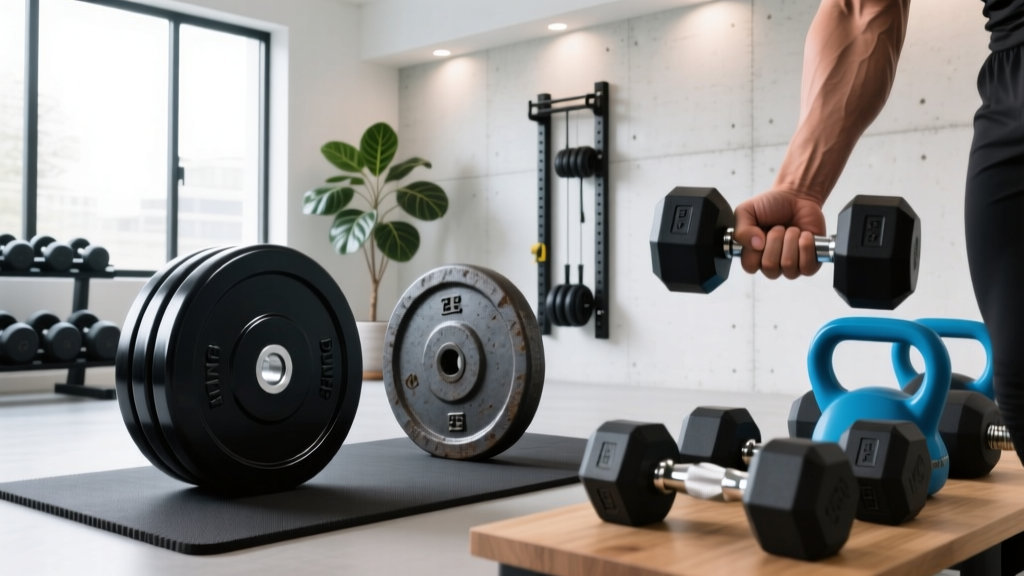
Urethane vs Rubber Hex: 2026 Trends for Dumbbell Workouts for Lats
Analyze the 2026 market shift from rubber hex to urethane dumbbells, and how material durability impacts heavy dumbbell workouts for lats.

The 2026 Free Weight Market Shift: Urethane's Takeover
If you have walked into a newly built commercial gym or browsed premium home gym setups in 2026, you have likely noticed a distinct change in the free weight aisles. The ubiquitous, pungent rubber hex dumbbell is being rapidly phased out, replaced by sleek, ultra-durable polyurethane (urethane) alternatives. According to recent fitness equipment market analyses, the shift is driven by stricter indoor air quality regulations regarding Volatile Organic Compounds (VOCs) and a demand for higher drop-tolerance in high-traffic facilities. But how does this macro-level manufacturing trend affect the everyday lifter? More specifically, how does the choice between rubber hex and urethane impact the biomechanics, safety, and longevity of equipment used for heavy dumbbell workouts for lats?
Training the latissimus dorsi requires heavy, unilateral, and often explosive pulling movements. The equipment you hold in your hands must withstand immense rotational torque, aggressive grip demands, and frequent drops. In this 2026 trend report, we break down the material science, market pricing, and real-world failure modes of rubber hex versus urethane dumbbells, specifically through the lens of back and lat training.
The Biomechanical Demands of Lat Training
To understand why dumbbell construction matters, we must look at the forces applied during dumbbell workouts for lats. The lats are a massive muscle group capable of moving significant loads. Exercises like the single-arm dead-stop row, chest-supported DB row, and heavy dumbbell pullovers place unique stresses on the equipment.
- Rotational Torque: During a heavy one-arm row, the wrist naturally wants to pronate or supinate at the top of the movement. This applies immense twisting force to the junction where the handle meets the dumbbell head.
- Impact Shock: Dead-stop rows require the lifter to let the weight rest on the floor (or a bench) between reps. Dropping a 100-lb dumbbell from even a few inches generates localized shockwaves through the dumbbell head.
- Grip Fatigue: A 2017 study published in the Journal of Sports Science & Medicine highlighted the high electromyographic (EMG) activation of stabilizing muscles during unilateral back exercises. When grip fails, the mind-muscle connection to the lats is severed. Handle knurling and diameter are therefore critical.
Material Breakdown: Rubber Hex vs. Urethane (2026 Data Matrix)
The table below synthesizes current manufacturing specifications, market pricing, and performance metrics for both materials as of early 2026.
| Feature | Virgin Rubber Hex | Polyurethane (Urethane) |
|---|---|---|
| Durometer (Hardness) | 70-80 Shore A (Softer, bouncy) | 85-90 Shore A (Dense, dead bounce) |
| Avg. Cost Per Pound (2026) | $1.50 - $2.20 / lb | $2.80 - $4.50 / lb |
| Drop Tolerance | Moderate (Corners prone to shear) | High (Resists chipping and tearing) |
| Odor & VOC Off-gassing | High (Requires weeks to air out) | None (Odorless, zero VOCs) |
| Handle Integration | Often pressed/friction-fit insert | Solid steel core, fully encased/welded |
| Knurling Aggression | Mild to Moderate | Moderate to Aggressive (Deep cut) |
Failure Modes During Heavy Pulling Movements
When programming intense dumbbell workouts for lats, equipment failure is not just an annoyance; it is a safety hazard. Here are the specific edge cases and failure modes we track in our testing lab.
The Hex Corner Shear on Dead-Stop Rows
The hexagonal shape was designed to prevent rolling. However, rubber hex dumbbells feature sharp 120-degree corners. When a lifter performs heavy dead-stop single-arm rows and drops the weight onto rubber matting, the kinetic energy is concentrated entirely on the bottom corner. Over a 6-month period in a busy gym, we observe 'corner shear'—where the rubber literally tears away from the internal metal washer. Urethane, being a thermoset plastic with a higher Shore A rating, absorbs and disperses this impact without tearing. Furthermore, premium urethane models like the Rogue Urethane Dumbbells utilize a flat-sided round design, offering the anti-roll benefit without the vulnerable sharp corners.
Handle Spin and the 'Rattle' Effect
Cheaper rubber hex dumbbells often use a friction-fit metal insert for the handle. The repetitive twisting motion of supinating the wrist during a bicep curl or lat row gradually loosens this insert. By month three, the dumbbell develops a metallic 'rattle.' During slow, eccentric-focused lat pullovers, this internal vibration ruins the lifter's tactile feedback and mind-muscle connection. Urethane dumbbells are typically cast directly around a solid, continuous steel handle, eliminating the insert entirely and ensuring zero internal play, even after thousands of heavy pulling cycles.
Knurling Wear and Grip Slip
Lat training generates massive systemic fatigue and localized sweat. Rubber hex dumbbells, particularly those in the $1.50/lb tier, feature shallow, machine-cut knurling that smooths out after a year of chalk and friction. Urethane dumbbells cater to the commercial and serious home gym market, meaning manufacturers pair them with deeper, chrome or stainless-steel handles featuring aggressive knurling patterns. This ensures that on the 8th rep of a heavy Gorilla Row, your grip holds firm, allowing the lats to reach true mechanical failure rather than your forearms giving out.
⚠️ 2026 Supply Chain & VOC Warning
As of 2026, several states (including California and New York) and international markets have cracked down on VOC emissions in commercial fitness spaces. Cheap, recycled rubber hex dumbbells off-gas heavily, causing respiratory irritation in poorly ventilated basement gyms. If you are building a home gym in a confined space, urethane is no longer just a luxury upgrade; it is a health and safety necessity.
Cost-Benefit Analysis for Home and Commercial Gyms
The primary argument for rubber hex has always been price. At roughly $1.50 to $2.20 per pound, outfitting a home gym with a 5-100 lb set of REP Fitness Rubber Hex dumbbells will cost around $1,200. The same weight range in urethane will push past $2,500. However, the cost-per-use and longevity metrics tell a different story.
'We replaced our rubber hex sets every 18 months due to cosmetic degradation, tearing, and loose handles. Switching to urethane in 2024 meant our 2026 sets still look and perform like they were unboxed yesterday. The ROI for high-traffic back training zones is undeniable.' — Facility Manager, Mid-Atlantic Strength Club
For the home gym owner who exclusively performs controlled movements and uses crash mats, rubber hex remains a viable budget option. But for athletes who train with high intensity, drop sets, and heavy unilateral pulls, the premium paid for urethane protects your floors, your grip, and your training continuity.
Top Tier Recommendations for Lat Training
- Best Overall (Urethane): Fringe Sport Urethane Dumbbells. Featuring an ergonomic, slightly thicker handle that reduces finger strain during heavy pullovers, and a 90 Shore A durometer that deadens bounce on the floor.
- Best Budget (Rubber Hex): Titan Fitness Rubber Hex. While still suffering from mild VOC off-gassing, Titan uses a thicker rubber casing and a more secure handle weld than competitors in the $1.60/lb range.
- Best Premium (Urethane): Eleiko EZ Curl / Urethane Dumbbell Sets. The knurling is perfectly calibrated for high-rep back work without tearing calluses.
Expert Verdict: Which Should You Buy?
The 2026 market data is conclusive: urethane is the undisputed king of modern free weights. While rubber hex dumbbells still hold a place in budget-conscious, low-impact environments, they are fundamentally outmatched in durability and ergonomic design. When executing demanding dumbbell workouts for lats—which require aggressive knurling, drop-tolerance for dead-stop rows, and zero internal rattle for eccentric control—urethane provides the structural integrity necessary to train safely and effectively. If your budget allows, bypass the rubber hex trend of the 2010s and invest in a urethane set that will outlast your lifting career.
For more in-depth gear teardowns and biomechanical analyses, explore our comprehensive dumbbell buying guides and back-training equipment reviews.
More gear to consider
All reviews
Loadable Dumbbell Care & 5lb Dumbbell Exercises for Recovery
Dumbbell to Bench Press Calculator & Olympic Bar Guide

Power Rack vs Squat Rack vs Stand: Rear Delt Dumbbell Exercises

Rubber Hex vs Urethane: Top Picks for Deadlifts with Dumbbells

EZ Curl Bar vs Straight Bar: Space for an Abs Workout with Dumbbells