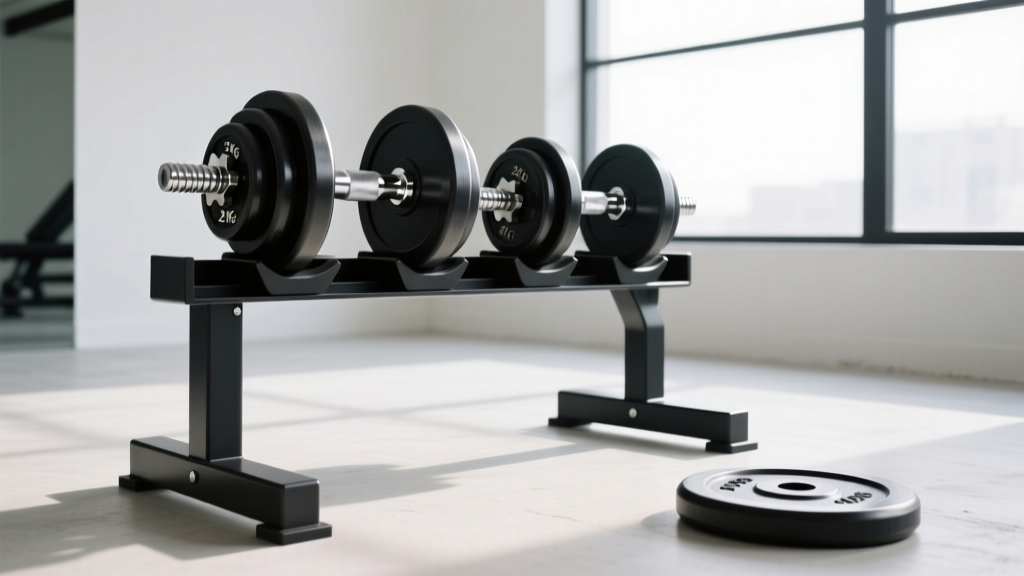
Urethane vs Rubber: Space & Straight Leg Deadlifts with Dumbbells
Compare urethane and rubber hex dumbbells for space optimization. Learn how material density impacts storage and the straight leg deadlift with dumbbells.

Designing a highly functional home gym in 2026 requires a meticulous approach to spatial geometry. Whether you are converting a compact spare bedroom, a narrow section of a garage, or a multi-use living area, every square inch of your layout dictates your training efficacy. When selecting free weights, the debate between rubber hex dumbbells and urethane dumbbells is often framed purely around durability or budget. However, from a space optimization and layout design perspective, the physical density and dimensional footprint of these materials profoundly impact both your storage solutions and your movement mechanics.
This is especially true for floor-based hinge movements. If your programming includes the straight leg deadlift with dumbbells, the width and profile of the dumbbell heads will directly influence your stance, your clearance from surrounding equipment, and your overall biomechanical safety in a constrained environment. Below, we break down the spatial realities of rubber hex versus urethane dumbbells to help you engineer the ultimate space-efficient free weight zone.
The Spatial Footprint: Material Density and Dimensions
To understand how dumbbells affect your gym layout, we must first look at material density. Urethane (polyurethane) is a synthetic polymer that is significantly denser than the recycled rubber typically used in budget-friendly hex dumbbells. This density differential means that for any given weight, a urethane dumbbell head is physically smaller and more compact than its rubber counterpart.
Data Highlight: The 50 lb. Dumbbell Comparison
- Rubber Hex (e.g., CAP Barbell Cast Iron Hex): A 50 lb. dumbbell head measures approximately 8.5 inches in length and 4.5 inches in width.
- Virgin Urethane (e.g., Rogue Urethane Dumbbells): A 50 lb. dumbbell head measures roughly 7.2 inches in length and 3.8 inches in width.
While a 1.3-inch difference in length and 0.7-inch difference in width seems marginal on a single pair, this discrepancy compounds drastically across a full 5-50 lb. set (10 pairs) when calculating linear rack space and floor clearance.
Storage Layouts: Tiered Racks vs. Vertical Stands
Space optimization begins with how your equipment rests when not in use. The bulkier profile of rubber hex dumbbells forces you to purchase wider storage racks, which eats into your gym's usable square footage.
Horizontal Tiered Racks
A standard 3-tier horizontal rack designed for rubber hex dumbbells typically requires a 48-inch to 54-inch width to accommodate the wider heads without them overhanging or jamming. In a narrow home gym layout—such as a galley-style garage gym where you must maintain a 36-inch walking aisle—sacrificing an extra 12 inches of lateral wall space can disrupt the flow of the room. Urethane dumbbells, due to their compact heads, can comfortably fit a full 5-50 lb. set on a 36-inch or 41-inch tiered rack, preserving crucial lateral space for movement and additional equipment like kettlebells or medicine balls.
Vertical Tree Stands
If your layout demands a vertical footprint, vertical dumbbell trees are the ultimate space-saving solution. However, rubber hex dumbbells are notoriously incompatible with many vertical trees. The wide, angular heads often clash with one another on the vertical pegs, forcing you to skip pegs and effectively doubling the vertical height required. Urethane dumbbells, particularly those with rounded or beveled edges, stack seamlessly on vertical trees, allowing you to utilize vertical air space rather than valuable floor space.
Floor Clearance and the Straight Leg Deadlift with Dumbbells
The true test of a space-optimized gym is how the layout accommodates complex, multi-joint movements. The straight leg deadlift with dumbbells is a foundational posterior chain exercise that requires the weights to travel vertically down the legs, terminating near the floor. In a constrained home gym, this movement presents unique spatial challenges that are directly affected by your choice of dumbbell material.
Stance Width and Biomechanical Interference
To execute a proper straight leg deadlift with dumbbells, your stance should ideally be hip-width apart to allow the weights to hang naturally without scraping your thighs or knees. When using bulky rubber hex dumbbells, the 4.5-inch width of the heads often forces the lifter to adopt a wider stance to prevent the dumbbells from colliding with their legs during the descent.
In a tight layout—such as standing in a 4-foot wide corridor between a power rack and a wall—a wider stance pushes your feet closer to the edges of your designated workout zone. This spatial restriction can subtly alter your hip hinge mechanics, potentially leading to lower back rounding as you unconsciously adjust your center of gravity to avoid clipping the rack uprights or the wall. According to biomechanical guidelines emphasized by the National Strength and Conditioning Association (NSCA), maintaining a neutral spine and proper hip-hinge depth is paramount; a wider, forced stance compromises this by altering the leverages of the hamstrings and glutes.
The Urethane Advantage in Tight Aisles
Urethane dumbbells solve this spatial interference. Because the heads are narrower and often feature a more streamlined, rounded profile, you can maintain a natural, hip-width stance even when performing the straight leg deadlift with dumbbells in a narrow aisle. The weights glide cleanly past the legs, allowing you to maximize your range of motion and touch the floor without requiring an expansive lateral footprint. This means you can safely perform heavy hinge movements in tighter, space-optimized zones without sacrificing form or safety.
Environmental Space: Off-Gassing and Visual Clutter
Space optimization is not solely about physical dimensions; it also encompasses the environmental quality of the space. Many home gyms are located in poorly ventilated areas like basements, enclosed garages, or spare bedrooms.
- Rubber Hex Odor: Budget rubber dumbbells are often manufactured using recycled tires and chemical binders that off-gas volatile organic compounds (VOCs). In a small, unventilated room, this odor can make the space unusable for extended periods, effectively shrinking your gym's functional footprint by forcing you to leave doors open or train outdoors.
- Urethane Purity: High-quality virgin urethane is virtually odorless and does not off-gas. This allows you to seal your space for climate control (AC or heating) without trapping noxious fumes, making it the superior choice for indoor, multi-use room layouts.
Furthermore, rubber hex dumbbells are prone to edge degradation. Over time, the corners chip and flake, leaving black rubber debris on your flooring. This not only creates visual clutter but also requires frequent cleaning, detracting from the streamlined, minimalist aesthetic that defines a well-designed home gym.
Cost vs. Space ROI: The 2026 Buyer's Matrix
While urethane demands a higher initial financial investment, space-constrained lifters must evaluate the Cost-to-Space Return on Investment (ROI). Purchasing cheaper rubber hex dumbbells often necessitates buying a wider, more expensive 3-tier rack, or forces you to replace them after a few years due to degradation.
| Feature | Rubber Hex Dumbbells | Urethane Dumbbells |
|---|---|---|
| Average Cost per lb. (2026) | $1.50 - $2.00 | $2.50 - $3.50 |
| Rack Space Required (5-50lb Set) | 48 - 54 inches (Wide Rack) | 36 - 41 inches (Compact Rack) |
| Vertical Tree Compatibility | Poor (Heads clash) | Excellent (Stacks flush) |
| Clearance for Floor Hinges | Requires wider stance | Allows narrow, natural stance |
| Environmental Impact | High VOC off-gassing | Odorless, indoor-safe |
Final Verdict: Designing Your Free Weight Zone
If your primary constraint is a strict financial budget and you have a sprawling, well-ventilated garage with ample wall space, rubber hex dumbbells remain a viable, utilitarian option. However, if you are engineering a space-optimized home gym where every inch of floor and rack space is premium, urethane is the undisputed champion.
By choosing urethane, you unlock the ability to use compact vertical storage, eliminate toxic off-gassing in enclosed rooms, and most importantly, preserve your natural biomechanics. When you step up to perform the straight leg deadlift with dumbbells in a tight 4-foot aisle, the streamlined profile of urethane ensures that your equipment adapts to your space, rather than forcing your body to adapt to the equipment. For the modern, space-conscious lifter, investing in density is the ultimate layout hack.
More gear to consider
All reviews
Power Rack vs Squat Stand: Beyond Planet Fitness Dumbbell Weights

Best Neoprene Dumbbells for a Dumbbell Pull Up Workout (2026)

Best Loadable Dumbbells for Incline Dumbbell Press (2026)

300 Pound Dumbbell Care & Cast Iron vs Competition Kettlebells
EZ Bar vs Straight Bar: Budget & Dumbbell Calf Raises