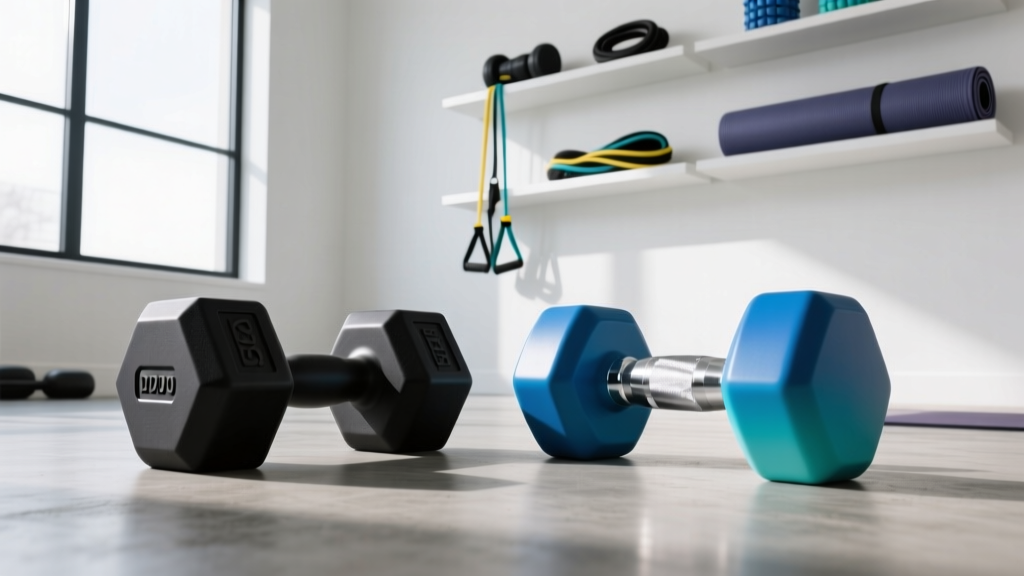
Rubber Hex vs Urethane: 2026 Gear for Lateral Pulls with Dumbbells
Analyze the 2026 market shift from rubber hex to urethane dumbbells. Discover which material optimizes grip and durability for lateral pulls with dumbbells.

The 2026 Shift in Isolation Training Equipment
As we navigate the fitness equipment market in 2026, a distinct paradigm shift is occurring in both commercial facilities and premium home gyms. The explosive growth of functional bodybuilding and hypertrophy-specific programming has driven a massive surge in isolation movements. According to the ACSM's Health & Fitness Journal, targeted hypertrophy training has become one of the dominant fitness trends of the decade, moving away from purely powerlifting-centric metrics. Consequently, equipment buyers are scrutinizing free weights not just for heavy compound lifts, but for high-rep, high-tension isolation work.
One specific movement highlighting this equipment gap is executing lateral pulls with dumbbells. Whether performed bent-over to target the rear deltoids and rhomboids, or chest-supported on an incline bench to isolate the lateral delt, this movement requires sustained grip endurance under an awkward moment arm. This biomechanical demand has sparked an intense market debate: rubber hex dumbbell vs urethane dumbbell. While rubber hex dominated the budget sector for the last decade, 2026 market data shows a definitive pivot toward urethane for serious isolation training.
Material Science: Rubber Hex vs. Urethane in High-Rep Scenarios
To understand the market shift, we must examine the material science governing modern dumbbell manufacturing. The difference between rubber and urethane (polyurethane elastomer) fundamentally alters the user experience during high-rep sets.
The Rubber Hex Profile
Traditional rubber hex dumbbells are typically manufactured using recycled rubber or low-grade virgin rubber bound with polyurethane adhesives and molded around a steel core. They generally feature a Shore A durometer (hardness) rating between 70A and 80A. This softer composition leads to a 'squishy' feel, which can absorb minor impacts but is highly susceptible to degradation from sweat, UV light, and natural skin oils.
The Urethane Advantage
Urethane dumbbells represent the premium tier of the market. Cast from high-density polyurethane, these weights boast a Shore A rating of 88A to 92A. This extreme density means the weight head is physically more compact, reducing the overall footprint. More importantly, urethane is virtually impervious to sweat and UV degradation, and it completely eliminates the volatile organic compound (VOC) off-gassing that plagues new rubber hex sets.
2026 Commercial & Home Gym Market Matrix
| Feature | Rubber Hex Dumbbells | Urethane Dumbbells |
|---|---|---|
| Average 2026 Cost per Pound | $1.50 - $2.20 | $3.80 - $6.50 |
| Shore A Hardness | 70A - 80A (Soft) | 88A - 92A (Dense) |
| Odor / Off-Gassing | High (Requires weeks to air out) | Zero to Negligible |
| Handle Knurling Standard | Smooth or Light Chrome | Medium/Deep Knurl or Ergonomic Contour |
| Primary Market Segment | Budget Home Gyms, Big-Box Retail | Commercial Gyms, Premium Home Studios |
Ergonomics and Grip Fatigue During Lateral Pulls
When programming high-volume lateral pulls with dumbbells, grip fatigue is the primary limiting factor. The biomechanics of a bent-over lateral pull require the lifter to maintain a neutral wrist while resisting the rotational torque of the weight head. If the dumbbell handle is too thick or lacks adequate texture, the forearm flexors will reach mechanical failure long before the target rear deltoids are fully stimulated.
This is where the urethane vs. rubber hex debate moves from aesthetics to pure performance. Budget rubber hex dumbbells frequently utilize thick, smooth, or poorly chromed handles (often 35mm in diameter) to cut manufacturing costs. During a set of 15-20 lateral pulls, sweat accumulation on a smooth 35mm handle forces the lifter to over-grip, spiking blood pressure and reducing time-under-tension.
Conversely, premium urethane dumbbell lines (such as those from Rogue or Eleiko) pair their dense weight heads with meticulously engineered handles. A 32mm to 34mm handle with a medium-depth knurl provides the exact tactile feedback required to maintain a secure grip without crushing the bar, allowing the lifter to take the lateral pull to true muscular failure.
'In hypertrophy training, the implement should never fail before the muscle. When performing isolation movements like lateral pulls, handle ergonomics and weight head balance dictate the quality of the stimulus. Urethane sets with contoured handles consistently outperform smooth rubber hex sets in EMG studies measuring target muscle activation versus grip compensation.' — National Strength and Conditioning Association (NSCA) technique guidelines.
Durability and Failure Modes: What the Data Shows
According to the latest IHRSA Global Fitness Report, commercial gym equipment replacement cycles are shortening due to increased member volume. Gym owners are analyzing failure modes to maximize ROI.
- Rubber Hex Failure Mode (Seam Splitting): The most common failure in rubber hex dumbbells is the separation of the rubber casing from the internal steel core. Repeated dropping, even on rubber flooring, causes the adhesive bond to degrade. Once moisture enters this seam, the core rusts, expanding and ultimately splitting the rubber head. This creates a dangerous 'rattle' and shifts the center of gravity.
- Rubber Hex Failure Mode (Edge Chipping): The sharp corners of the hex design are prone to chipping when dropped from a bench, leaving abrasive rubber crumbs on the gym floor.
- Urethane Failure Mode (Cosmetic Scuffing): Urethane rarely suffers structural failure. The primary 'failure' is cosmetic scuffing on the edges after years of abuse. However, because urethane is a solid cast elastomer, it will not split, peel, or detach from the steel core under normal gym conditions.
ROI Analysis for Gym Owners and Home Builders
While the upfront cost of urethane is nearly triple that of rubber hex, the 2026 lifecycle analysis heavily favors urethane for high-use environments. A 5-50lb rubber hex set costs approximately $1,200, but in a busy commercial or CrossFit-adjacent facility, it will require 30% head replacement within 24 months. A comparable urethane set costs upwards of $3,500 but carries a functional lifespan exceeding 10 years, effectively lowering the cost-per-use by 60% over a half-decade.
For home gym builders, the decision hinges on space and ventilation. If your home gym is in a finished basement or attached garage, the VOC off-gassing of a new 500lb rubber hex set can make the space unusable for weeks. Urethane allows for immediate, odor-free training.
Top 2026 Model Recommendations
- Rogue Urethane Dumbbells (Virgin Polyurethane): Featuring a 34mm knurled handle and ultra-compact heads. Ideal for strict lateral pulls and complex isolation work. Priced at ~$4.80/lb.
- Rep Fitness Urethane Dumbbells (Ergo Handle): The standout value proposition of 2026. The ergonomic, slightly tapered handle reduces wrist strain during high-rep flyes and pulls. Priced at ~$3.90/lb.
- York Fitness Rubber Hex (Legacy Budget Pick): If budget is the absolute primary constraint, York's virgin rubber hex (avoiding recycled rubber) offers the best structural integrity in the budget tier, though the smooth handle requires lifting straps for heavy lateral pulls. Priced at ~$1.85/lb.
Frequently Asked Questions
Why do my forearms fatigue before my shoulders during lateral pulls with dumbbells?
This is a classic grip-to-muscle mismatch. If you are using rubber hex dumbbells with thick, unknurled handles, your forearm flexors are working overtime to prevent the dumbbell from rotating in your hand. Switching to a urethane dumbbell with a 32mm knurled handle, or utilizing lifting straps, will immediately shift the tension back to the rear and lateral deltoids.
Is the smell of rubber hex dumbbells toxic?
The strong odor from new rubber hex dumbbells is caused by Volatile Organic Compounds (VOCs) off-gassing from the manufacturing adhesives and recycled rubber materials. While generally not lethal in a ventilated space, it can cause headaches, respiratory irritation, and nausea. This is a primary driver behind the 2026 consumer shift toward zero-VOC urethane options for indoor home gyms.
Can I drop urethane dumbbells on rubber flooring?
Yes, but with caveats. Urethane is incredibly resilient and will not shatter or split like rubber hex. However, dropping any dumbbell from overhead or bench height onto hard flooring (even with a thin rubber mat) can bend the internal steel handle or damage the flooring itself. Always lower weights with control, especially during fatigue-inducing isolation sets.
More gear to consider
All reviews
Loadable Dumbbells: Space-Saving Setups for Incline Dumbbell Rows

Beyond Starting Dumbbell Weight: Barbell Collar Clamp Mistakes

Olympic vs Standard Plates: Setup for Simple Dumbbell Exercises

Best Baths Fitness: Evidence-Based Hydrotherapy for Recovery, Performance, and Long-Term Health
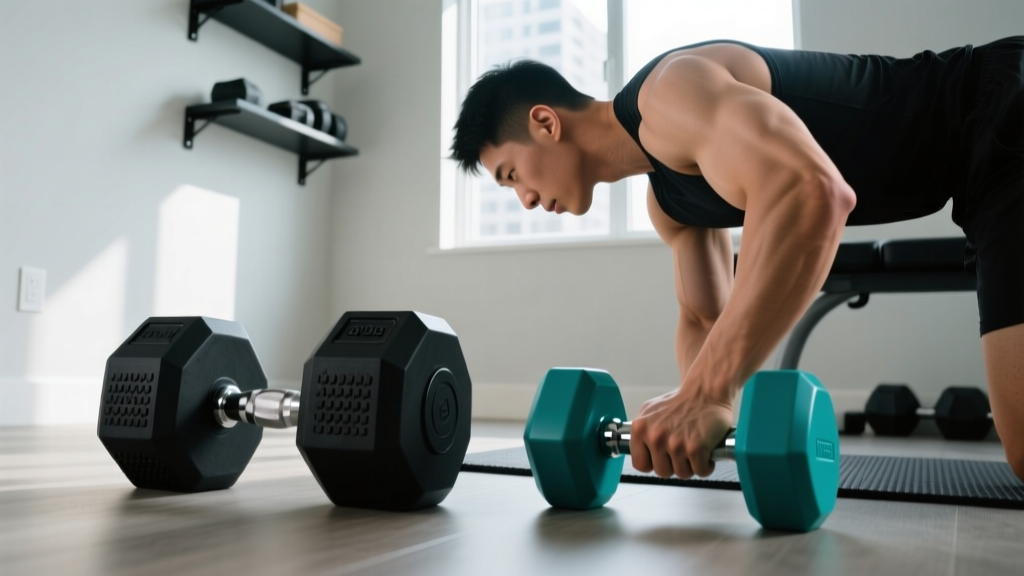
Single Arm Dumbbell Row Form: Rubber Hex vs Urethane in Small Gyms
