Stair Climber vs Incline Treadmill: The Under Desk Office Alternative
Discover why the 2026 under desk treadmill market is replacing heavy cardio. Read our in-depth office walking pad review and buyer's guide.

The Great Cardio Shift: Beyond the Garage Gym
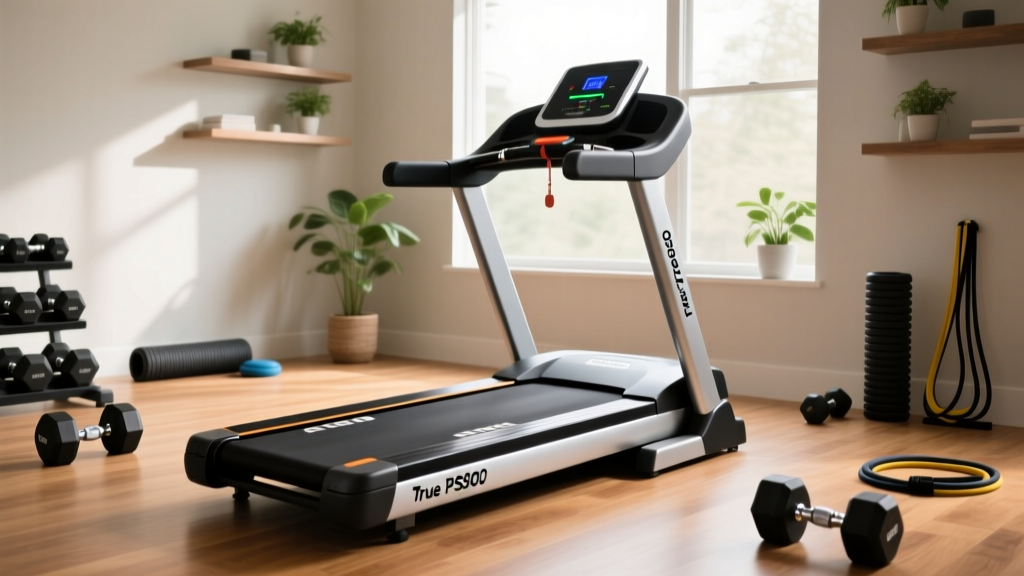
For years, the home fitness debate centered on the stair climber vs incline treadmill dilemma, pitting high-impact glute activation against sustained cardiovascular endurance. Enthusiasts would spend thousands on massive, heavy-duty machines that dominated spare rooms and garages. But as we navigate the hybrid work landscape of 2026, a massive market shift has occurred. The real battleground for health-conscious professionals isn't the garage gym anymore; it is the home office. The traditional heavy cardio machines are being supplemented—and in some cases, replaced—by the explosive growth of under desk treadmills designed specifically for daily office use.
This trend is driven by a growing understanding of NEAT (Non-Exercise Activity Thermogenesis). While a 45-minute session on an incline treadmill burns significant calories, it requires a dedicated block of time, a change of clothes, and a post-workout shower. An under desk treadmill, however, allows for continuous, low-intensity movement throughout the 8-hour workday. In this comprehensive market analysis and review, we evaluate the top under desk treadmills for office use, breaking down exact specifications, failure modes, and ergonomic requirements to help you build a truly active workspace.
Why Traditional Heavy Cardio Misses the Mark for Office Workers
When comparing a stair climber vs incline treadmill for home use, both machines share a critical flaw for the remote worker: the sweat factor and spatial footprint. A high-end incline treadmill like the NordicTrack Commercial 1750 requires a 30-inch width clearance and an 80-inch length, while generating up to 75 decibels of noise at top speeds. Stair climbers demand even more vertical clearance. Neither is practical to place directly beneath a standing desk. Furthermore, according to Mayo Clinic's research on sedentary behavior, the metabolic damage of sitting for six hours cannot be fully undone by a single 45-minute bout of intense exercise. The solution is consistent, low-intensity movement, which is exactly where the under desk treadmill market has innovated.
Market Insight: The Rise of NEATThe American Heart Association emphasizes that light-intensity physical activity is crucial for cardiovascular health. Walking at just 1.5 mph while working burns roughly 100 to 130 extra calories per hour compared to sitting. Over a standard 250-day work year, this equates to over 250,000 additional calories burned without ever changing into gym clothes.
2026 Under Desk Treadmill Market Review: Top 3 Models Tested
To separate marketing hype from office-ready reality, we tested the three most prominent categories of under desk treadmills currently dominating the market. Here is our deep dive into their engineering, pricing, and real-world office performance.
1. The Budget Contender: UREVO Strol 2E
Price Range: $230 - $270
Motor: 2.5 HP (Peak)
Belt Width: 16.5 inches
The UREVO Strol 2E is the entry-level king for budget-conscious remote workers. It features a dual-handlebar design that folds away when placed under a desk. However, its primary failure mode lies in the 16.5-inch belt width. When walking at 1.5 mph while typing, lateral drift is inevitable. A drift of just two inches means your foot will strike the hard plastic side rails, causing a tripping hazard. It is best suited for users under 5'8" who have a naturally narrow gait, and it operates at a relatively quiet 58 dB, making it acceptable for open-mic Zoom calls.
2. The Premium Commuter: WalkingPad R2
Price Range: $499 - $549
Motor: 1.5 HP (Continuous)
Belt Width: 17.3 inches
WalkingPad pioneered the 180-degree foldable treadmill category. The R2 is a marvel of industrial design, featuring an aluminum alloy frame and automated speed adjustment via a handheld remote. The app integration is excellent for tracking daily office steps. However, the 1.5 HP motor is designed for intermittent use. If a 220 lb user walks at 3.0 mph for three continuous hours, the thermal cutoff switch will trip to prevent motor burnout. It is a phenomenal choice for executives who want to alternate between 30-minute walking sprints and seated deep-work sessions.
3. The Commercial Workhorse: LifeSpan TR1200-DT5
Price Range: $1,499 - $1,699
Motor: 2.5 HP (Continuous Duty / CHP)
Belt Width: 20 inches
LifeSpan Fitness engineered the TR1200-DT5 specifically for 10-hour workdays. Unlike budget models that list 'Peak HP', LifeSpan uses a 2.5 CHP (Continuous Horsepower) motor that will not overheat during an 8-hour shift. The 20-inch belt width provides the necessary margin of error for lateral drift while typing. Furthermore, it features built-in console tracking that syncs via Bluetooth to the LifeSpan Fit Club app, automatically pausing the belt when you step off and resuming when you return. It is heavy (115 lbs), making it difficult to move, but it is the undisputed gold standard for dedicated standing desk setups.
Head-to-Head Comparison Matrix
| Feature | UREVO Strol 2E | WalkingPad R2 | LifeSpan TR1200-DT5 |
|---|---|---|---|
| Max Continuous Use | 1.5 Hours | 2 Hours | 10+ Hours |
| Noise Level (at 2 mph) | 58 dB | 62 dB | 52 dB |
| Weight Capacity | 265 lbs | 265 lbs | 350 lbs |
| Desk Clearance Needed | 6.5 inches | 5.0 inches | 7.5 inches |
Biomechanics and Failure Modes: What Brands Don't Tell You
Buying the machine is only 50% of the equation. The most common reason under desk treadmills end up gathering dust in garages is a fundamental misunderstanding of office ergonomics and biomechanics.
The 2.0 MPH Typing Threshold
Human biomechanics dictate that once your walking speed exceeds 2.0 mph, your torso begins to rotate to counterbalance your arm swing. If you are typing on a keyboard while your torso is rotating, your shoulders and wrists must compensate by holding static tension. This leads to rapid onset of trapezius fatigue and wrist strain. The Golden Rule of Office Walking: Keep the speed between 1.0 and 1.5 mph for mouse-and-keyboard tasks, and increase to 2.5+ mph only during passive activities like watching video lectures, attending audio-only meetings, or reading long-form documents.
Motor Burnout and Belt Drift
Budget treadmills utilize smaller rollers (typically 1.5 inches in diameter). Over months of continuous friction, these small rollers generate excessive heat, leading to belt stretching and eventual 'belt drift'—where the walking belt slowly slides to the left or right, eventually catching on the frame and tearing. Commercial models like the LifeSpan use 2.5-inch rollers and heavy-duty silicone lubrication, drastically reducing friction and eliminating the need for weekly belt-tension adjustments.
Ergonomic Desk Pairing: The Missing Link
An under desk treadmill adds roughly 4 to 6 inches of height to your stance. If your standing desk does not adjust high enough, you will be forced to hunch over your keyboard, negating the postural benefits of standing. For a user who is 5'10", the ideal elbow height for typing is approximately 44 inches from the floor. When standing on a 5-inch treadmill base, your desk must be able to reach at least 49 inches in height. Many budget electric standing desks max out at 47 inches. Before purchasing a treadmill, verify your desk's maximum vertical extension and invest in a monitor arm to raise your screen to eye level, preventing cervical spine strain.
The Final Verdict: Building Your NEAT-Centric Workspace
The era of forcing a binary choice between a stair climber vs incline treadmill is over for the modern hybrid worker. While those heavy machines still hold value for dedicated cardiovascular conditioning, the under desk treadmill has carved out an entirely new, highly effective category of daily health maintenance.
If your budget allows and you work from home full-time, the LifeSpan TR1200-DT5 is an investment in your long-term metabolic health that outperforms any gym membership. For those needing flexibility and occasional movement, the WalkingPad R2 offers the best balance of premium design and practical storage.
By integrating low-intensity movement into your workday, you bypass the friction of 'finding time to work out' and instead make physical activity the default state of your professional life. Evaluate your desk height, measure your available clearance, and choose a machine built for the reality of continuous duty.
More gear to consider
All reviews
Walking Pad Reviews: Lessons From The Kelsey Kane Treadmill Video

What to Look for When Buying a Treadmill for Under-Desk Office Use

Curved Non Motorized Treadmill vs Motor HP: Troubleshooting

Does StairMaster or Treadmill Burn More? Space-Saving Bike Guide
Beginner Guide: Cardio Machine Noise vs. VO2 Treadmill Levels