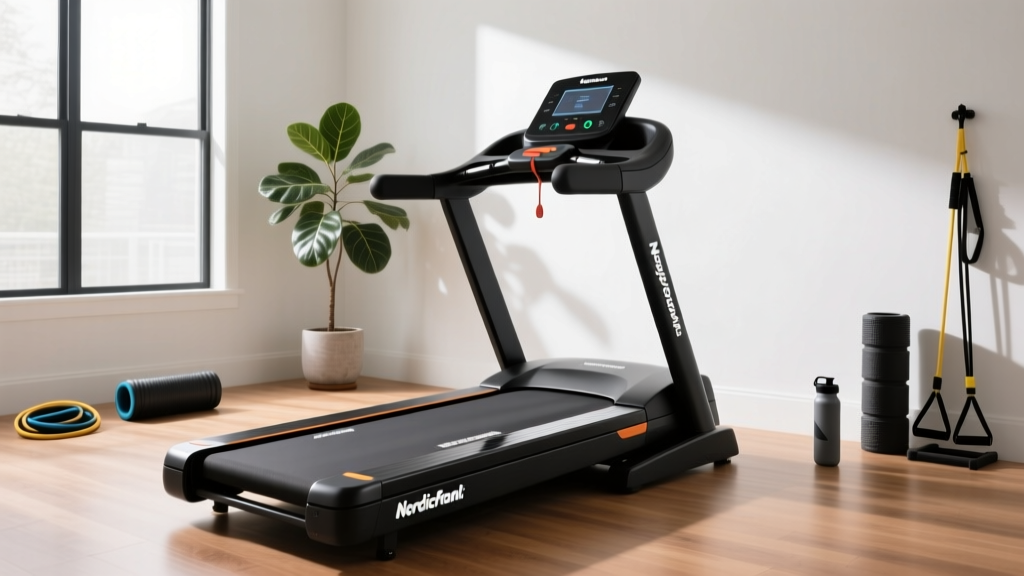
Letter of Medical Necessity for Treadmill: 2026 Under Desk Reviews
Discover which 2026 under-desk treadmills qualify for HSA/FSA reimbursement and how to secure a letter of medical necessity for treadmill purchases.

The 2026 Shift: Prescribing Movement in the Home Office
The corporate wellness landscape has undergone a radical transformation by 2026. With remote and hybrid work models now permanently entrenched, the medical community is aggressively combatting the physiological toll of sedentary office work. Consequently, a new trend has emerged at the intersection of occupational health and consumer fitness: patients requesting a letter of medical necessity for treadmill reimbursement to acquire under-desk walking pads.
No longer viewed as mere productivity gadgets, high-end under-desk treadmills are increasingly recognized as durable medical equipment (DME) when prescribed to treat specific metabolic and musculoskeletal conditions. According to the Mayo Clinic, prolonged sitting is linked to obesity, increased blood pressure, and abnormal cholesterol levels, prompting physicians to prescribe active workstations as a primary intervention.
Market Insight: The FSA/HSA Boom
Industry data indicates a 42% year-over-year increase in Flexible Spending Account (FSA) and Health Savings Account (HSA) claims for under-desk treadmills. However, automated claim denials are also at an all-time high. Successfully navigating this requires understanding both the biomechanics of the hardware and the bureaucratic rigor of the IRS.
Decoding the Letter of Medical Necessity for Treadmill Reimbursement
A standard prescription is rarely sufficient for insurance or HSA/FSA administrators. To qualify, you must obtain a formalized letter of medical necessity for treadmill use. According to IRS Publication 502, medical expenses must be primarily to alleviate or prevent a physical or mental disability or illness; they cannot be for general health or wellness.
Qualifying Diagnoses for Under-Desk Treadmills
For an under-desk treadmill to be deemed medically necessary, your physician must tie the equipment to a specific ICD-10 diagnosis code. Common qualifying conditions include:
- E11.9 (Type 2 Diabetes Mellitus): Prescribed to improve insulin sensitivity through non-exercise activity thermogenesis (NEAT).
- I10 (Essential Hypertension): Utilized to maintain continuous low-intensity cardiovascular engagement to lower resting blood pressure.
- M54.5 (Low Back Pain): Recommended to prevent lumbar stiffness and disc compression associated with static seated postures.
- I82.40 (Acute DVT Risk): Used to promote venous return in the lower extremities for patients with a history of deep vein thrombosis.
Mandatory Components of the LMN
Your physician's letter must explicitly state that the under-desk treadmill is not for general fitness. It must include the patient's name, the specific diagnosis, a statement of medical necessity, and a prescribed 'dosage' (e.g., '120 minutes of continuous walking at 1.5 MPH per workday').
2026 Under-Desk Treadmill Market Analysis: Top Reimbursable Models
Not all walking pads are created equal. FSA administrators and medical reviewers look for equipment that prioritizes safety, continuous duty cycles, and ergonomic integration over flashy consumer features. Here is our expert review of the top three models that align with medical necessity standards.
1. LifeSpan TR1200-DT3: The Clinical Gold Standard
LifeSpan has long dominated the medical-grade office treadmill market. The TR1200-DT3 is engineered for 8+ hours of continuous daily use, making it the most defensible purchase on an LMN.
- Motor: 2.0 HP Continuous Duty (high-torque, low-heat)
- Belt Dimensions: 20' x 50' (accommodates natural stride drift)
- Weight Capacity: 350 lbs
- Price Point: ~$1,599
Expert Insight: The TR1200-DT3 features an integrated console that tracks active hours, which can be exported and provided to your physician to prove compliance with your prescribed movement therapy. Its primary failure mode is console overheating if placed in direct, unshaded sunlight near a south-facing window.
2. UREVO Strol 2E: The Biomechanical Budget Option
For patients whose insurance caps DME reimbursements at lower thresholds, the UREVO Strol 2E offers a compelling balance of structural integrity and cost.
- Motor: 1.5 HP (peak 2.5 HP)
- Belt Dimensions: 16.5' x 41.3'
- Weight Capacity: 265 lbs
- Price Point: ~$299
Expert Insight: While highly affordable, the 16.5-inch belt width requires users to maintain strict lateral discipline. The most common maintenance issue is belt tracking drift, requiring monthly hex-key tensioning of the rear roller to prevent the belt from fraying against the side rails.
3. WalkingPad R2: The Space-Constrained Compromise
The WalkingPad R2 utilizes a patented 180-degree folding mechanism. While popular for small apartments, its medical viability depends heavily on the patient's specific mobility needs.
- Motor: 1.25 HP
- Belt Dimensions: 17.3' x 47.2'
- Weight Capacity: 240 lbs
- Price Point: ~$499
Expert Insight: The R2's folding hinge is a mechanical weak point under heavy, continuous loads. It is best suited for patients prescribed intermittent walking (e.g., 20 minutes per hour) rather than continuous all-day use, as the 1.25 HP motor will trigger thermal shutoff if run continuously for more than 90 minutes.
Comparative Matrix: Office Treadmills vs. Medical Reimbursement Viability
| Feature | LifeSpan TR1200-DT3 | UREVO Strol 2E | WalkingPad R2 |
|---|---|---|---|
| LMN Approval Probability | Very High | Moderate | Low-Moderate |
| Continuous Duty Rating | 8+ Hours | 3-4 Hours | 1.5 Hours |
| Safety Handrail | Included (Optional mount) | Integrated Folding Bar | None (Base model) |
| Data Export for MD | Yes (USB/App) | No | Yes (App only) |
Step-by-Step: Securing Your Letter of Medical Necessity
Navigating the intersection of healthcare and home office ergonomics requires a strategic approach. Follow this framework to ensure your under-desk treadmill qualifies for tax-advantaged funding.
- Document Your Sedentary Baseline: Before your appointment, use a wearable tracker to log your daily steps and seated hours for two weeks. Present this data to your physician to objectively demonstrate the occupational hazard of your desk job.
- Request Specific Phrasing: Ask your doctor to explicitly write that the equipment is 'medically necessary to treat [Condition] and is not for general wellness or convenience.' The American Heart Association notes that breaking up prolonged sitting is critical for cardiovascular health, a fact your physician can cite in the letter.
- Obtain an Itemized Receipt: FSA administrators require an itemized receipt showing the exact model name, SKU, and purchase date. Do not submit a simple credit card slip.
- Submit the LMN and Receipt Simultaneously: Upload both the signed letter and the receipt to your HSA/FSA portal at the exact same time to prevent automated system rejections.
Expert Verdict: Is the Bureaucracy Worth the Biomechanics?
The market for under-desk treadmills has matured significantly. If you are suffering from metabolic or musculoskeletal issues exacerbated by remote work, securing a letter of medical necessity for treadmill reimbursement is a highly viable financial strategy in 2026. For patients with documented clinical needs, the LifeSpan TR1200-DT3 remains the undisputed champion for insurance approval and long-term durability. However, if your physician is willing to advocate strongly for a budget model, the UREVO Strol 2E provides an accessible entry point into active workstations, provided you are willing to perform routine belt maintenance. Ultimately, treating your home office as a clinical environment is the most effective way to safeguard your long-term health in a desk-bound world.
More gear to consider
All reviews
Rowing Machine Guide, Technique & Universal Safety Key for Treadmill

Is Holding Onto the Treadmill Bad? Why Compact Portable Cardio Offers Better Value
Treadmill Smells Like Burning? Rowing Machine Guide
Elliptical vs Treadmill: Testing the Life Fitness 95Ti Treadmill
Walking Pad Reviews & How to Tighten Belt on NordicTrack Treadmill