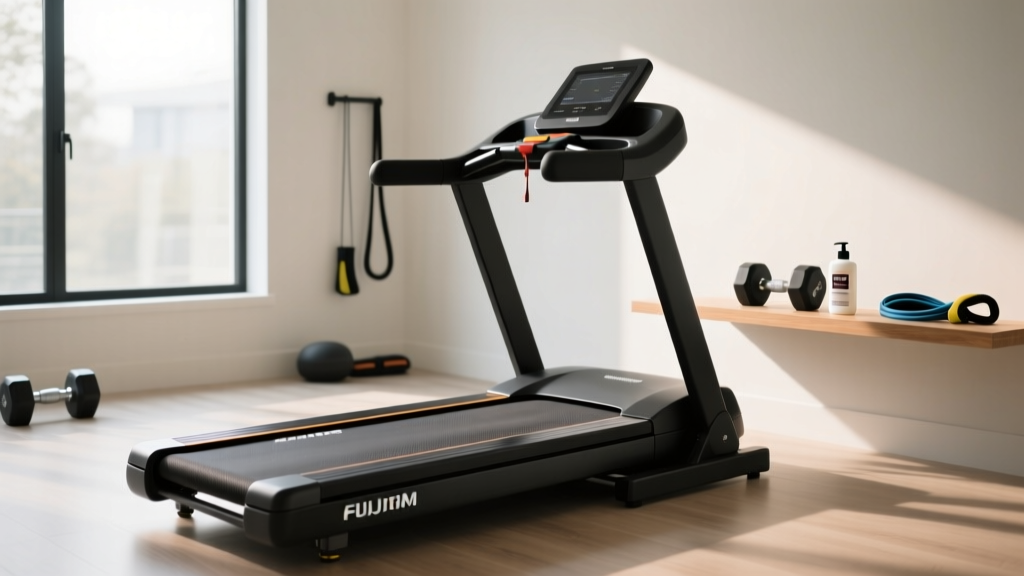
Can an Under Desk Treadmill Be Placed on Carpet? Office Care Guide
Wondering if an under desk treadmill can be placed on carpet? Discover office setup reviews, maintenance tips, and longevity hacks for your workspace.

The Carpet Conundrum in the Modern Home Office
As hybrid work models solidify in 2026, the under-desk treadmill has transitioned from a niche biohacking gadget to a mainstream office staple. However, setting up an active workspace introduces a highly specific mechanical challenge: flooring. Most home offices and corporate cubicles are fitted with carpet, leading to one of the most frequently asked questions in fitness equipment forums: 'can treadmill be placed on carpet?' The short answer is yes, but doing so without a rigorous maintenance protocol and proper matting will drastically reduce the lifespan of your machine.
According to research from Cornell University's Ergonomics Web, active workstations significantly reduce musculoskeletal discomfort, but the biomechanics of walking require a stable, level surface. When a walking pad is placed directly on plush or berber carpet, the deck sinks, altering the belt tracking and suffocating the motor's cooling system. This guide breaks down the best under-desk treadmills for carpeted environments, the exact failure modes to watch for, and a step-by-step maintenance routine to protect your investment.
Addressing the Core Question: Can Treadmill Be Placed on Carpet?
When remote workers ask, 'can treadmill be placed on carpet?' the answer requires a nuanced understanding of DC motor thermodynamics and friction physics. Under-desk treadmills rely on convective air cooling. The motor intake fan is typically located just 1 to 2 inches off the ground. Carpet acts as a massive electrostatic dust trap and an insulator.
Warning: The Thermal Shutoff RiskWhen placed directly on medium-pile carpet, a treadmill's intake fan pulls in microscopic polyester fibers and dust. These fibers wrap around the motor armature and melt due to friction heat, eventually causing a thermal shutoff or permanent short circuit in the Motor Control Board (MCB).
Carpet Pile vs. Treadmill Clearance Matrix
| Carpet Type | Pile Height | Direct Placement Safe? | Required Mat Thickness |
|---|---|---|---|
| Low-Pile Berber | < 1/4 inch | Conditionally (with weekly vacuuming) | 1/8 inch PVC |
| Medium Plush | 1/4 - 1/2 inch | No | 3/16 inch Rubber |
| High-Pile Shag | > 1/2 inch | No (Void Warranty Risk) | 3/8 inch Heavy Rubber |
Top Under-Desk Treadmills for Carpeted Offices (2026 Review)
Not all walking pads are engineered equally when it comes to ground clearance and motor shrouding. Here is how the top models fare in carpeted environments.
1. Lifespan TR1200-DT5 (Best Overall for Carpet)
Price: $899 | Motor: 1/2 HP Continuous | Deck Width: 20 inches
The Lifespan TR1200-DT5 is a commercial-grade unit adapted for office use. Unlike ultra-slim folding pads, this unit features an elevated deck with nearly 3 inches of ground clearance beneath the motor shroud. This extra height allows for adequate airflow even on medium-pile carpets. Its heavy-duty steel frame prevents the deck from bowing into the carpet under a 250 lb user, maintaining proper belt tension.
2. UREVO Strol 2E (Best Budget Option with Caveats)
Price: $299 | Motor: 1.5 HP Continuous (2.5 Peak) | Deck Width: 16.5 inches
The Strol 2E is highly popular for its foldable handle and compact footprint. However, its low-profile motor hood sits dangerously close to the floor. If used on carpet without a high-density PVC mat, the UREVO is prone to belt slipping and MCB overheating within the first 6 months of daily use.
3. WalkingPad R2 (Worst for Carpet)
Price: $499 | Motor: 1.25 HP | Deck Width: 15 inches
While the WalkingPad R2 is a marvel of folding engineering, its ultra-slim 2-inch profile makes it fundamentally incompatible with carpeted floors. The intake vents are practically flush with the ground, guaranteeing immediate dust ingestion. If you own an R2 and have carpet, a 3/16-inch interlocking foam or rubber mat is absolutely non-negotiable.
The Dust & Heat Factor: Why Carpets Kill Treadmill Motors
To understand maintenance, you must understand the failure modes. The Mayo Clinic notes that while standing and walking desks combat the dangers of sedentary behavior, the equipment itself requires a safe environment to prevent electrical hazards.
- Amp-Draw Spikes: When a treadmill deck sinks into carpet, the user's weight creates uneven pressure on the walking belt. This increases the coefficient of friction between the belt and the wooden deck. The motor must draw more amps to maintain speed, generating excess heat.
- Carbon Dust Accumulation: DC treadmill motors use carbon brushes. Over time, these brushes shed conductive carbon dust. On hard floors, this dust blows away. On carpet, the static charge of the rug pulls the carbon dust back into the motor housing, eventually bridging electrical contacts and frying the board.
- Belt Delamination: Excess heat generated by high amp-draw transfers to the PET (polyethylene terephthalate) walking belt, causing the layers to delaminate and the edges to fray.
Essential Maintenance Routine for Carpeted Office Treadmills
If your office has carpet, you must adopt an aggressive maintenance schedule. According to guidelines referenced by the CDC's NIOSH ergonomics division, maintaining a safe physical workspace includes ensuring equipment is functioning without electrical or tripping hazards.
Step 1: The Weekly Intake Purge
Every Friday, unplug the treadmill. Use a vacuum with a crevice tool to clean the motor intake vents. Do not use compressed air, as this will simply blow the carpet fibers deeper into the motor housing and onto the optical sensors.
Step 2: Bi-Monthly Silicone Lubrication
Friction is the enemy. Every 60 days (or 150 miles of walking), apply exactly 0.5 oz of 100% pure silicone treadmill lubricant. Never use WD-40 or petroleum-based products, as these will dissolve the PET belt and ruin the deck wax coating. Lift the belt edge, apply the silicone in a zig-zag pattern toward the center, and run the treadmill at 2.0 MPH for 3 minutes to distribute the fluid.
Step 3: The 'Tennis Ball' Deck Test
To check if your carpet is causing the deck to bow and create friction, perform the Tennis Ball Test. Place a standard tennis ball under the walking belt in the center of the deck. The belt should rest lightly on the ball without pinning it. If the belt presses down hard enough to deform the ball, your rear roller bolts are too tight, or the carpet is pushing the deck upward. Loosen the rear roller bolts by exactly one-quarter turn using the provided hex key.
Expert Tip: Belt Tracking AlignmentIf the belt drifts to the left on a carpeted surface, it means the left side of the treadmill is sinking deeper into the carpet pile, altering the roller geometry. Place a thin, rigid shim (like a folded business card) under the front-left leveling foot to re-establish a perfectly horizontal plane before adjusting the tension bolts.
Matting Solutions: Do You Really Need a Treadmill Mat?
Yes. If you are placing an under-desk treadmill on carpet, a mat is not just for protecting the rug; it is a critical structural component for the treadmill's longevity. However, not all mats are created equal.
- PVC Mats (1/8 inch): Cheap and lightweight. They will curl at the edges when placed on plush carpet and fail to provide a rigid base. Avoid these for carpeted offices.
- Recycled Rubber Mats (3/16 to 3/8 inch): The gold standard. High-density rubber distributes the point-load of the treadmill's feet across a wider surface area, preventing the machine from sinking into the carpet pile. They also dampen the low-frequency vibration of the DC motor, keeping your Zoom calls quiet.
Frequently Asked Questions
Will placing a treadmill on carpet void the manufacturer's warranty?
In many cases, yes. Brands like WalkingPad and UREVO explicitly state in their 2026 user manuals that damage caused by 'improper ventilation or debris ingestion due to flooring' is not covered under the standard 1-year motor warranty. Using a proper rubber mat circumvents this clause.
How often should I lubricate a walking pad used on carpet?
Because carpet increases the ambient temperature around the motor and deck, the silicone lubricant degrades faster than it would on a hard floor. Lubricate every 2 months or every 150 miles, whichever comes first.
Can I use a yoga mat instead of a treadmill mat?
No. Yoga mats are made of porous TPE or PVC foam designed to compress under human weight. Under the 80 lb concentrated weight of a treadmill, a yoga mat will compress to near-zero thickness, offering no structural support and trapping heat against the motor shroud.
More gear to consider
All reviews
Horizon 7.4 AT Treadmill Install & Rowing Machine Guide

Compact Cardio: Post-Treadmill Stress Test Echocardiogram Layouts
Stair Climber Setup: Ending the Row Machine vs Treadmill Debate
Skip the Viral Treadmill Walking Workout: Home Stair Climber Guide

Matrix Endurance Treadmill Motor Guide & HP Comparison