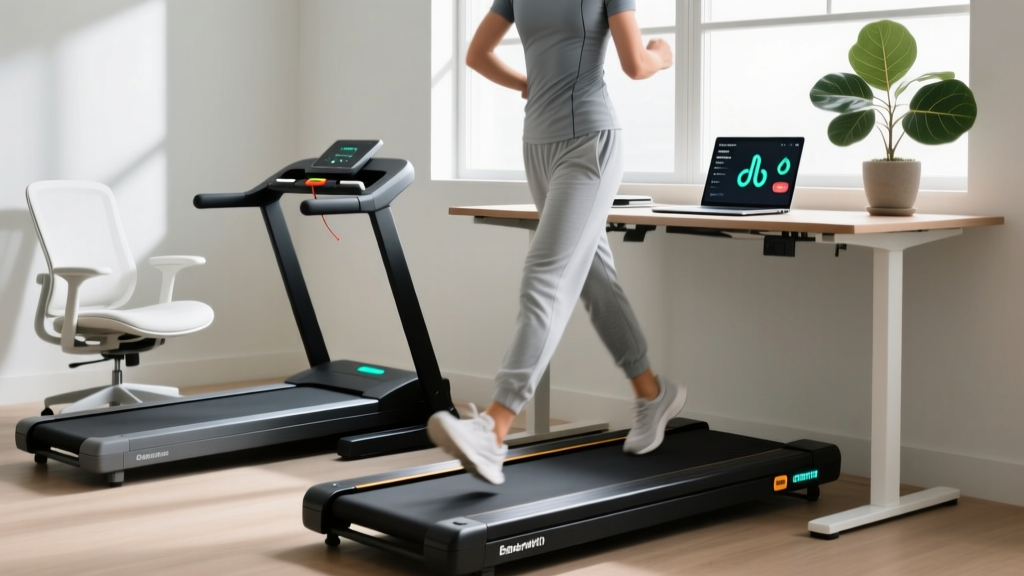
Under Desk Treadmill Review: Budget vs Matrix Treadmill User Manual
We break down the true cost of under-desk treadmills for office use, comparing budget models to the maintenance in a Matrix treadmill user manual.

The Home Office Cardio Dilemma: Walking Pads vs. Premium Engineering
As remote and hybrid work models solidify in 2026, the home office treadmill has transitioned from a luxury perk to a staple of ergonomic health. The concept of Non-Exercise Activity Thermogenesis (NEAT) proves that low-intensity, sustained movement throughout the workday yields massive metabolic benefits. According to the Centers for Disease Control and Prevention (CDC), integrating consistent, light physical activity into sedentary routines drastically reduces cardiovascular risks associated with desk jobs.
However, a critical blind spot plagues the modern home office buyer: the illusion of upfront savings. Consumers frequently purchase ultra-slim, budget-friendly walking pads, treating them as disposable appliances. But what happens when we analyze the long-term budget breakdown of these budget models against the rigorous longevity and maintenance standards outlined in a premium Matrix treadmill user manual? The financial and mechanical realities reveal a stark contrast in total cost of ownership.
💡 The Core Value Question: Is it more cost-effective to replace a $300 under-desk walking pad every 18 months, or invest in a $1,200+ commercial-grade under-desk unit built on the same engineering principles as premium home fitness rigs?2026 Under-Desk Treadmill Market: The Budget Contenders
To conduct a proper value analysis, we must first establish the baseline specifications of the most popular budget and mid-tier under-desk treadmills currently dominating the home office market.
1. WalkingPad R2 (The Ultra-Budget Folder)
- Price: ~$499
- Motor: 1.25 HP Continuous (2.5 HP Peak)
- Deck Material: High-density MDF with basic EVA cushioning
- Max User Weight: 265 lbs
- Top Speed: 7.6 mph
Analysis: The R2 is a marvel of spatial engineering, folding 180 degrees to slide under a sofa. However, its 1.25 HP continuous motor is strictly rated for walking. Pushing this motor to 4+ hours of continuous daily use generates excessive heat, leading to premature control board failure.
2. LifeSpan TR1200-DT3 (The Dedicated Office Workhorse)
- Price: ~$1,299
- Motor: 2.0 HP Continuous
- Deck Material: Phenolic resin-coated wood with heavy-duty silicone lubrication
- Max User Weight: 350 lbs
- Top Speed: 4.0 mph (Intentionally governed for desk work)
Analysis: LifeSpan specifically limits the top speed to prioritize high-torque, low-heat operation. The console tracks daily usage hours, a vital metric for warranty claims and maintenance scheduling.
Failure Modes: Why Budget Walking Pads Burn Out
When reviewing under desk treadmills for office use, the most common failure mode in sub-$500 models is not the belt snapping, but the motor controller frying. Budget walking pads utilize ultra-slim profiles that eliminate active cooling fans and restrict airflow around the motor housing.
Furthermore, budget models rely on MDF (Medium-Density Fiberboard) decks. In a home office environment where humidity fluctuates, or if a user spills a drink, MDF swells. This swelling increases the friction coefficient between the deck and the PVC belt. The motor must draw higher amperage to overcome this friction, tripping the thermal cutoff switch or burning out the internal wiring.
The Premium Standard: Lessons from a Matrix Treadmill User Manual
To understand what true longevity costs, we look to the commercial and premium home fitness sector. If you review a Matrix treadmill user manual for their premium home or light-commercial lines, you will find a meticulously engineered approach to friction management and motor preservation that budget walking pads entirely ignore.
Maintenance as a Proxy for Build Quality
A standard Matrix manual dictates specific, user-serviceable maintenance intervals that guarantee a 10-to-15-year lifespan. These include:
- Belt Tension Calibration: Checking and adjusting the rear roller bolts after the first 30 days of use to prevent motor strain caused by a slipping belt.
- Deck Inspection: Premium units use reversible, phenolic-coated decks. The manual instructs users to flip the deck after 5,000 miles, effectively doubling the lifespan of the walking surface.
- Motor Hood Vacuuming: Clearing dust and pet hair from the motor compartment every 90 days to ensure the internal cooling fan operates at 100% efficiency.
The Budget Disconnect: You cannot perform any of these life-extending procedures on a $300 under-desk walking pad. They are sealed units with non-reversible MDF decks and inaccessible motor housings. When a budget walking pad deck warps or the motor chokes on dust, the entire unit becomes e-waste.
5-Year Office ROI: Budget vs. Premium Breakdown
Let us project the financial reality of outfitting a home office with an under-desk treadmill over a 5-year period, assuming 3 hours of daily use, 5 days a week.
| Cost Factor | Budget Walking Pad ($300) | Premium Under-Desk ($1,300) |
|---|---|---|
| Initial Purchase | $300 | $1,300 |
| Expected Lifespan (3 hrs/day) | 14 - 18 Months | 5+ Years |
| Units Required Over 5 Years | 3 to 4 Units | 1 Unit |
| Replacement Costs | $600 - $900 | $0 |
| Maintenance (Lubrication/Parts) | $0 (Sealed/Disposable) | $45 (Silicone & Belt) |
| Total 5-Year Cost | $900 - $1,200+ | $1,345 |
Insight: While the premium unit costs slightly more over a half-decade, the elimination of downtime, the hassle of warranty claims, and the superior ergonomics make the ROI heavily favor the premium model for dedicated remote workers.
Ergonomic Edge Cases: Keyboard Shake and Deck Height
Beyond financial cost, the Mayo Clinic emphasizes that ergonomic setups must not introduce secondary physical stressors. Budget under-desk treadmills often fail the 'keyboard shake' test.
The Deck Height Problem
Ultra-slim walking pads achieve their low profile by using micro-rollers and thin decks. This raises the user's standing height by only 4 to 5 inches. However, because the frames lack torsional rigidity, the lateral sway of walking transfers directly up the user's legs and into the desk surface if the treadmill is placed on a hard floor.
Premium under-desk models like the LifeSpan or iMovR ThermoTread utilize thicker, extruded aluminum side rails and isolated motor mounts. They add 5.5 to 6 inches of height—requiring you to raise your standing desk accordingly—but they absorb the kinetic energy of your stride, keeping your coffee and your mouse cursor perfectly stable.
Final Verdict: Which Setup Actually Saves You Money?
If your home office routine involves only 45 minutes of casual pacing during Zoom calls, a budget walking pad like the WalkingPad R2 offers acceptable short-term value. It is an appliance of convenience, not a piece of fitness equipment.
However, if you are committing to a NEAT-heavy lifestyle, walking 2 to 4 hours a day while working, the budget breakdown shifts dramatically. By studying the maintenance paradigms found in a Matrix treadmill user manual, it becomes clear that longevity requires serviceable parts, continuous-duty motors, and friction-managed decks. Investing $1,200+ in a dedicated, commercial-style under-desk treadmill is not an expense; it is a hedge against the inevitable e-waste cycle of budget walking pads. In 2026, true budget fitness means buying once and buying right.
More gear to consider
All reviews
Treadmill LISS Workout Setup: Motor Size & Installation Guide

Market Analysis: The Fastest Treadmills for Small Spaces in 2026

Stair Climber vs Treadmill with Handrails: Beginner Home Guide

Air Bike vs Assault Bike & Lifespan TR1200i Treadmill Budget

Expert Treadmill Wax Review: Best Belt Lubricants Tested
