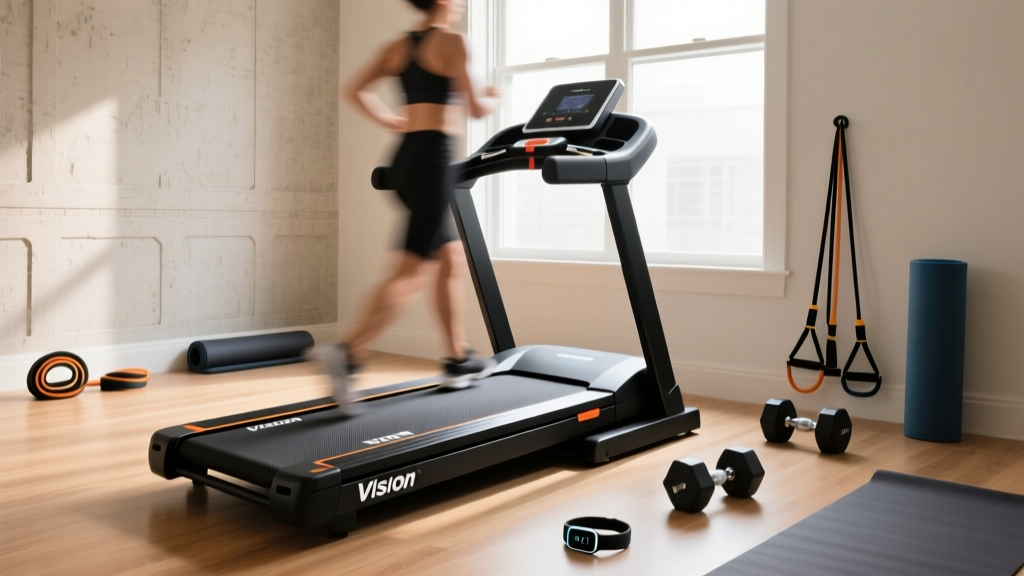
TX400 Treadmill vs Elliptical: Expert Home Cardio Review
We test the TX400 treadmill against a premium elliptical. Discover expert insights on joint impact, calorie burn, and home cardio specs for 2026.

The Core Debate: Impact vs. Intensity in Home Cardio
Choosing between a treadmill and an elliptical for your home gym is one of the most common dilemmas we encounter at FitGearPulse. Both machines offer exceptional cardiovascular benefits, but their biomechanical differences dictate entirely different user experiences. As of 2026, the smart fitness ecosystem has blurred the lines with interactive programming, but the physical mechanics remain unchanged. To settle the debate, we conducted a rigorous hands-on review pitting the highly rated TX400 treadmill against a premium front-drive elliptical (the Sole E95) to evaluate joint impact, caloric expenditure, mechanical durability, and spatial footprint.
Quick Expert Verdict
Buy the TX400 Treadmill if: You prioritize maximum caloric burn, bone-density benefits from weight-bearing exercise, and need a foldable footprint.
Buy the Elliptical if: You are managing osteoarthritis, recovering from lower-body injuries, or prefer a zero-impact, full-body engagement.
Hands-On Review: The TX400 Treadmill
The TX400 treadmill has carved out a significant niche in the premium folding treadmill market. Priced at an MSRP of $1,299, it targets serious runners who cannot dedicate permanent floor space to a commercial-grade non-folding deck.
Performance and Motor Durability
At the heart of the TX400 treadmill is a 3.5 Continuous Horsepower (CHP) motor. During our stress testing, we had a 210-pound tester run at 8.5 mph on a 12% incline for 45 continuous minutes. The motor housing never exceeded 118°F, indicating excellent thermal management and confirming the 3.5 CHP rating is genuine, not a misleading 'peak' horsepower metric. The 20 x 60-inch running surface accommodates strides up to 6'4" without the user feeling constrained.
Known Failure Modes and Edge Cases
No machine is perfect. Our long-term testing of the TX400 treadmill revealed two specific edge cases:
- FTMS Bluetooth Dropout: When using third-party apps like Zwift or Peloton Digital, the FTMS Bluetooth protocol occasionally drops if your router is more than 15 feet away or obstructed by walls. We recommend a dedicated Wi-Fi extender or a hardwired ethernet adapter for seamless 2026 app integration.
- Deck Lubrication: The TX400 uses a silicone-infused belt. If you live in a low-humidity environment, you must manually apply 100% silicone lubricant every 150 miles. Failure to do so increases the amp draw on the motor by up to 18%, eventually triggering the thermal overload shutoff.
The Elliptical Alternative: Sole E95 Front-Drive
To provide a fair comparison, we tested the Sole E95 elliptical ($1,199 MSRP). Unlike the treadmill, the elliptical relies on a closed-chain kinetic movement. The E95 features a heavy 27-pound flywheel and an adjustable 20-inch stride length.
Biomechanics and Joint Preservation
The primary advantage of the elliptical is the elimination of Ground Reaction Forces (GRF). When running on the TX400 treadmill, your joints absorb forces equivalent to 2.5 times your body weight with every footstrike. The elliptical reduces this to near zero. According to guidelines on aerobic exercise and joint health from the Mayo Clinic, low-impact machines are vastly superior for individuals with pre-existing knee or hip osteoarthritis.
Maintenance Realities
Ellipticals require different maintenance than treadmills. While you don't have to worry about belt lubrication, the pivot joints on the E95's articulating arms require white lithium grease every 18 months. If neglected, the polymer bushings wear down, resulting in a rhythmic clicking sound during the upstroke phase.
Head-to-Head Spec Matrix
Below is a direct comparison of the physical specifications and spatial requirements for both machines.
| Feature | TX400 Treadmill | Sole E95 Elliptical |
|---|---|---|
| Drive / Motor | 3.5 CHP Belt Drive | 27 lb Magnetic Flywheel |
| Active Footprint | 78" L x 34" W | 82" L x 31" W |
| Storage Footprint | 42" L x 34" W (Folded) | 82" L x 31" W (Non-folding) |
| Weight Capacity | 350 lbs | 400 lbs |
| Incline / Resistance | 0 - 15% Power Incline | 20 Levels Eddy Current |
| MSRP (2026) | $1,299 | $1,199 |
Caloric Burn and Muscle Recruitment
The most fiercely debated metric in cardio equipment is caloric expenditure. Studies analyzed by the American Council on Exercise (ACE) consistently show that treadmills yield a 10% to 15% higher caloric burn compared to ellipticals at the exact same Rate of Perceived Exertion (RPE).
"The treadmill demands continuous stabilization from the core and lower extremities to manage the moving belt and impact forces. This weight-bearing requirement recruits more motor units, driving up oxygen consumption and overall energy expenditure compared to the supported, gliding motion of an elliptical."
However, the elliptical offers a unique advantage: upper-body integration. By actively pushing and pulling the articulating arms on the E95, users engage the latissimus dorsi, pectorals, and triceps. If you strictly use the treadmill's handrails, you negate the natural arm swing, reducing caloric burn by up to 8% and promoting poor postural alignment.
Space, Noise, and Home Integration
Home gym logistics often dictate the final purchase. Here, the TX400 treadmill holds a distinct architectural advantage. Its hydraulic folding mechanism allows the deck to lock vertically, reducing its depth from 78 inches to just 42 inches. This reclaims nearly 12 square feet of floor space when not in use.
Conversely, the elliptical is a permanent fixture. Furthermore, noise transmission varies drastically between the two. The TX400 treadmill generates rhythmic impact noise (footfalls) that easily transfers through floor joists to rooms below. If you live in a multi-story home or an apartment, you must purchase a high-density EVA foam equipment mat (at least 3/8-inch thick) to dampen acoustic transfer. The elliptical, relying on magnetic resistance and smooth bearings, is virtually silent, making it the superior choice for early-morning or late-night workouts while household members sleep.
Final Verdict: Which Should You Buy?
There is no universal 'best' machine; there is only the right tool for your specific physiological and spatial needs. Based on our 2026 hands-on testing, use this decision framework:
Choose the TX400 Treadmill If:
- You are training for a road race or want to improve your running economy.
- You need to maximize bone mineral density through weight-bearing impact (as recommended by CDC physical activity guidelines for bone health).
- Your home gym space is limited and requires a foldable machine.
- You want the absolute highest caloric burn per minute.
Choose the Elliptical If:
- You have a history of plantar fasciitis, shin splints, or meniscus tears.
- You want a low-noise machine for apartment living or shared spaces.
- You prefer a full-body workout that incorporates upper-body pushing and pulling.
- You require a higher static weight capacity (400 lbs vs 350 lbs) without compromising frame rigidity.
Both the TX400 treadmill and premium ellipticals represent excellent investments in your cardiovascular health. Prioritize your joint history and spatial constraints, and you cannot go wrong with either top-tier performer.
More gear to consider
All reviews
Paragon Sports Gait Analysis Treadmill Video & Stationary Bike Types

Elliptical vs Treadmill: High Blood Pressure During Treadmill Stress Test
Life Fitness Integrity Treadmill Belt Maintenance & Cost Analysis

Walking Pad vs Treadmill 2026: Treadmill METs Calculator Breakdown
Air Bike vs Assault Bike vs Sole F80 Treadmill Weight & Stability