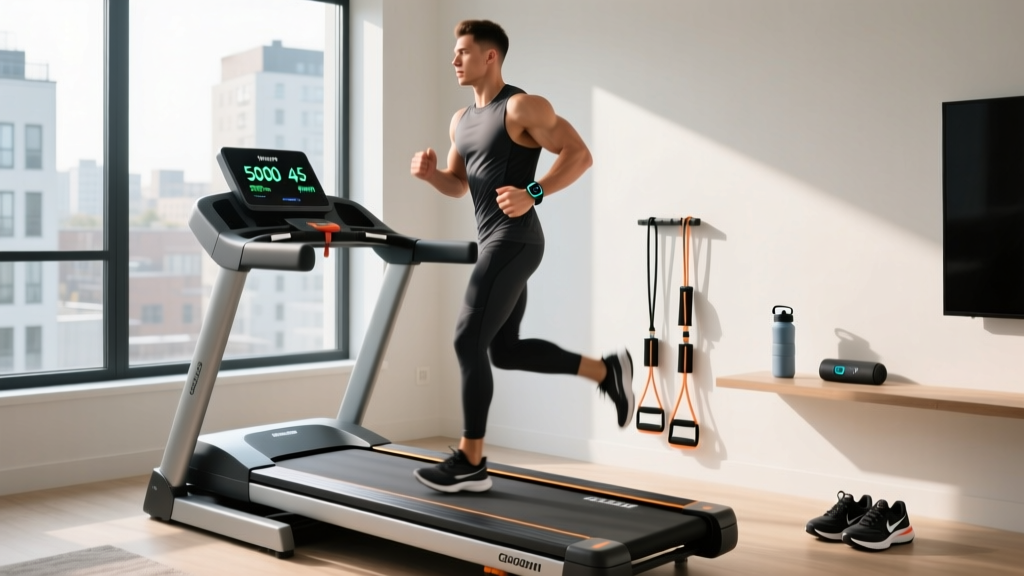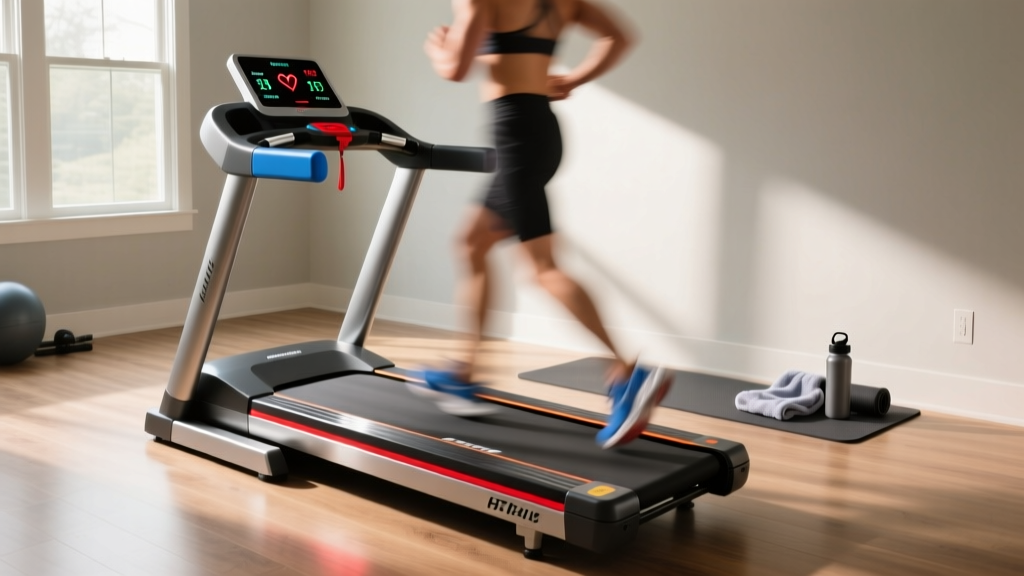
High Intensity Interval Training Treadmill Workout: Compact Gear Care
Learn essential maintenance tips to protect compact cardio equipment when performing a high intensity interval training treadmill workout at home.

The Mechanical Reality of Compact Treadmills in 2026
The shift toward micro-apartments and flexible home offices has made compact, foldable cardio equipment a staple in modern fitness routines. Devices like the WalkingPad X21, Echelon Stride, and various under-desk treadmills offer incredible convenience. However, a significant conflict arises when users attempt to push these space-saving machines beyond their intended design limits. Specifically, executing a rigorous high intensity interval training treadmill workout on a machine engineered primarily for steady-state walking or light jogging can lead to catastrophic mechanical failure if proper maintenance and operational boundaries are not respected.
According to the American Council on Exercise (ACE), HIIT protocols require rapid, explosive changes in speed and incline, generating immense torque and friction. While a commercial gym treadmill boasts a 4.0 Continuous Horsepower (CHP) AC motor and a reinforced steel deck, most portable treadmills utilize 1.25 to 1.75 CHP DC motors and lightweight aluminum frames. Understanding how to maintain and protect your compact gear during these demanding sessions is critical for longevity and safety.
⚠️ Thermal Shutdown Warning: Most compact treadmill control boards are programmed to trigger a thermal safety shutdown when the internal motor temperature reaches 105°C (221°F). A 1.75 CHP motor running at 8.0 mph with a 180 lb user can hit this threshold in just 12 minutes of continuous interval sprinting. Always allow for active cooling periods.Pre-Workout Calibration: Belt Tension and Alignment
The most immediate danger during a high intensity interval training treadmill workout is belt slip. When you transition from a 3.0 mph recovery jog to an 8.5 mph all-out sprint, the sudden force of your footstrike can cause a loose belt to hesitate or slip over the front roller. This not only ruins the workout interval but poses a severe fall hazard.
Step-by-Step Belt Tensioning Protocol
- The Lift Test: With the machine powered off, reach under the center of the treadmill belt. You should be able to lift it exactly 2 to 3 inches off the deck. If it lifts higher, it is too loose; if lower, it is over-tensioned and will strain the motor.
- Locate the Rear Roller Bolts: Find the two hex-key adjustment bolts at the very back of the left and right side caps.
- Micro-Adjustments: Using the provided M8 hex wrench, turn both bolts exactly one-quarter (1/4) turn clockwise. Never adjust one side more than the other, or the belt will track off-center.
- The Walk Test: Power the machine to 2.0 mph and walk on the edges of the belt to ensure it does not slip underfoot before attempting any sprints.
Lubrication Schedules: Standard Use vs. HIIT Sprints
Friction is the enemy of compact treadmill longevity. During interval training, the rapid acceleration and deceleration generate significantly more heat between the belt and the MDF (medium-density fiberboard) deck than steady walking. This heat can cause the deck's wax coating to melt and the belt's PVC underside to degrade, leading to warping and increased motor amperage draw.
Using 100% silicone treadmill lubricant is non-negotiable. Petroleum-based products will destroy the belt. Below is a data-driven maintenance schedule comparing standard use to HIIT-specific wear and tear.
| Maintenance Metric | Standard Walking (Under 4.0 mph) | HIIT Sprint Protocols (6.0+ mph) |
|---|---|---|
| Lubrication Frequency | Every 150 miles or 3 months | Every 75 miles or 6 weeks |
| Silicone Volume per Application | 10 ml (approx. 2 squirts) | 15 ml (approx. 3 squirts) |
| Deck Inspection Interval | Annually | Every 4 months (check for grooving) |
| Estimated Belt Lifespan | 3 to 5 years ($40 - $60 replacement) | 12 to 18 months ($40 - $60 replacement) |
Active Cooling and Post-Workout Motor Care
Because portable treadmills lack the massive internal cooling fans found in commercial models, heat dissipation is a primary concern. The Consumer Reports Treadmill Buying Guide consistently notes that motor overheating is the leading cause of control board failure in compact fitness equipment.
Implementing a Post-HIIT Cooldown Routine
- Do Not Power Off Immediately: After your final sprint, do not just turn the machine off. Drop the speed to 2.0 mph and let the belt run empty for 3 to 5 minutes. The movement of the belt helps pull ambient air through the motor housing, accelerating the cooling process.
- Elevate the Deck: If your foldable treadmill stores flat under a bed or sofa, never store it immediately after a HIIT session. Leave it unfolded and slightly elevated (using the manual incline feet if available) to allow heat to escape from the underside of the deck.
- External Airflow: For users running intense intervals in small, poorly ventilated rooms, positioning a standard oscillating floor fan to blow directly across the front motor cover can drop internal operating temperatures by up to 12°C.
When Compact Treadmills Fail: Alternative Portable HIIT Options
Sometimes, the physics of compact gear simply cannot support your fitness ambitions. If you weigh over 200 lbs or consistently run sprints above 9.0 mph, a 1.5 CHP foldable treadmill will eventually fail, often resulting in a burned-out motor control board (a $120 to $250 replacement part). If your primary goal is a true high intensity interval training treadmill workout, but space is at a premium, consider these compact alternatives that handle explosive power output much better:
"The physiological demands of HIIT require equipment that can absorb rapid kinetic energy spikes. When spatial constraints rule out commercial treadmills, pivoting to magnetic resistance or air-based portable equipment is often the smartest biomechanical and financial decision."
Top Portable HIIT Alternatives for Small Spaces
- Foldable Air Rowers (e.g., Stamina X Air Rower): Priced around $350, these machines use wind resistance, meaning the resistance scales infinitely with your effort. They fold vertically, take up less than 4 square feet of floor space, and have no motor to overheat.
- Portable Smart Bikes (e.g., MYX II or compact Echelon EX-3): While not as small as a walking pad, these bikes feature heavy-duty flywheels and magnetic resistance that can handle the violent torque changes of Tabata or sprint intervals without mechanical degradation.
- Under-Desk Ellipticals with High Resistance: For low-impact HIIT, modern magnetic under-desk ellipticals offer 16+ levels of resistance. They eliminate the foot-strike impact that destroys compact treadmill decks.
Frequently Asked Questions
Can I add an external cooling fan to my portable treadmill's motor housing?
While technically possible, drilling into the plastic motor shroud to mount an external PC-style fan can void your warranty and create a dust-ingestion hazard. It is safer to use an external oscillating room fan directed at the intake vents.
How do I know if my treadmill deck is warped from HIIT heat?
Place a straight edge (like a metal ruler) across the width of the deck. If you see daylight beneath the center of the ruler, the MDF has warped downward due to heat and friction. A warped deck will cause the belt to track poorly and will eventually snap the belt seams. Replacement decks typically cost between $80 and $150.
What does the Mayo Clinic say about HIIT frequency?
According to Mayo Clinic experts, HIIT sessions should generally be limited to 2 to 3 times per week with adequate recovery in between. This physiological recovery period also conveniently aligns with the thermal recovery and maintenance windows required for compact treadmill motors.
Is it worth upgrading the motor on a foldable treadmill?
No. Compact treadmill frames and control boards are wired specifically for the amperage of their stock DC motors. Installing a higher-wattage motor will likely trip the internal breaker or melt the wiring harness. If you outgrow your machine's motor, it is time to upgrade the entire unit.
More gear to consider
All reviews
Rowing vs Treadmill: How Many Steps is 30 Minutes on the Treadmill?
Setup the NordicTrack Elite 5700 Treadmill for Whisper-Quiet Use

Treadmill Motor Size Guide: What Is a Treadmill Mat?

Treadmill Buying Guide: Best Reading Stand Features (2026)

NordicTrack T 5.5 Treadmill Belt Maintenance & Value Breakdown