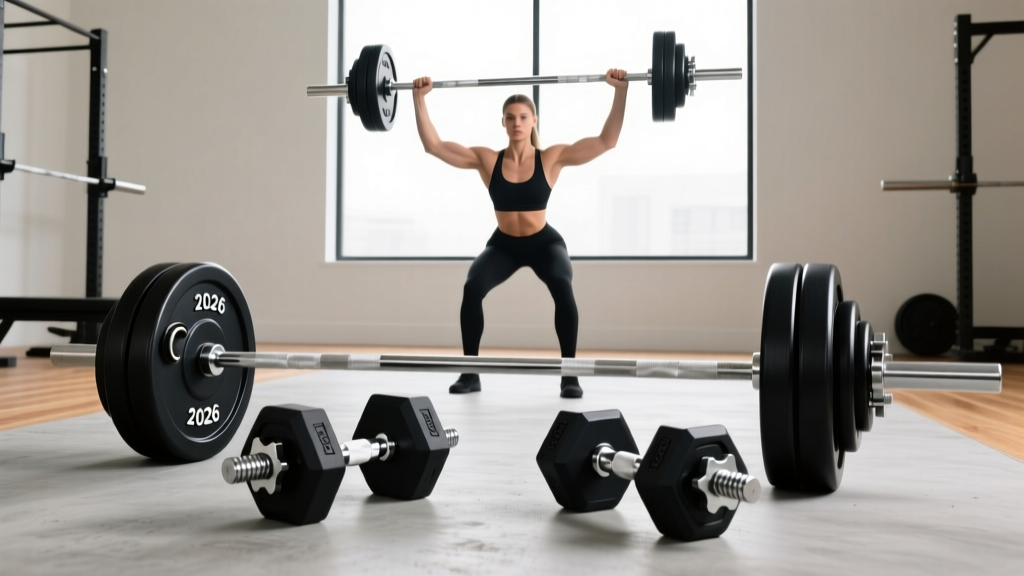
Olympic vs Standard Plates for a Dumbbell Total Body Workout Routine
Compare Olympic vs standard weight plates for your dumbbell total body workout routine. Discover clearance, ROM, and cost differences for home gyms.

The Biomechanical Clash: 1-Inch Standard vs. 2-Inch Olympic Ecosystems
When outfitting a home gym for a comprehensive dumbbell total body workout routine, most lifters immediately gravitate toward fixed hex dumbbells. However, for those utilizing space-saving plate-loaded dumbbell handles, the choice between 1-inch standard weight plates and 2-inch (50mm) Olympic weight plates dictates not just your budget, but the actual biomechanical viability of your training. The hub diameter difference seems minor on paper, but it fundamentally alters sleeve length, plate clearance, and range of motion (ROM) during complex, multi-joint movements.
⚙️ The Core Specification Divide:Standard Plates: Feature a 1-inch (25.4mm) center hole, designed for lightweight, entry-level threaded or smooth 1-inch handles.
Olympic Plates: Feature a 2-inch (50.8mm) center hole, engineered for heavy-duty loadable dumbbell handles and Olympic barbells.
Choosing the wrong ecosystem for your plate-loaded dumbbells can lead to awkward wrist deviations, restricted chest stretches, and premature equipment failure. In this head-to-head comparison, we break down exactly how standard cast iron and Olympic urethane/bumper plates perform when loaded onto dumbbell handles for full-body training.
The Range of Motion (ROM) Trap: How Plate Diameter Impacts Your Routine
The most critical, yet frequently overlooked, factor when selecting plates for a dumbbell total body workout routine is the physical diameter of the plate itself. According to biomechanical principles outlined by the ExRx Kinesiology Database, the distance from the load's center of mass to the joint axis directly impacts torque and stabilization demands. When using plate-loaded dumbbells, the plate's outer diameter dictates your physical clearance.
1. The Goblet Squat & Lunge Clearance
A staple in any full-body routine, the Goblet Squat requires holding a single dumbbell vertically against your chest. If you load an Olympic dumbbell handle with standard 45lb Olympic bumper plates (which measure 17.7 inches or 450mm in diameter), the plates will physically collide with your torso and chin, forcing you to hold the weight further away from your center of gravity. This shifts the load from your quads to your anterior deltoids and lower back. Conversely, standard 1-inch 25lb cast iron plates measure roughly 11.5 inches in diameter, allowing the handle to sit flush against your sternum for proper squat mechanics.
2. Floor Presses & Chest Flyes
When performing floor presses to limit shoulder extension and protect the rotator cuff, Olympic 45lb plates restrict your ROM severely. The 17.7-inch diameter hits the floor before your triceps and pecs achieve a meaningful stretch. Standard 1-inch plates, being smaller in diameter, allow your elbows to travel deeper, providing superior hypertrophic stimulus for the chest.
3. Renegade Rows & Plank Drag-Throughs
For core-heavy dumbbell movements, stability is paramount. Standard 1-inch cast iron plates are narrow, prone to rolling, and will gouge hardwood floors or tear rubber mats during renegade rows. Olympic bumper plates or thick urethane Olympic plates provide a wide, flat, dead-bounce surface that acts as a stable base for plank-based total body exercises.
Head-to-Head Spec & Performance Matrix
Below is a direct comparison of how a 50lb plate-loaded dumbbell setup performs across both ecosystems. Data reflects 2026 market standards for premium home gym equipment.
| Feature | 1-Inch Standard Cast Iron | 2-Inch Olympic Urethane/Bumper |
|---|---|---|
| Handle Compatibility | CAP Barbell 14' Smooth/Threaded | Rogue Loadable Dumbbell |
| Max Sleeve Load | ~45 lbs (before collar slippage) | 110+ lbs (secured via spring collars) |
| Wrist Ergonomics | Poor (Long sleeves shift center of mass) | Excellent (Compact handle, weight stays close) |
| Floor Friendliness | Low (Chips paint, damages subfloors) | High (Rubber/Urethane absorbs impact) |
| Cost Per Pound (Avg) | $1.20 - $1.50 / lb | $2.80 - $4.50 / lb |
Material Degradation and Failure Modes
When executing high-repetition circuits in a dumbbell total body workout routine, equipment failure modes become highly apparent. The National Strength and Conditioning Association (NSCA) emphasizes that equipment integrity directly correlates with lifter safety, particularly during dynamic movements like dumbbell snatches or thrusters.
Standard 1-Inch Cast Iron: The Budget Starter
- The Good: Unbeatable price point. Standard plates are widely available on the secondary market for pennies on the dollar.
- The Bad: 1-inch handles require long sleeves to accommodate multiple plates. A 16-inch handle with four 10lb standard plates creates a massive lever arm. During lateral raises or front raises, this extended center of mass places immense, unnatural shear force on the wrist joint.
- Failure Mode: The threaded collars on standard handles routinely strip or loosen mid-set, leading to plates sliding off during overhead presses—a severe safety hazard.
Olympic 2-Inch Urethane: The Serious Lifter's Choice
- The Good: Olympic loadable dumbbell handles (like those from Titan Fitness or Rogue) feature thick, knurled 2-inch sleeves that mimic the grip of a fixed hex dumbbell. The weight sits tight against the hand.
- The Bad: The initial buy-in is steep. You must purchase 2-inch plates, which are significantly more expensive per pound than standard iron.
- Failure Mode: Cheaper recycled rubber Olympic plates emit a noxious off-gassing odor and can degrade when exposed to UV light or extreme garage temperatures, eventually cracking around the steel hub insert.
Expert Insight: "When programming a total body routine with plate-loaded dumbbells, always prioritize 10lb and 25lb Olympic plates over 45lb plates for upper-body pressing. The smaller diameter of the 10lb (9-inch) and 25lb (14-inch) Olympic plates preserves your pressing range of motion, whereas 45lb plates will artificially shorten your stroke and limit pec activation."
2026 Cost Breakdown: Building a 100lb Dumbbell Set
To understand the true financial commitment of each ecosystem, let's break down the cost of building a pair of 50lb dumbbells (100lb total) using 2026 retail pricing.
- Standard 1-Inch Ecosystem:
- Pair of 14' Standard Handles: $25.00
- Four 25lb Cast Iron Plates: $60.00
- Standard Spinlock Collars: $15.00
- Total Investment: ~$100.00
- Olympic 2-Inch Ecosystem:
- Pair of Rogue Loadable Dumbbell Handles: $175.00
- Four 25lb Virgin Rubber Olympic Plates: $160.00
- Pair of 1.5' Spring Collars: $25.00
- Total Investment: ~$360.00
While the Olympic setup is over three times more expensive, the ergonomic benefits, safety features, and compatibility with standard Olympic barbells make it the superior long-term investment for serious home gym owners.
Final Verdict: Matching Plates to Your Training Age
Your choice between Olympic and standard weight plates should be dictated by your training age, budget, and the specific demands of your dumbbell total body workout routine.
Choose 1-Inch Standard Plates If: You are a beginner on a strict budget, your routine consists primarily of basic isolation movements (bicep curls, tricep extensions), and you do not plan to drop the dumbbells on the floor. Be mindful of the extended sleeve length and avoid heavy, dynamic full-body movements where collar slippage is a risk.
Choose 2-Inch Olympic Plates If: You are an intermediate to advanced lifter executing complex, multi-planar total body routines. The superior grip ergonomics of Olympic loadable handles, combined with the floor-friendly nature of urethane or bumper plates, provides a safe, commercial-gym-quality experience. Just remember to stock up on 10lb and 25lb diameter plates to preserve your range of motion during chest and shoulder presses.
More gear to consider
All reviews
Loadable Dumbbells: The 2026 Women's Dumbbell Workout Routine Trend

Iron Bull Dumbbell & Bar Care: EZ Curl vs Straight Bar Longevity
Best Adjustable Dumbbells for Two Arm Seated Dumbbell Extension

Adjustable Dumbbell Review: Setup for Chest Exercise with Dumbbells

Cast Iron vs Competition Kettlebells & Straight Arm Dumbbell Pullover