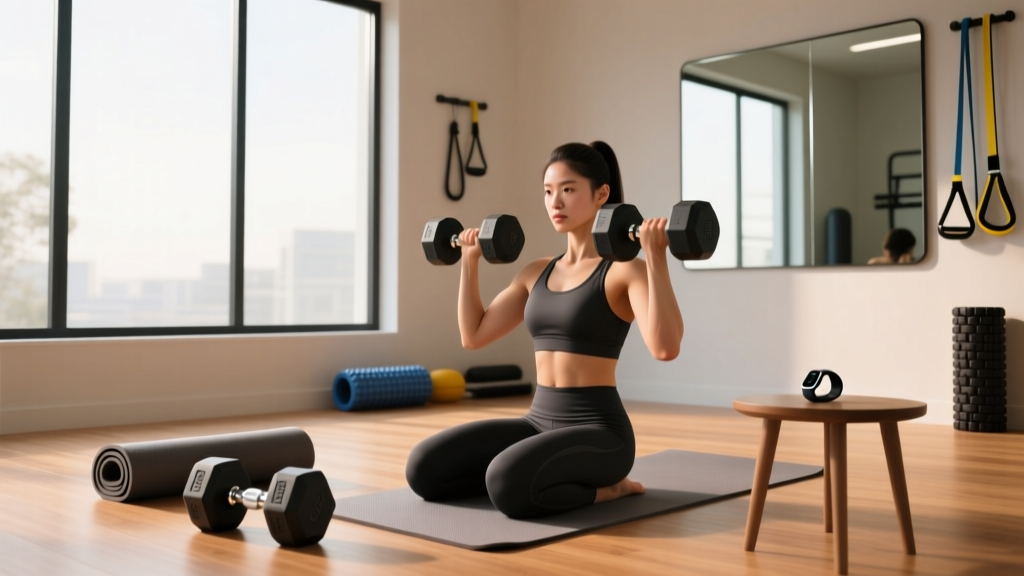
Troubleshooting Seated Exercises with Dumbbells: Neoprene Home Guide
Fix common form and gear mistakes during seated exercises with dumbbells. Expert troubleshooting for neoprene coated weights in your home gym.

The Biomechanical Reality of Seated Movements
Building a home gym in 2026 almost guarantees the presence of neoprene-coated hex dumbbells. Brands like Yes4All, CAP Barbell, and Amazon Basics dominate the market, offering floor-friendly, noise-reducing weights that typically range from $1.20 to $1.60 per pound. However, when you transition to seated exercises with dumbbells, the combination of fixed bench positioning and the unique material properties of neoprene introduces specific biomechanical and equipment-related failure modes.
Unlike standing movements, seated exercises eliminate the kinetic chain transfer from your lower body. Your glutes, hamstrings, and calves are entirely removed from the stabilization equation. This means your lumbar spine and core must absorb 100% of the shear force and rotational torque. When you pair this isolated spinal load with the specific grip and weight limitations of neoprene dumbbells, form breakdowns are incredibly common. This guide will troubleshoot the most frequent mistakes and provide actionable fixes for your home training.
Material Troubleshooting: Neoprene Grip Degradation
Neoprene (polychloroprene) is an excellent synthetic rubber for protecting hardwood floors and reducing the acoustic impact of dropped weights. However, it is highly susceptible to human sebum and sweat. Over 6 to 12 months of regular home gym use, the oils from your palms break down the porous surface of the neoprene, creating a slick, almost greasy film.
The Mistake: Over-Gripping to Compensate for Slip
When performing seated exercises with dumbbells—such as seated shoulder presses or seated bicep curls—lifters often subconsciously squeeze the handle with excessive force to prevent the dumbbell from slipping. This premature forearm flexor fatigue limits your ability to overload the target muscle (e.g., the anterior deltoids or biceps brachii).
The Fix: Proper Maintenance and Grip Aids
- Cleaning Protocol: Never use bleach or high-concentration isopropyl alcohol on neoprene; this dries out the rubber, leading to peeling and cracking. Instead, wipe down your dumbbells after every session with a microfiber cloth dampened with a 50/50 mix of water and mild dish soap.
- Chalk Usage: Liquid chalk (magnesium carbonate suspended in alcohol) is superior to loose chalk for home gyms. It dries out the neoprene surface instantly, restoring grip without leaving a messy residue on your floors or bench.
If your older neoprene dumbbells are flaking or peeling near the handle junction, it is time to retire them. Ingesting or inhaling micro-particles of degraded synthetic rubber is a health hazard. Upgrade to urethane-coated hex dumbbells (approx. $2.00/lb), which offer similar floor protection but are entirely impervious to sweat degradation and do not peel.
Postural Mistakes and Bench Angle Errors
The adjustable utility bench is the cornerstone of seated training. Yet, improper bench angles severely compromise joint health during seated exercises with dumbbells.
Seated Overhead Shoulder Press
The Mistake: Setting the bench backrest to a perfectly vertical 90 degrees. This forces the humerus into extreme external rotation at the top of the movement, dramatically increasing the risk of shoulder impingement and rotator cuff strain. It also encourages excessive lumbar arching.
The Fix: Adjust your bench (such as the popular Flybird or Bowflex adjustable models) to a 75-degree or 80-degree incline. This slight backward tilt keeps the spine in a neutral alignment, reduces lower back shear force, and allows the scapula to move freely against the pad.
Seated Incline Bicep Curls
The Mistake: Setting the bench too low (e.g., 30 degrees) and allowing the elbows to drift behind the torso, which places the long head of the bicep under extreme, uncontrolled stretch at the shoulder joint.
The Fix: Set the bench to 45 or 60 degrees. Keep your elbows pinned slightly in front of your midline. According to Mayo Clinic's strength training guidelines, maintaining proper joint alignment and avoiding hyperextension is critical for preventing tendonitis in isolated movements.
Data Matrix: Seated Movements and Neoprene Weight Selection
Neoprene dumbbells are generally manufactured in lighter increments, capping out around 15 to 20 pounds for most home sets. Below is a troubleshooting matrix for common seated movements using these specific weights.
| Exercise | Ideal Neoprene Weight (2026 Avg Cost) | Common Mistake | Troubleshooting Fix |
|---|---|---|---|
| Seated Lateral Raise | 8–12 lbs ($15–$22/pair) | Shrugging traps to initiate the lift. | Depress scapula; lead with the elbow, not the hand. |
| Seated Russian Twist | 10–15 lbs ($18–$28/pair) | Rotating only the arms, not the thoracic spine. | Hold dumbbell close to chest; rotate shoulders as a single unit. |
| Seated Tricep Extension | 15–20 lbs ($25–$35/pair) | Flaring elbows outward, stressing the joint. | Keep elbows pointing straight up and tucked near ears. |
| Seated Arnold Press | 12–15 lbs ($22–$28/pair) | Rushing the rotational phase of the movement. | Pause for 1 second at the bottom before pressing up. |
The Lightweight Trap: Troubleshooting Progressive Overload
The most significant limitation of using neoprene coated dumbbells for home use is the weight ceiling. Once you can comfortably press 20-pound neoprene dumbbells for 12 repetitions, you have exhausted the standard progressive overload model of simply "adding more weight."
As noted by Harvard Health Publishing, muscle hypertrophy and endurance can still be achieved with lighter weights, provided you manipulate time under tension and proximity to failure. Here is how to troubleshoot the lightweight trap during seated exercises with dumbbells:
- Implement 1.5 Repetitions: Lower the dumbbell all the way down, come halfway up, return to the bottom, and then press all the way up. This counts as one rep and drastically increases time under tension.
- Eccentric Overloads: Use a 3-to-4-second negative phase. For a seated bicep curl, take a full 4 seconds to lower the neoprene dumbbell back to your thigh. This causes micro-tears in the muscle fibers that stimulate growth even with sub-maximal loads.
- Isometric Pauses: Introduce a hard, 2-second isometric hold at the point of maximum contraction (e.g., when the dumbbell is at shoulder level during a lateral raise).
Expert Insight: "When you are restricted to lighter neoprene dumbbells, your central nervous system adapts quickly to the standard tempo. By manipulating the eccentric phase and adding isometric pauses during seated exercises, you force the muscle to recruit high-threshold motor units without needing a 50-pound iron dumbbell."
Step-by-Step Diagnostic Checklist
Before your next home gym session, run through this quick troubleshooting checklist to ensure your gear and form are optimized for seated training:
- Step 1: Inspect the neoprene coating. If it feels slick or oily, wipe it down with soapy water and apply liquid chalk before lifting.
- Step 2: Verify your bench angle. Ensure the backrest is set to 75° for overhead presses and 45°-60° for incline curls to protect your rotator cuffs and lumbar spine.
- Step 3: Check your foot placement. Even though you are seated, your feet should be planted flat on the floor, shoulder-width apart, to provide a stable base and prevent pelvic tilting.
- Step 4: Program your tempo. If you are using the heaviest neoprene dumbbells you own, write down a 3-second eccentric tempo for your working sets to guarantee muscle failure.
Final Thoughts on Home Gym Optimization
Neoprene coated dumbbells remain an excellent, budget-friendly investment for home gyms in 2026, particularly for high-repetition endurance work, rehabilitation, and quick circuit training. However, executing seated exercises with dumbbells requires a keen awareness of both your body's biomechanics and the physical limitations of your equipment. By troubleshooting your bench angles, maintaining the synthetic rubber grip, and utilizing advanced tempo techniques to overcome weight ceilings, you can maximize muscle growth and joint safety without ever needing to step foot in a commercial gym.
More gear to consider
All reviews
Barbell Clamps Compared: Beyond the Dumbbell Workout Plan PDF

Space Layouts for Working Out Only With Dumbbells: Loadable Plates

Mazoni Golden Dumbbell vs Nuobell: 2026 Adjustable Weight Showdown

EZ vs Straight Bar: Seated Dumbbell Tricep Extension Trends 2026

Best Dumbbell Racks for Your Arm and Shoulder Workout with Dumbbells
