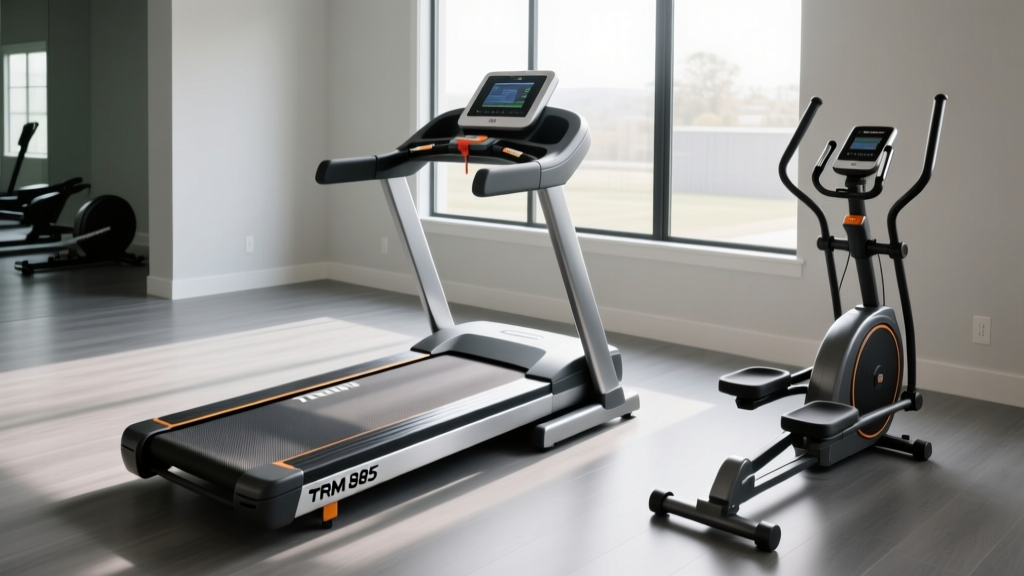
TRM 885 Treadmill vs. Compact Portable Cardio: Space Guide
Discover why the commercial TRM 885 treadmill fails small spaces and explore premium compact portable cardio options for optimized home gym layouts.

The Commercial Trap: Why the TRM 885 Treadmill Fails Small Spaces
When designing a luxury home gym, the allure of commercial-grade equipment is undeniable. The Precor TRM 885 treadmill is a masterpiece of biomechanical engineering, featuring an Integrated Footplant Technology (IFT) belt speed system and a massive 22-inch by 60-inch running surface. However, from a space optimization and layout design perspective, deploying the TRM 885 treadmill in a standard residential setting is often a critical miscalculation.
As of 2026, high-density living and multi-use room designs demand rigorous spatial efficiency. The TRM 885 measures 83 inches long and 35 inches wide. But the physical footprint is only half the equation. According to safety guidelines highlighted by Consumer Reports, motorized treadmills require a minimum of 30 to 39 inches of unobstructed clearance behind the machine to prevent severe injury in the event of a fall. This pushes the TRM 885’s operational length to nearly 122 inches (over 10 feet). Furthermore, its 460-pound weight and requirement for a dedicated 20-amp electrical circuit make it entirely unsuitable for upper-floor bedrooms, apartments, or flexible multi-use spaces.
Warning: Ceiling Clearance CalculationsDo not forget the vertical axis. The TRM 885’s deck sits roughly 9 inches off the floor. To prevent head strikes during high-incline sprints (up to 15%), you must add the user's height, the 9-inch deck height, and a 15-inch safety buffer to your ceiling height requirement. In rooms with standard 8-foot ceilings, this commercial unit becomes a hazard.
The Space-Optimized Cardio Matrix: Compact Alternatives
To achieve premium cardiovascular conditioning without sacrificing your floor plan, you must pivot to compact portable cardio equipment options. Modern engineering has closed the gap between commercial durability and residential portability. Below is a comparative matrix of high-end, space-efficient alternatives that deliver elite performance metrics while respecting spatial constraints.
| Equipment Model | In-Use Footprint | Stored Footprint | Weight | 2026 Price Range |
|---|---|---|---|---|
| Precor TRM 885 (Baseline) | 83" x 35" (+39" clearance) | Non-storable | 460 lbs | $11,000+ |
| Concept2 RowErg (Model D) | 96" x 24" | 27" x 25" (Vertical) | 57 lbs | $990 |
| Sole F85 Folding Treadmill | 80" x 35" (+30" clearance) | 40" x 35" x 73" | 280 lbs | $1,999 |
| Peloton Bike+ (Smart Cycle) | 59" x 22" | 59" x 22" (Static) | 140 lbs | $2,495 |
| WalkingPad X21 (Ultra-Compact) | 63" x 22" | 38" x 22" x 8" | 65 lbs | $599 |
1. Premium Portable Rowers: The Vertical Storage Kings
If your layout cannot accommodate the 10-foot operational length of a commercial treadmill, the Concept2 RowErg is the undisputed champion of spatial efficiency. In use, it requires a 96-inch length, but its two-piece rail design allows it to be separated and stored vertically against a wall, occupying a mere 27-inch by 25-inch floor footprint. According to the American Council on Exercise (ACE), rowing engages over 80% of the body's muscle mass, providing a higher cardiovascular ROI per minute than walking or light jogging. For home gym designers, the Concept2 offers zero electrical requirements, meaning it can be placed in the center of a room near a window without worrying about cord routing or outlet proximity.
2. Heavy-Duty Folding Treadmills: The Direct Pivot
For users who refuse to abandon the running motion, the Sole F85 represents the optimal compromise between the heavy-duty feel of a TRM 885 and residential spatial realities. While it still requires rear safety clearance during operation, its hydraulic folding mechanism reduces its resting footprint by nearly 50%. The F85 features a 4.0 HP motor and a 22-inch by 60-inch belt—matching the TRM 885’s running surface—but weighs 180 pounds less and operates on a standard 15-amp household circuit. When folded, it locks securely into a 40-inch by 35-inch stance, allowing you to reclaim the center of your multi-use room when the workout is complete.
3. Magnetic Resistance Bikes: The Zero-Clearance Heroes
When optimizing studio apartments or converting small dens into fitness spaces, stationary smart bikes like the Peloton Bike+ or the Echelon EX5s offer the ultimate zero-clearance advantage. Unlike treadmills, bikes do not require rear fall zones or lateral dismount clearance. A 59-inch by 22-inch footprint can be tucked into the corner of a bedroom or positioned directly in front of a television. The magnetic resistance systems are virtually silent, eliminating the acoustic footprint and low-frequency vibration issues associated with motorized treadmills in shared-wall living environments.
Layout Design Framework: Mapping Your Cardio Zone
Integrating compact portable cardio equipment options into your home requires a systematic approach to layout design. Professional fitness facility planners utilize a multi-zone framework to ensure safety, airflow, and usability. Apply this 3-zone framework to your residential space:
- Zone 1: The Active Footprint. This is the physical dimension of the machine itself. Always measure this against your room's primary walkways to ensure doors and closets can open fully without striking the equipment.
- Zone 2: The Safety & Ventilation Buffer. As noted by safety experts, treadmills need a 30-inch rear buffer. Additionally, cardio equipment generates significant ambient heat. Ensure your Zone 2 aligns with HVAC vents or window placements to provide cross-breeze cooling, preventing equipment overheating and user fatigue.
- Zone 3: The Transition & Maintenance Area. Leave at least 18 inches of lateral space on one side of the machine. This allows you to easily access the power switch, perform belt lubrication, or clean the motor hood without having to pull the heavy equipment away from the wall.
Designing a home gym is not just about what fits in the room; it is about how the room functions when the equipment is not in use. Portability and folding capabilities are the ultimate luxury in modern residential design.
Flooring and Vibration Dampening for Multi-Use Rooms
A common failure mode in home gym design is neglecting the subfloor interaction, particularly when transitioning from commercial gear to portable options. The TRM 885’s massive weight naturally dampens vibration, but lighter, compact portable cardio equipment options like the WalkingPad X21 or lightweight folding treadmills can transmit high-frequency impact noise directly into floor joists, disturbing occupants in rooms below.
To solve this, abandon standard interlocking EVA foam puzzle mats. Instead, invest in 3/8-inch vulcanized rubber stall mats or specialized PVC fitness tiles. According to architectural acoustics guidelines referenced by Apartment Therapy, dense rubber absorbs kinetic energy and prevents the 'drum effect' on hardwood or laminate subfloors. For ultra-compact treadmills, placing a high-density anti-vibration pad specifically under the motor housing will reduce acoustic transfer by up to 40%.
Final Verdict: Maximizing ROI per Square Foot
The Precor TRM 885 treadmill is an exceptional piece of engineering, but it belongs in a dedicated, climate-controlled commercial facility or a sprawling estate with a designated 150-square-foot fitness wing. For the vast majority of home gym builders in 2026, space optimization dictates a shift toward intelligent, compact portable cardio equipment options. By leveraging vertical storage rowers, hydraulic folding treadmills, and zero-clearance smart bikes, you can achieve elite cardiovascular conditioning while maintaining a functional, breathable, and aesthetically pleasing living environment. Measure twice, account for safety clearances, and prioritize equipment that adapts to your space—not the other way around.
More gear to consider
All reviews
How Does an Anti-Gravity Treadmill Work vs Budget Stationary Bikes?

Does Treadmill Help Weight Loss? Curved vs Motorized Mistakes

Nordic Track 2450 Treadmill vs Under Desk Office Pads: 2026 Review
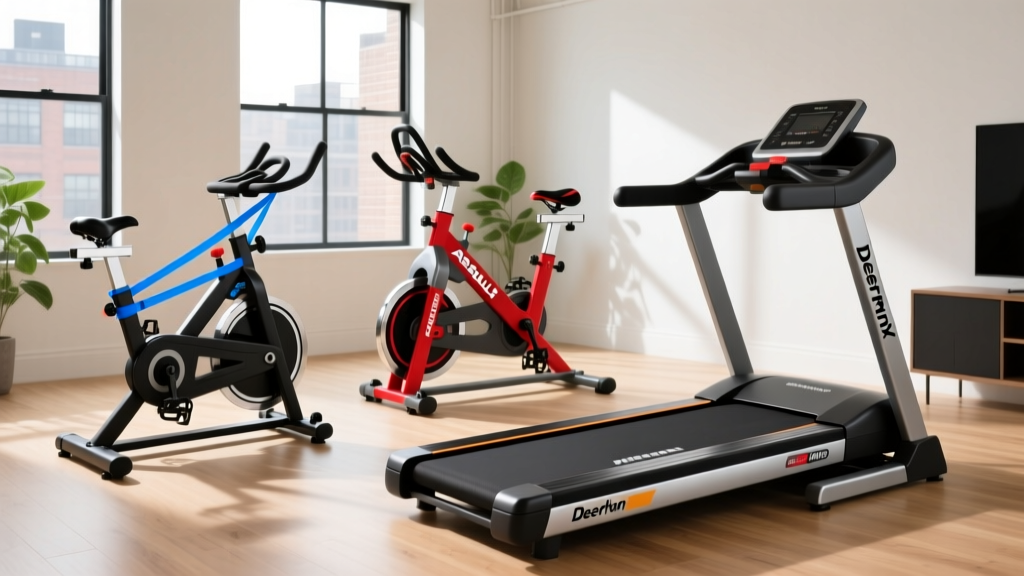
Air Bike vs Assault Bike & DeerRun Z10 Pro Muse Type 2 in 1 Foldable Treadmill

Fixing Motor Stalls at 4 Miles Per Hour on Treadmill: HP Sizing Guide
