Treadmill Weight Loss Plan: Noise Troubleshooting & Machine Comparison
Stick to your treadmill weight loss plan by fixing loud equipment. Explore cardio machine noise comparisons and troubleshoot common squeaks and thumps.

The Hidden Saboteur of Your Treadmill Weight Loss Plan: Noise
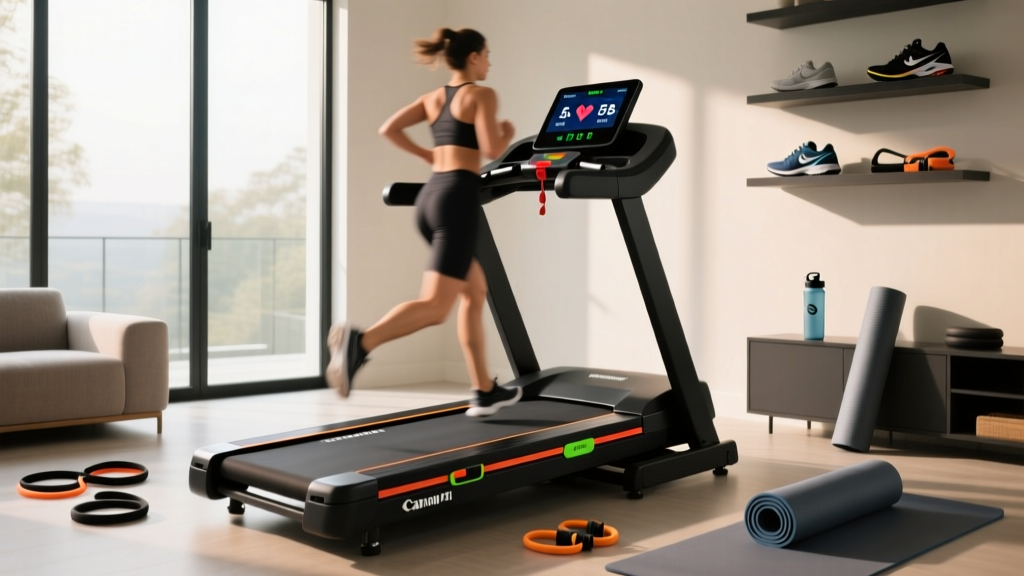
When committing to a structured treadmill weight loss plan, consistency is your most valuable metric. According to the Centers for Disease Control and Prevention (CDC), sustainable weight loss requires a consistent caloric deficit achieved through 150 to 300 minutes of moderate-intensity aerobic activity per week. But what happens when your primary tool for achieving this—a home treadmill—becomes a disruptive nuisance?
Noise is the most frequently overlooked variable when purchasing home cardio equipment. A loud machine leads to skipped early-morning sessions, abandoned late-night fat-burn intervals, and strained relationships with housemates or neighbors. In this comprehensive troubleshooting guide, we will compare the acoustic footprints of popular cardio machines, diagnose the mechanical failures causing your treadmill to sound like a freight train, and provide actionable fixes to keep your weight loss plan on track in 2026.
Cardio Machine Noise Level Comparison Matrix
Before troubleshooting, it is crucial to understand the baseline acoustic expectations of different cardio machines. Sound is measured in decibels (dB), where normal conversation sits around 60 dB and a vacuum cleaner operates at roughly 75 dB. Impact noise (footfalls) and mechanical noise (motors and belts) combine to create the total output.
| Machine Type | Average dB Range | Primary Noise Source | Best Environment | Weight Loss Plan Suitability |
|---|---|---|---|---|
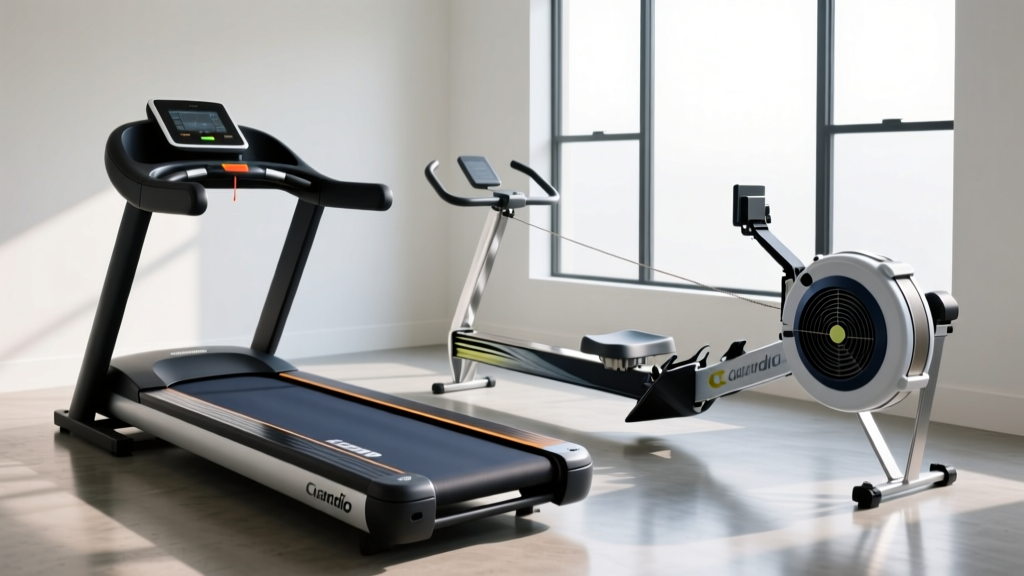
| Motorized Treadmill | 70 - 88 dB | Footfall impact, motor whine, belt friction | Basements, ground floors, garages | High (Excellent for LISS and HIIT) |
| Elliptical Cross-Trainer | 50 - 65 dB | Drive mechanism, pivot joint squeaks | Second-floor apartments, shared walls | High (Low impact, high calorie burn) |
| Magnetic Spin Bike | 40 - 55 dB | Pedal bearings, cooling fan (if equipped) | Bedrooms, small apartments, studios | Medium-High (Great for HIIT/SIT) |
| Air Resistance Bike | 75 - 95 dB | Fan blade wind displacement | Garages, dedicated gym spaces | Medium (Ideal for short Tabata bursts) |
| Water Rower | 65 - 75 dB | Water displacement (swooshing), chain pull | Living rooms, open spaces | Medium (Full-body, lower steady-state) |
Troubleshooting Guide: Diagnosing and Fixing Treadmill Noise
If your treadmill is exceeding its expected decibel range, it is likely suffering from one of three common maintenance mistakes. Addressing these issues is vital to maintaining the daily consistency required for your treadmill weight loss plan.
Mistake 1: Ignoring the Squeak (Belt Friction and Alignment)
A high-pitched squeaking or chirping sound that syncs with your stride indicates excessive friction between the walking belt and the deck. Over time, the factory lubricant dries out, causing the motor to work harder, draw more amps, and generate a whining noise alongside the squeak.
- The Fix: Apply exactly 1 ounce of 100% silicone treadmill lubricant under the belt. Never use WD-40 or petroleum-based oils, as these will degrade the rubber and void your warranty.
- The Tension Test: Lift the walking belt from the center of the deck. It should rise exactly 2 to 3 inches. If it lifts higher, the belt is too loose (causing a slapping noise); if it lifts less, it is too tight (straining the motor and front roller bearings).
Mistake 2: Misdiagnosing the Thud (Impact vs. Roller Failure)
A rhythmic thumping that shakes the floorboards is often blamed on the user's footstrike, but it is frequently a mechanical failure. In 2026, most premium treadmills feature multi-ply belts, but the front and rear rollers utilize sealed ball bearings that eventually fail.
- The Diagnostic: Turn the treadmill off and manually push the walking belt with your hand. If you feel a "catch" or hear a grinding sensation once per revolution, a roller bearing is shot.
- Cost vs. Replace: Replacement rollers cost between $80 and $140. However, if the MDF deck itself is warped or grooved (which happens after 1,500+ miles of heavy use), the friction will destroy a new belt within months. A replacement deck and belt kit usually costs $200 to $350.
Mistake 3: Overlooking Motor Whine (The CHP Mismatch)
If your treadmill emits a loud, strained whine when you increase the incline or speed, you may be exceeding the machine's Continuous Horsepower (CHP) rating. A common mistake is buying a treadmill with a 2.0 CHP motor for a user weighing over 200 lbs. The motor must draw excessive voltage to maintain speed under load, resulting in severe acoustic whining and premature capacitor failure.
Expert Warning: For any serious treadmill weight loss plan involving users over 200 lbs or frequent incline walking, you must use a machine with a minimum of 3.0 CHP. Peak horsepower (often advertised on budget models) is a marketing gimmick and does not reflect sustained operational noise or heat generation.Acoustic Mistakes: The Subfloor Amplification Effect
Many users buy a premium, quiet treadmill only to find it sounds like a drum in their home. This is due to structural impact transmission. When your heel strikes the deck, the kinetic energy travels down the uprights, into the floor, and through the floor joists.
The Puzzle Mat Trap: The most common mistake is placing the treadmill on interlocking EVA foam puzzle mats (typically 1/2-inch thick). EVA foam is designed for light impact and children's play areas; under the 250+ lbs of combined user and machine weight, it compresses to a fraction of a millimeter, offering zero acoustic isolation.
The Solution: Invest in a 3/8-inch thick, high-density vulcanized rubber mat (costing roughly $80 to $120). Vulcanized rubber absorbs low-frequency impact vibrations before they can transfer into wooden subfloors, reducing perceived downstairs noise by up to 40%.
Adapting Your Treadmill Weight Loss Plan for Shared Spaces
Sometimes, troubleshooting is not enough. If you live in an apartment with strict lease agreements regarding noise and vibrations, you may need to pivot your treadmill weight loss plan to a quieter alternative without sacrificing caloric expenditure. The American Heart Association (AHA) emphasizes that cardiovascular health and weight management rely on heart rate elevation, not the specific modality of the machine.
"Consistency in heart-rate zone training is the primary driver of cardiovascular adaptation and caloric expenditure. The modality is secondary to adherence."
The Magnetic Resistance Pivot: If treadmill noise is destroying your adherence, transition to a heavy-duty magnetic resistance bike (such as the Schwinn IC4 or NordicTrack S22i). These machines operate at roughly 45 dB—quieter than a library. To replicate the caloric burn of a 45-minute treadmill incline walk, perform 35 minutes of high-cadence (90+ RPM) intervals with moderate magnetic resistance. You maintain the exact same heart rate zones required for your weight loss plan, but eliminate the impact noise entirely.
Frequently Asked Questions (FAQ)
How often should I lubricate my treadmill to keep it quiet?
For standard home use (3-4 hours per week), apply 100% silicone lubricant every 3 months or every 150 miles. If you are running a high-volume treadmill weight loss plan (6+ hours a week), lubricate every 6 weeks.
Does a heavier treadmill reduce noise?
Yes. Heavier treadmills (250+ lbs) have a lower center of gravity and more mass to absorb kinetic energy. Budget treadmills weighing under 150 lbs will physically vibrate and "walk" across the floor during running intervals, creating massive secondary noise.
Can I use a treadmill in an upstairs apartment?
It is highly discouraged unless you are walking only (under 4.0 mph) on a 3/8-inch vulcanized rubber mat over a concrete subfloor. If you have wooden floor joists, the low-frequency thud of running will inevitably penetrate the ceiling below, risking noise complaints and lease violations.
More gear to consider
All reviews
Stop Feeling Like a Shrimp on Treadmills: 2026 Stair Climber Guide
Stair Climber vs Treadmill for Weight Loss: Elliptical vs Treadmill

2026 Under Desk Treadmill Review: How to Track Steps on Treadmill

Sunny Health & Fitness P8700 Pink Treadmill vs Walking Pads (2026)
2026 Trends: Elliptical vs Treadmill & Sunny Treadmill SF-T7917