Treadmill Running vs Road Running: The Rowing Machine Guide
We analyze treadmill running vs road running, then reveal why rowing is the ultimate low-impact alternative. Includes a 2026 buying guide and technique tips.

The Biomechanics: Treadmill Running vs Road Running
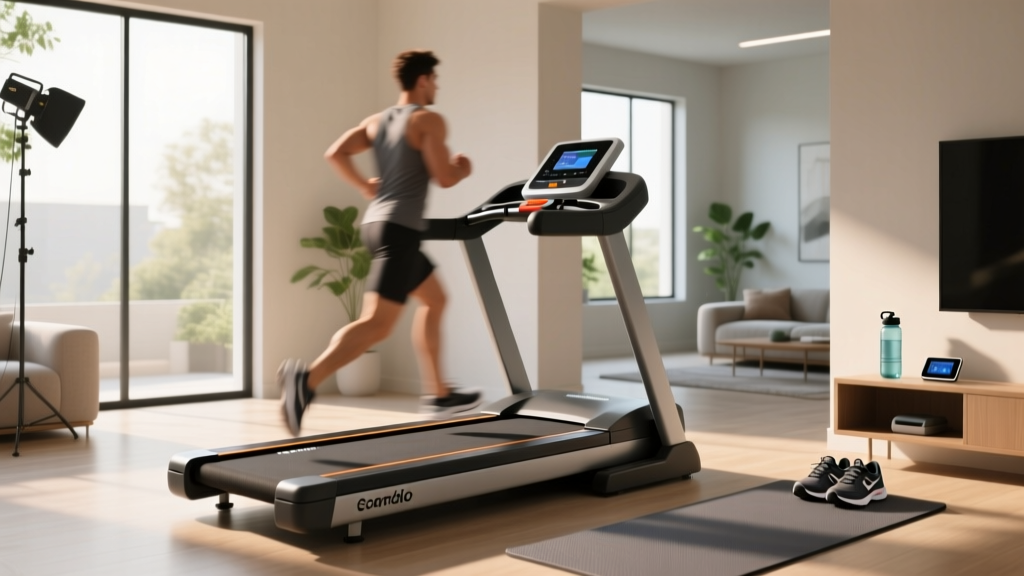
When athletes and physical therapists debate treadmill running vs road running, the conversation inevitably centers on joint impact, biomechanical variance, and environmental control. Road running exposes the kinetic chain to uneven terrain and concrete surfaces, generating ground reaction forces equivalent to 2.5 to 3 times your body weight with every footstrike. Treadmills, conversely, offer engineered deck cushioning—such as the FlexSelect system on the NordicTrack Commercial 1750 ($1,799)—which reduces peak impact forces by up to 15%. However, the motorized belt artificially pulls your leg back, altering hamstring engagement and promoting a shorter, more repetitive stride that can lead to overuse injuries like IT band syndrome.
According to the Mayo Clinic's guidelines on aerobic exercise, while running is exceptional for cardiovascular health, the repetitive axial loading on the lumbar spine and knee menisci makes it unsustainable for many aging athletes or those recovering from lower-extremity injuries. This biomechanical reality is driving a massive shift in home cardio setups for 2026: the pivot toward full-body, zero-impact ergometers.
Head-to-Head Comparison: Treadmill vs. Rowing Ergometer
If you are caught in the treadmill running vs road running dilemma and seeking a joint-sparing alternative that does not sacrifice caloric expenditure, the rowing machine is the undisputed champion. Below is a direct comparison between a premium home treadmill and the gold-standard indoor rower.
| Feature | NordicTrack Commercial 1750 (Treadmill) | Concept2 RowErg (Rowing Machine) |
|---|---|---|
| Retail Price (2026) | $1,799 | $990 |
| Joint Impact | Moderate to High (Axial loading) | Zero (Seated, non-weight bearing) |
| Muscle Engagement | Lower body dominant (approx. 40% of muscle mass) | Full body (approx. 86% of muscle mass) |
| Caloric Burn (Vigorous) | 600 - 800 kcal/hr | 700 - 900 kcal/hr |
| Footprint | 80" L x 38" W (Heavy, difficult to move) | 94" L x 24" W (Separates in two, stores vertically) |
| Power Dependency | Requires 120V dedicated outlet | Self-generated (2 D-cell batteries for monitor) |
2026 Rowing Machine Buying Guide: Resistance & Monitors
Transitioning from the running debate to the rowing market requires understanding the three primary resistance modalities available in 2026. Your choice dictates the machine's feel, maintenance needs, and acoustic footprint.
1. Air Resistance: The Gold Standard
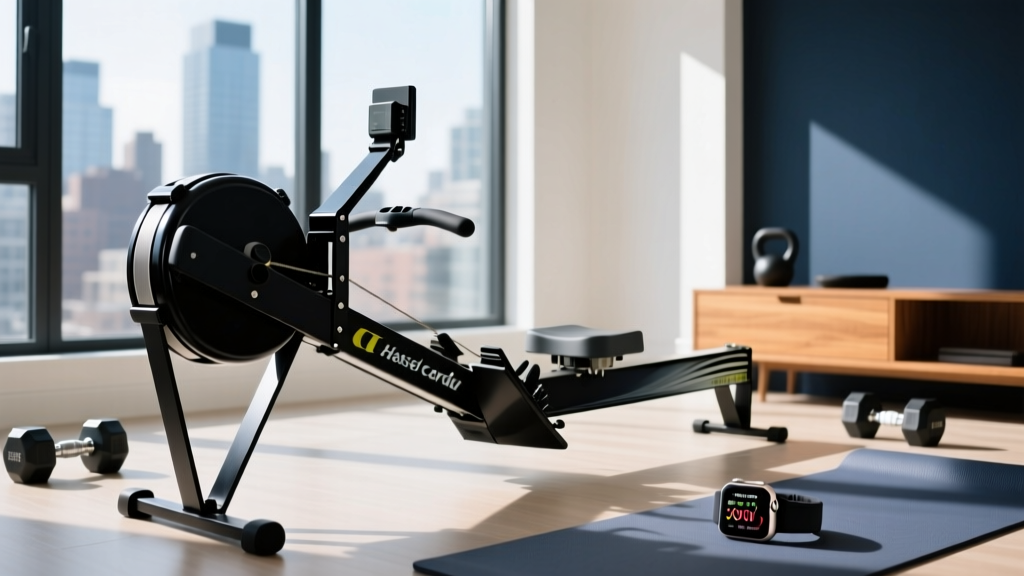
The Concept2 RowErg remains the benchmark for competitive rowers and CrossFit athletes. Air resistance is infinitely variable; the harder you pull, the more drag the flywheel generates. The integrated PM5 monitor tracks your exact wattage, drag factor, and split time per 500 meters. It is loud—sounding like a large desk fan on overdrive—but its durability is virtually unmatched.
2. Magnetic Resistance: The Premium Silent Option
If you live in an apartment or want to watch TV without headphones, magnetic rowers like the Hydrow Athlete ($2,495) use electromagnets to brake an aluminum flywheel. They are whisper-quiet and offer a smoother 'catch' (the beginning of the stroke). However, they lack the raw, dynamic wind-resistance feel of air rowers and require a continuous power connection and Wi-Fi for their interactive screens.
3. Water Resistance: The Aesthetic Choice
The WaterRower Natural ($1,595) uses a polycarbonate tank and wooden frame. The resistance is created by paddles pushing through water, providing a highly realistic 'on-the-water' feel and a soothing swooshing sound. The trade-off? Water requires periodic purification tablets to prevent algae, and the monitors are generally less advanced than Concept2 or Hydrow.
⚠️ Buyer's Warning: Avoid sub-$300 magnetic rowers found on generic marketplaces. They often suffer from 'dead spots' in the drive phase, use fragile bungee cords instead of chains or Kevlar belts for the handle return, and feature monitors that wildly miscalibrate caloric output. Stick to established brands with verified force-curve data.Step-by-Step Rowing Technique: The 60-30-10 Rule
Unlike running, where you simply step and go, rowing requires a specific motor pattern to protect the lower back and maximize power. According to the official Concept2 technique guides, the stroke is divided into four phases. The power distribution should always follow the 60-30-10 rule: 60% legs, 30% core swing, 10% arms.
- The Catch: Shins vertical, torso leaning slightly forward (11 o'clock position), arms straight. Your chest should be close to your knees. Keep your heels slightly elevated if ankle mobility is limited.
- The Drive: Initiate the movement entirely with your legs. Push the footplate away as if doing a heavy leg press. Do not pull with your arms yet. When the handle passes your knees, swing your torso back to the 1 o'clock position.
- The Finish: With your legs fully extended and torso leaned back, draw the handle into your lower sternum using your lats and biceps. Keep your wrists flat.
- The Recovery: Reverse the sequence exactly. Arms extend first, torso hinges forward past the knees, then the knees bend to slide back to the Catch. The recovery should take twice as long as the drive (a 1:2 ratio).
Target Metrics for Aerobic Base Building
For steady-state cardio (Zone 2 training), the American Heart Association recommends maintaining a target heart rate between 50-70% of your maximum. On the rower, achieve this by keeping your stroke rate (spm) between 18 and 22, and setting the damper lever on the side of the flywheel to a drag factor of 100-130 (usually a damper setting of 3 to 5). Setting the damper to 10 is a common beginner mistake that leads to premature muscular fatigue rather than cardiovascular adaptation.
Maintenance & Edge Cases: Avoiding the 'Clunk'
Rowing machines are mechanical workhorses, but they do require specific maintenance to prevent failure modes that ruin the user experience.
- Chain Maintenance (Air Rowers): The nickel-plated steel chain on a Concept2 requires lubrication with purified mineral oil or 20W motor oil every 50 hours of use. Wipe it with a paper towel, apply oil to a cloth, and pull the chain through. Failure to do this results in a grinding 'clunk' during the catch phase.
- Monitor Battery Drain: The PM5 monitor runs on 2 D-cell batteries. If you leave the machine plugged into a USB-C wall adapter continuously, it can sometimes cause the internal battery logic to loop, draining the cells. Use USB power only for firmware updates or extended racing sessions.
- Water Tank Clouding: For water rowers, never use bleach to clean the tank, as it degrades the polycarbonate seals. Use only the provided chlorination tablets every 6 months.
Frequently Asked Questions
Can rowing replace my long-distance running days?
Yes, but you must adjust your time expectations. Because rowing engages the upper body and core, your heart rate will spike faster than on a treadmill. A 45-minute steady-state row is roughly equivalent to a 60-minute run in terms of cardiovascular demand and caloric expenditure.
Will rowing make my legs bulky?
No. Rowing is an endurance and power-endurance sport. The resistance is dictated by your effort, not a fixed heavy weight. You will develop dense, toned quadriceps and glutes, similar to a track cyclist, but not the hypertrophy associated with heavy barbell squats.
Is a treadmill still better for marathon prep?
If your primary goal is a road marathon, you must run to condition your bones and tendons to the specific impact forces of the pavement. However, integrating two rowing sessions a week as 'active recovery' will massively improve your VO2 max and postural endurance without adding joint mileage.
More gear to consider
All reviews
Walking Pad Reviews & How to Tighten Belt on NordicTrack Treadmill

Signature Fitness Treadmill Review: Top Folding Picks for Small Spaces
Adidas Ultra Series T 23 Treadmill Noise Troubleshooting & Comparison
Air Bike vs Assault Bike: Trading Treadmill Time for Better Value
Urevo Cyberpad for Home Smart Treadmill vs. Stationary Bike Types