Escape the Treadmill to Oblivion: Space-Saving Stationary Bikes
Avoid the treadmill to oblivion trap. Discover how upright, recumbent, and spin bikes optimize home gym layouts with exact dimensions and 2026 pricing.

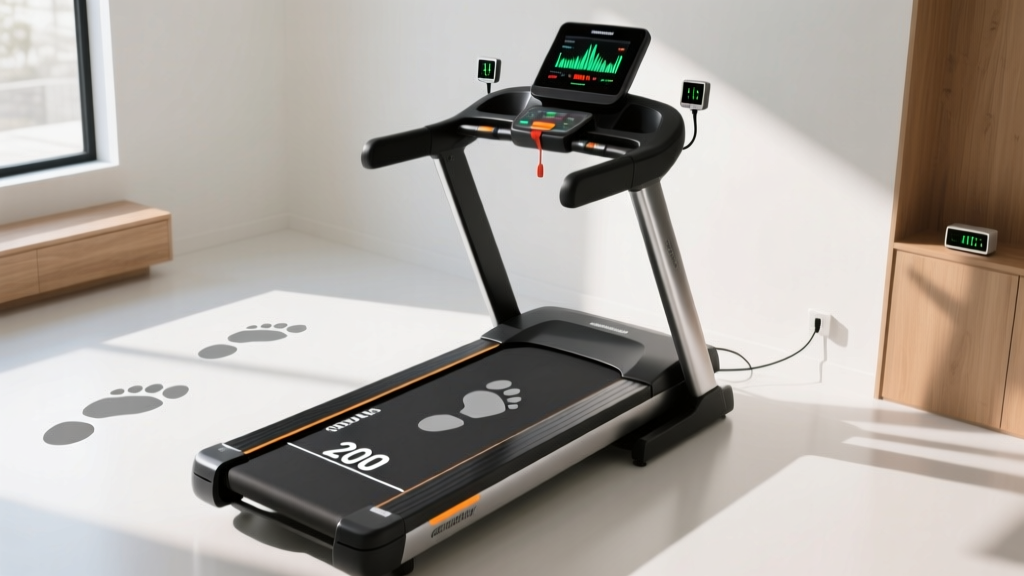
When designing a home gym, the most common mistake enthusiasts make is anchoring the room with a massive, space-hogging treadmill. Many homeowners fall into the treadmill to oblivion trap—investing $2,500+ in a motorized belt that eventually becomes an expensive clothes hanger, consuming over 30 square feet of prime real estate while motivation slowly fades. The physical footprint of a treadmill doesn't just eat up floor space; it dominates sightlines, creates structural impact noise, and restricts traffic flow in multi-use rooms.
If your goal is to meet the World Health Organization's recommendation of 150 to 300 minutes of moderate-intensity aerobic activity per week without sacrificing your living space, stationary bikes are the ultimate spatial saviors. In this guide, we break down the layout advantages, exact dimensions, and spatial integration strategies for upright, spin, and recumbent bikes in 2026.
The Spatial Math: Treadmills vs. Stationary Bikes
Before diving into specific bike types, we must address the raw geometry of home fitness equipment. According to safety and spacing guidelines referenced by the American Council on Exercise (ACE), motorized treadmills require a minimum of 20 inches of lateral clearance on each side and at least 36 inches of posterior clearance for emergency dismounts.
The Footprint Reality Check
- Standard Treadmill (e.g., NordicTrack 1750T): 76.5" L x 35.5" W (18.8 sq ft) + 6 sq ft safety clearance = ~25 sq ft total footprint.
- Standard Upright/Spin Bike: 48" L x 22" W (7.3 sq ft) + minimal lateral clearance = ~10 sq ft total footprint.
By swapping a treadmill for a stationary bike, you reclaim up to 60% of your dedicated workout floor space, allowing for better HVAC airflow and multi-purpose room utilization.
Upright Bikes: The Vertical Space Hack
Upright bikes mimic the geometry of a traditional road bicycle. Because their mass is distributed vertically rather than horizontally, they are exceptionally well-suited for narrow alcoves, walk-in closets converted into micro-gyms, or tight apartment corners.
Layout Advantages & Visual Weight
In interior design, 'visual weight' dictates how heavy an object feels in a room. A treadmill acts as a solid wall, blocking natural light and sightlines. An upright bike, with its open frame and elevated flywheel, allows light to pass through and under it, making small rooms feel significantly larger. Furthermore, upright bikes generate zero structural impact noise, meaning you can place them on second-floor hardwood or in shared-wall apartments without violating noise ordinances.
Top 2026 Spatial Pick: Schwinn IC4
- Dimensions: 48.7" L x 21.2" W x 51.8" H
- Footprint: 7.2 square feet
- Price: ~$799
- Space-Saving Feature: The magnetic resistance flywheel is enclosed and compact, and the front stabilizer features integrated transport wheels. You can easily tilt and roll the IC4 into a 22-inch wide gap between a bookshelf and a wall when not in use.
Spin Bikes: High-Intensity, Minimal Footprint
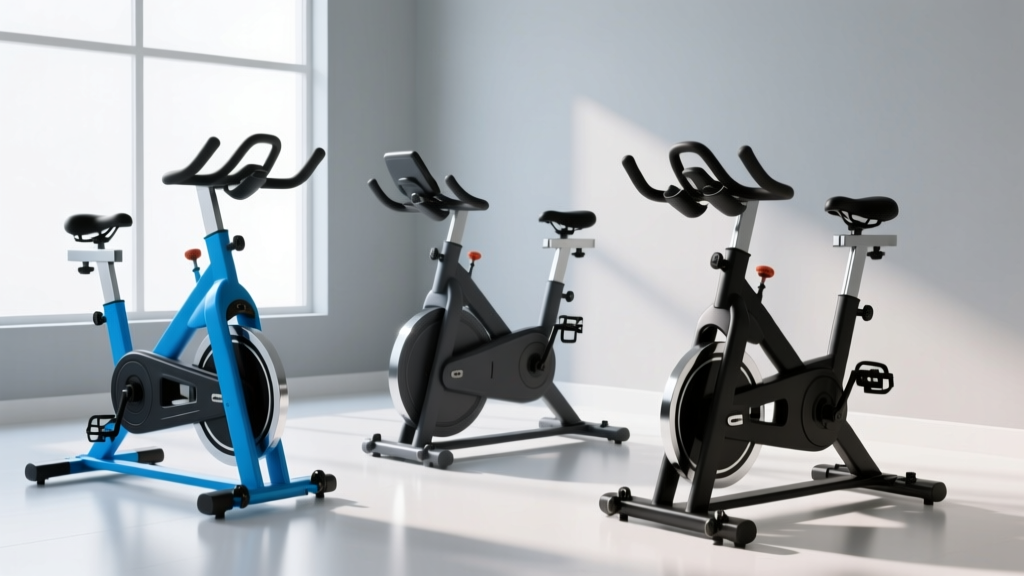
Spin bikes (indoor cycles) are designed for aggressive, out-of-the-saddle riding. Their geometry is fixed and rigid, prioritizing biomechanical alignment over comfort. From a layout perspective, spin bikes require careful consideration of ceiling height and sweat management.
Ceiling Clearance and Airflow
When riding out of the saddle, a user's vertical profile increases. If you are placing a spin bike in a basement or a room with sloped ceilings, ensure a minimum of 84 inches of vertical clearance to prevent head strikes during high-cadence standing climbs. Additionally, high-intensity interval training (HIIT) on a spin bike generates significant thermal output. Position the bike facing a window or directly in the path of a smart ceiling fan to optimize convective cooling.
Top 2026 Spatial Pick: Keiser M3i
- Dimensions: 45" L x 26" W x 57" H
- Footprint: 8.1 square feet
- Price: ~$2,495
- Space-Saving Feature: The M3i's V-shaped frame design tapers inward at the base, allowing it to be tucked flush against a baseboard. Its rear-mounted magnetic resistance system eliminates the need for a massive front flywheel, drastically reducing the anterior footprint.
Recumbent Bikes: Ergonomics in Tight Corners
Recumbent bikes feature a bucket seat and forward-facing pedals, offering unparalleled lumbar support. While they boast the largest physical footprint of the three bike types, their low profile makes them uniquely adaptable to specific architectural constraints.
Design Insight: Never judge a machine solely by its square footage. A recumbent bike is long, but its seat height rarely exceeds 30 inches. This allows you to slide the entire machine beneath standard window sills, floating shelves, or even the overhang of a wall-mounted television, effectively utilizing 'dead' vertical air space.
Top 2026 Spatial Pick: Nautilus R618
- Dimensions: 65.3" L x 27.6" W x 48.8" H
- Footprint: 12.5 square feet
- Price: ~$699
- Space-Saving Feature: Despite its length, the R618's low center of gravity and elongated frame allow it to serve as a room divider or fit seamlessly behind a low-profile living room sofa, maintaining an open-concept aesthetic.
Comparison Matrix: Footprint, Clearance, and Cost
| Bike Type | Avg. Footprint | Min. Ceiling Req. | Ideal Room Placement | 2026 Price Range |
|---|---|---|---|---|
| Upright | 7 - 8 sq ft | 72 inches | Narrow alcoves, closets | $500 - $900 |
| Spin / Indoor Cycle | 8 - 9 sq ft | 84 inches | Dedicated corners, bedrooms | $800 - $2,500 |
| Recumbent | 12 - 14 sq ft | 60 inches | Under windows, behind sofas | $400 - $800 |
Designing Your Micro-Gym Layout: 3 Critical Rules
Avoiding the treadmill to oblivion isn't just about the machine you choose; it's about how you integrate it into your home's architecture. Follow these layout rules to ensure your cardio zone remains functional and inviting.
- Implement Acoustic Decoupling: While magnetic resistance bikes are nearly silent, the user's foot strikes on the pedals and shifting body weight can transmit low-frequency vibrations through floor joists. Place your bike on a 3/8-inch thick vulcanized rubber mat (not cheap EVA foam, which compresses and causes wobble). This protects hardwood floors and dampens vibration transfer to rooms below.
- Optimize the 'Dismount Zone': Unlike treadmills that require rear clearance, bikes require lateral clearance. Ensure you have at least 24 inches of clear space on the drive-side (usually the right side) of the bike to allow for safe mounting, dismounting, and towel retrieval without kicking a wall or furniture.
- Cable Management and Power Routing: Modern smart bikes (like the Bowflex C6 or Peloton Bike+) require continuous power. When planning your layout, position the bike within 6 feet of a grounded outlet to avoid using extension cords, which are a tripping hazard and violate national home fitness safety guidelines. Use adhesive cable channels to route power cords along baseboards, maintaining a clean, minimalist aesthetic.
Final Thoughts on Spatial Fitness
Your home gym should be a space that invites movement, not a cluttered storage unit for abandoned fitness resolutions. By recognizing the spatial and psychological drain of the 'treadmill to oblivion' phenomenon, you can pivot to highly efficient, biomechanically sound alternatives. Whether you choose the vertical efficiency of an upright bike, the intense compactness of a spin bike, or the low-profile ergonomics of a recumbent model, optimizing your layout ensures your cardio equipment works with your home's architecture, not against it.
More gear to consider
All reviews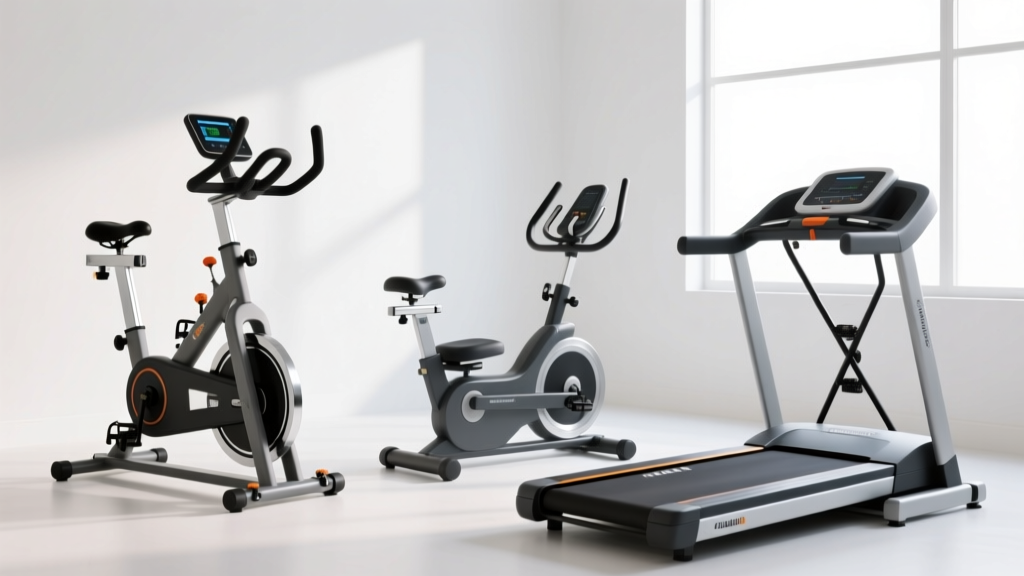
Treadmill Stops While Running? Budget Bike Alternatives

Curved vs Motorized Troubleshooting: NordicTrack T9 vs T10 Treadmill
Runirox Treadmill Setup: Motor Horsepower & Installation Guide

From Treadmill Dad to Stair Climber: A Beginner's Home Guide

Life Fitness T3 Treadmill Review: A Motor Horsepower Guide