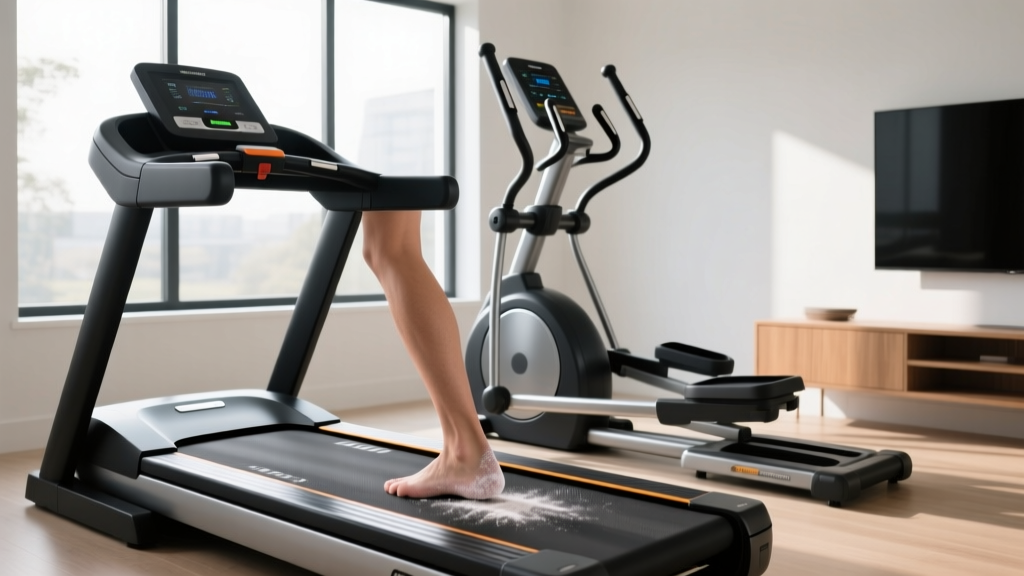
How Long Should a Treadmill Last vs. Spin, Upright & Recumbent Bikes?
Compare how long a treadmill lasts against upright, recumbent, and spin bikes. Expert budget breakdown and value analysis for 2026 home gyms.

The Home Gym Investment Dilemma: Treadmills vs. Stationary Bikes
When outfitting a home gym in 2026, the debate almost always narrows down to the two titans of cardiovascular training: the treadmill and the stationary bike. But beyond calorie burn, joint impact, and spatial footprint, the most critical metric for budget-conscious buyers is long-term value and equipment longevity. When buyers ask how long should a treadmill last compared to an indoor cycle, they are uncovering the hidden costs of home fitness. The answer dictates your cost-per-use, maintenance budget, and ultimate return on investment (ROI).
In this comprehensive budget breakdown, we analyze the mechanical longevity, hidden maintenance costs, and depreciation of treadmills against the three primary stationary bike types: spin bikes (indoor cycles), upright bikes, and recumbent bikes. By understanding the engineering behind these machines, you can make a financially sound decision that aligns with your biomechanical needs.
The Baseline: How Long Should a Treadmill Last?
A high-quality residential treadmill—such as the Sole F80 ($1,499) or Horizon 7.4 AT ($1,299)—typically lasts between 7 and 12 years. However, this lifespan is heavily contingent on maintenance, user weight, and usage frequency. Treadmills are mechanical beasts. They rely on a continuous duty horsepower (CHP) motor, usually ranging from 3.0 to 4.0 CHP in premium models, to pull a woven belt across a wooden or composite deck while supporting the dynamic impact of your body weight.
Primary Treadmill Failure Modes
- Deck Warping and Belt Friction: The most common killer of treadmill motors is a worn deck. As the deck loses its lubrication and wax coating, friction increases exponentially. This forces the motor to draw excess amperage, eventually frying the motor control board (a $400 to $600 replacement part).
- Belt Stretching and Seam Tearing: Treadmill belts require re-tensioning and eventual replacement every 3 to 5 years, costing between $150 and $300 for OEM parts.
- Electronic Console Obsolescence: In 2026, treadmills with integrated HD touchscreens (like the NordicTrack 1750) often face software obsolescence or screen burn-in long before the mechanical drivetrain fails.
Spin Bikes (Indoor Cycles): The Longevity Champions
Spin bikes, such as the Keiser M3i ($2,495) or Schwinn IC4 ($999), operate on fundamentally simpler mechanics than treadmills. Because they do not require a massive motor to move a surface beneath your feet, their lifespan routinely exceeds 12 to 15+ years. In the realm of budget breakdown and value analysis, spin bikes offer the lowest cost-per-year of any cardio machine.
Why Spin Bikes Outlast Treadmills
- Magnetic Resistance (Eddy Current): Premium spin bikes use magnets that never physically touch the flywheel. This means there is zero physical friction, zero wear on the resistance mechanism, and no parts to replace.
- Poly-V Belt Drives: Modern indoor cycles use Kevlar-reinforced belt drives instead of chains. These belts are virtually maintenance-free and do not require the monthly lubrication that older chain-drive bikes demanded.
- No Impact Stress: Your feet never leave the pedals, meaning the frame is subjected to static downward force rather than the repetitive, high-impact pounding that cracks treadmill welds over time.
The primary failure point for a spin bike is sweat corrosion. If a user fails to wipe down the handlebars and seat post after heavy use, the salt can eat through the powder coating and compromise the structural integrity of the steel or aluminum frame within 5 to 7 years.
Upright Bikes: The Electronics Bottleneck
Upright bikes mimic the geometry of a traditional outdoor bicycle but feature a heavier flywheel and a fixed base. Models like the ProForm Studio Bike or the Sole B94 ($1,299) offer excellent cardiovascular conditioning. The mechanical lifespan of an upright bike is generally 8 to 12 years, but their functional lifespan is often cut short by electronic failures.
Unlike spin bikes, which often rely on a simple LCD screen powered by a crank generator or AA batteries, upright bikes feature complex, motorized resistance systems and large, plugged-in consoles. The internal wiring harnesses, potentiometer sensors (which measure resistance levels), and console motherboards are highly susceptible to power surges and dust accumulation. While the mechanical drivetrain of an upright bike could easily last 20 years, you will likely face a $300 to $500 console replacement by year 8.
Recumbent Bikes: The Heavy-Duty Workhorses
Recumbent bikes (e.g., the Spirit XBR95 at $2,299 or NuStep recumbent cross-trainers) feature a bucket seat with a backrest and a step-through frame. Because the user's weight is distributed over a larger area and the impact forces are virtually zero, the mechanical drivetrain experiences minimal stress. Consequently, recumbent bikes boast a lifespan of 10 to 15+ years.
The American Council on Exercise (ACE) frequently highlights recumbent bikes for their superior lumbar support and reduced joint strain, making them the gold standard for rehabilitation and older adults. From a budget perspective, the heavy-gauge steel frames of recumbent bikes are practically indestructible. The only notable maintenance cost is the motorized seat adjustment track, which can accumulate dust and require occasional silicone lubrication to prevent the seat carriage from stuttering.
Comparative Value Matrix: 2026 Budget Breakdown
To visualize the true cost of ownership, we must look beyond the retail price tag and calculate the annualized cost based on expected lifespans and mandatory maintenance.
| Machine Type | Avg Upfront Cost (2026) | Expected Lifespan | Est. Maintenance Cost | Cost-Per-Year |
|---|---|---|---|---|
| Treadmill (3.5 CHP) | $1,800 | 9 Years | $450 (Belts/Deck) | $250 / yr |
| Spin Bike (Magnetic) | $1,200 | 14 Years | $100 (Pedals/Grips) | $92 / yr |
| Upright Bike | $1,100 | 10 Years | $350 (Console/Sensors) | $145 / yr |
| Recumbent Bike | $1,900 | 13 Years | $150 (Seat Track) | $157 / yr |
The 'Cost-Per-Use' Decision Framework
Understanding how long should a treadmill last is only half the equation. To make a definitive purchasing decision in 2026, apply the Cost-Per-Use (CPU) framework tailored to your specific biomechanical profile:
1. The High-Mileage Runner (Choose the Treadmill)
If you are training for a marathon or require impact-based bone-density loading—as recommended by guidelines from the Centers for Disease Control and Prevention (CDC)—a treadmill is non-negotiable. Accept the higher cost-per-year ($250) as a mandatory expense for injury prevention and specific race-day simulation. Invest in a model with a 4.0 CHP motor and a reversible deck to maximize your 10-year ceiling.
2. The HIIT & Sprint Athlete (Choose the Spin Bike)
If your goal is high-intensity interval training (HIIT), a magnetic spin bike offers unmatched financial and mechanical value. You can sprint out of the saddle with zero risk of damaging a motor or snapping a belt. At just $92 per year over a 14-year lifespan, the spin bike is the undisputed ROI champion for aggressive, high-output athletes.
3. The Rehabilitation & Endurance User (Choose the Recumbent)
For users managing lower back pain, recovering from joint surgery, or logging hours of steady-state Zone 2 cardio while working from home, the recumbent bike provides the best ergonomic value. The higher upfront cost is offset by a bulletproof mechanical drivetrain that will easily outlast your need for it.
The Bottom Line: Treadmills offer unparalleled specificity for runners but demand the highest maintenance budget and shortest lifespan. Stationary bikes—particularly magnetic spin bikes and heavy-duty recumbents—offer superior long-term financial value, virtually eliminating the catastrophic mechanical failures that plague motorized cardio equipment.
Final Verdict: Maximizing Your 2026 Cardio Budget
Ultimately, the question of how long should a treadmill last compared to stationary bike types comes down to mechanical complexity versus human impact. Treadmills fight gravity and friction every single second they are in use. Bikes harness momentum and magnetic fields. If your budget is strictly capped and you want a 'buy it for life' piece of equipment, a high-end magnetic spin bike or a commercial-grade recumbent bike will serve you for a decade and a half with minimal financial upkeep. However, if your fitness goals demand the biomechanical specificity of running, budget an extra $100 annually for treadmill maintenance, and ensure you are lubricating the deck every 150 miles to push your machine past the 10-year mark.
More gear to consider
All reviews
Treadmill Weight Loss Before and After: 2026 Models Compared

Beyond the Pug on a Treadmill: Rowing Machine Setup & Guide

Treadmill Amp Draw and Stationary Bike Types: Home Gym Power Guide

Best Treadmills for an Interval Training Treadmill Workout 2026
What Is a Walking Pad Treadmill? 2026 Compact Cardio Trends