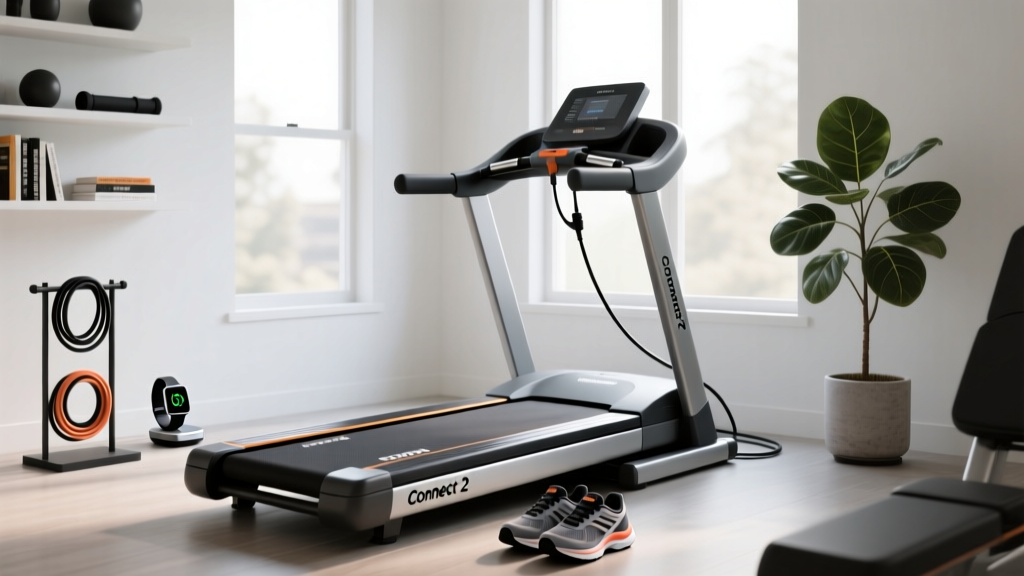
Treadmill on Second Floor? Air Bike vs Assault Bike Layout Guide
Worried about placing a treadmill on a second floor? Compare the Rogue Echo Air Bike and Assault Bike Elite for space-optimized, quiet upper-level home gyms.

Designing an upper-level home gym presents a unique set of architectural and spatial challenges. If you have been searching for advice on placing a treadmill on second floor layouts, you have likely encountered warnings about structural load limits, low-frequency vibration transfer, and massive spatial footprints. While modern treadmills are engineering marvels, their dynamic impact forces and sprawling dimensions often make them a poor fit for upstairs bedrooms or bonus rooms.
For space optimization and acoustic management in 2026, the smartest layout designers are pivoting away from upper-floor treadmills and embracing high-yield, compact cardio alternatives. Specifically, the air bike category offers unparalleled cardiovascular output with a fraction of the footprint and zero structural impact. In this guide, we will break down the structural realities of upstairs treadmills and provide a comprehensive Air Bike vs. Assault Bike comparison to help you choose the ultimate second-floor cardio machine.
⚠️ Structural Warning: The Second-Floor Treadmill Dilemma
According to the International Residential Code (IRC), standard residential second-floor joists are typically designed for a live load of 30 to 40 PSF (pounds per square foot). A standard commercial home treadmill (like the NordicTrack Commercial 1750) weighs 340 lbs and spans roughly 20 square feet, creating a 17 PSF dead load. However, the dynamic impact force of a 200 lb runner can generate up to 3 to 4 times their body weight per stride. This creates severe localized deflection, floor bounce, and structure-borne noise that will reverberate through the floor joists into the rooms below.
Spatial Footprint: Treadmill vs. Air Bike Layouts
When optimizing a compact second-floor gym, every square inch matters. The linear depth required for a treadmill severely limits equipment placement and traffic flow. Let us look at the raw spatial data comparing a standard home treadmill against the two leading air bikes on the market: the Rogue Echo Bike and the Assault Fitness AssaultBike Elite.
| Equipment Model | Machine Footprint | Total Weight | Required Clearance Zone | Total Layout Depth |
|---|---|---|---|---|
| Standard Home Treadmill | 32" x 80" | 300 - 350 lbs | 36" rear / 24" sides | 116" (9.6 ft) |
| Rogue Echo Bike (Air) | 29" x 51" | 125 lbs | 24" all around | 75" (6.2 ft) |
| AssaultBike Elite | 26" x 51" | 140 lbs | 24" all around | 75" (6.2 ft) |
By swapping a treadmill for an air bike, you reclaim nearly 3.5 feet of linear wall space. In a standard 10x12 second-floor bedroom, this spatial savings allows you to integrate a functional training rig, a rowing machine, or dedicated free-weight zones without compromising safety clearances.
Head-to-Head: Rogue Echo Bike vs. AssaultBike Elite
If you have decided to abandon the treadmill on your second floor, you must choose between the two titans of the air bike industry. Both machines utilize wind resistance—meaning the harder you pedal and push, the higher the resistance—but their engineering philosophies differ drastically.
1. Drive System and Acoustic Profile
When designing an upstairs layout, noise transfer is paramount. The Rogue Echo Bike utilizes a custom-molded belt-drive system. Belt drives are inherently whisper-quiet, eliminating the metallic clanking associated with chains. During high-RPM intervals, the primary sound is the whoosh of the fan blades, which produces a broad-spectrum white noise that is easily muffled by acoustic matting.
Conversely, the AssaultBike Elite uses a hybrid chain-and-belt drive. While Assault Fitness has upgraded the Elite model with a sealed cartridge bottom bracket and improved tensioners to reduce noise, the chain drive still produces a distinct mechanical hum and occasional metallic rattle under heavy lateral load. For a second-floor bedroom gym situated directly above a living room or home office, the Rogue Echo's belt drive offers a superior acoustic advantage.
2. Frame Geometry and Stability
The AssaultBike Elite features a slightly more upright seat tube angle and a heavier steel frame (140 lbs vs 125 lbs). This extra mass, combined with a wider front stabilizer bar, makes the Elite feel incredibly planted during aggressive out-of-the-saddle sprints. The Rogue Echo has a slightly more aggressive, forward-leaning geometry that mimics a road bike, which some users prefer for longer, steady-state cardio sessions, though it can feel marginally less stable during violent HIIT intervals if not properly anchored to the floor mat.
Acoustic Decoupling: Matting Your Second-Floor Air Bike
Even though air bikes eliminate the vertical impact forces of a treadmill, the rotational torque and lateral sway during max-effort intervals can still transmit low-frequency vibrations through the subfloor. To completely isolate your upstairs cardio zone, you must implement a decoupled matting strategy.
- Base Layer (Decoupling): Lay down a 5mm thick acoustic underlayment (such as cork or recycled rubber acoustic matting). This breaks the hard contact between the machine and the plywood subfloor.
- Top Layer (Mass and Grip): Place a 3/4-inch thick vulcanized rubber horse stall mat over the underlayment. The high density of vulcanized rubber (typically 70-90 durometer) absorbs the lateral torque of the bike frame while providing an anti-slip surface for your shoes.
- Perimeter Sealing: Leave a 1/2-inch gap between the rubber mat and the baseboards to prevent the mat from acting as a drum against the walls, which can amplify structure-borne noise.
"When optimizing upper-floor home gyms, the goal is not just to reduce airborne noise, but to eliminate structure-borne vibration. A belt-driven air bike paired with a decoupled rubber matting system reduces floor joist deflection to near-zero, making it virtually invisible to the rooms below."
— Structural Acoustics Guidelines for Residential Fitness Spaces
Console Tech and Ergonomics: The 2026 Standard
Modern air bikes have closed the technology gap that once made treadmills the default choice for home gyms. Both the Rogue Echo and AssaultBike Elite feature high-contrast LCD consoles that track watts, RPM, heart rate, and interval programming. However, the AssaultBike Elite edges ahead in console ergonomics; its display is mounted on a slightly higher, more adjustable stalk, making it easier to read when you are in an upright, out-of-the-saddle position. The Rogue Echo's console is fixed lower, which is excellent for seated sprints but requires you to glance down during standing intervals.
Pricing and Value Proposition
As of early 2026, the Rogue Echo Bike retails for approximately $795, while the AssaultBike Elite sits slightly higher at $849. Both prices reflect commercial-grade warranties and exceptional build quality. When you factor in the $0 maintenance cost of the Echo's belt drive versus the occasional chain lubrication required for the Elite, the Rogue offers a marginally better long-term ROI for the home user.
Final Verdict: Which Bike Wins the Upper-Floor Layout?
If your primary constraint is placing cardio equipment on a second floor where noise transfer, spatial limitations, and structural loads are critical factors, the air bike is the undisputed champion over the treadmill.
🏆 Best for Quiet & Low Maintenance: Rogue Echo Bike
Choose the Echo if your second-floor gym is above a noise-sensitive area (like a bedroom or office). The belt drive is whisper-quiet, and the aggressive geometry is perfect for high-cadence seated intervals.
💪 Best for Raw Power & Stability: AssaultBike Elite
Choose the Elite if you prefer heavy, out-of-the-saddle HIIT sessions and want a slightly more upright, planted frame. The chain drive is louder, but the mechanical feedback is unmatched for CrossFit-style conditioning.
Frequently Asked Questions
Can I put a walking pad on a second floor instead of a treadmill?
Yes, walking pads (under-desk treadmills) are significantly lighter (typically 50-80 lbs) and lack the heavy motor and incline mechanics of full-sized treadmills. However, they still generate continuous impact noise from footfalls. If noise is a concern, an air bike remains the superior zero-impact alternative.
Do I need to reinforce my floor joists for an air bike?
No. Both the Rogue Echo and AssaultBike Elite weigh under 150 lbs and distribute that weight across a wide stabilizer footprint. The dynamic load is purely rotational, not vertical impact. Standard residential floor joists (even older 2x8 systems) can easily support an air bike without any structural reinforcement.
How much ceiling height do I need for an air bike on the second floor?
You need a minimum of 8 feet of ceiling clearance to comfortably stand and pedal out of the saddle. If your second-floor room has sloped ceilings or dormers, ensure the peak is directly over the bike's footprint to avoid head strikes during high-intensity standing intervals.
More gear to consider
All reviews
IN10CT Treadmill: How to Use, Maintain, and Maximize Longevity
Bowflex T6 Treadmill Reviews: Curved vs Motorized Setup
Small Space Folding Treadmill Review: Treadmill Belt Tension & Value

Bowflex Treadmill Series: Expert Belt Maintenance Guide

Stair Climber Guide: How Many Calories Do Treadmills Burn vs Stairs