Treadmill Motor Size Guide: Is the ProForm 385 Treadmill Enough?
Discover how treadmill motor sizes impact longevity. We analyze the ProForm 385 treadmill motor, compare CHP ratings, and provide a 2026 buying matrix.

The Horsepower Confusion: Decoding Treadmill Motor Specs
When shopping for home cardio equipment, the motor is the undisputed heart of the machine. Yet, the fitness industry has a long history of obfuscating motor capabilities through misleading marketing jargon. As we navigate the 2026 fitness equipment market, understanding the exact difference between Peak Horse do not match the sustained output required for a 45-minute tempo run. According to testing methodologies highlighted by Runner's World, a motor that constantly operates near its peak threshold will overheat, degrade its internal components, and ultimately fry the motor controller board.
⚠️ The Golden Rule of Treadmill Motors: Always base your purchasing decision on Continuous Horsepower (CHP), not Peak HP. Peak HP is merely the maximum wattage the motor can draw for a fraction of a second before tripping a thermal cutoff.Case Study: Evaluating the ProForm 385 Treadmill Motor
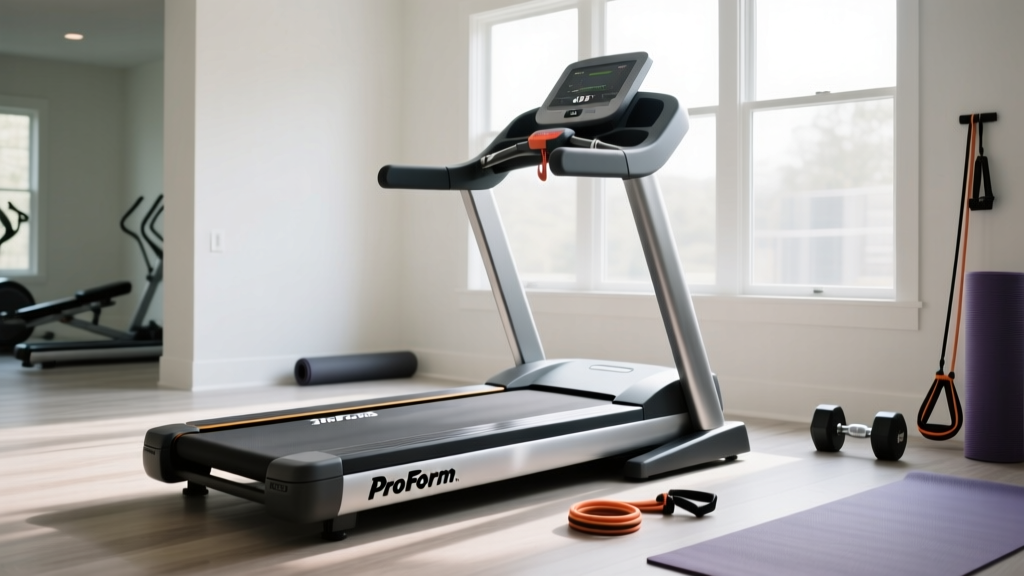
To understand how motor sizing impacts real-world performance, let us examine a specific, highly searched legacy model: the ProForm 385 treadmill. Originally marketed as a budget-friendly, entry-level walking and light-jogging machine, the ProForm 385 typically features a motor rated around 2.0 Peak HP (which translates to roughly 1.25 to 1.5 CHP in real-world continuous output).
Where the ProForm 385 Succeeds
For a user weighing under 180 pounds who strictly walks at 2.5 to 3.5 mph for 30 minutes a day, the ProForm 385 treadmill motor is adequate. The amperage draw remains low, the PWM (Pulse Width Modulation) controller does not overheat, and the belt moves smoothly. In the secondary market in 2026, you can often find this model used or refurbished for between $120 and $180, making it a highly accessible walking pad alternative.
Where the ProForm 385 Fails (The Edge Cases)
Problems arise when users push the ProForm 385 beyond its engineered duty cycle. If a 240-pound user attempts to run at 6.5 mph on a 10% incline, the motor must draw excessive amperage to overcome the combined forces of gravity, user weight, and belt friction.
- Thermal Shutoffs: The motor's internal thermal sensor will trip, abruptly stopping the belt mid-stride—a major safety hazard.
- H-Bridge Failure: The motor controller board's H-bridge (the component that regulates voltage to the DC motor) will absorb excess heat, eventually melting the solder joints or shorting out. Replacing this board costs between $140 and $220, effectively totaling the budget treadmill.
- Belt Stutter: You will notice a rhythmic 'hesitation' or 'stutter' in the belt as the motor struggles to complete its electrical cycle under heavy load.
2026 Treadmill Motor Comparison Matrix
How does the motor in the ProForm 385 compare to modern mid-tier and premium treadmills available today? The table below illustrates the evolution of motor sizing and pricing across different market segments.
| Model (2026 Market) | Motor Rating (Continuous) | Max User Weight | Motor Type | Est. Price |
|---|---|---|---|---|
| ProForm 385 (Legacy/Used) | ~1.5 CHP (2.0 Peak) | 275 lbs | Brushed DC | $120 - $180 |
| ProForm City L6 (Walking Pad) | 1.6 CHP | 250 lbs | Brushed DC | $499 |
| Horizon 7.4 | 3.0 CHP | 350 lbs | Brushed DC | $1,299 |
| Sole F80 | 3.5 CHP | 375 lbs | Brushed DC (Heavy Duty) | $1,999 |
| NordicTrack Commercial 1750 | 3.75 CHP | 300 lbs | Brushless DC (BLDC) | $2,599 |
Notice the shift toward Brushless DC (BLDC) motors in the premium tier. By 2026, top-tier manufacturers have begun adopting BLDC technology, which eliminates the carbon brushes that wear down over time, resulting in quieter operation and vastly extended lifespans. However, for machines under $1,500, heavy-duty brushed DC motors (like the 3.5 CHP in the Sole F80) remain the gold standard.
The Physics of Motor Strain: Amp Draw and Friction
A treadmill motor does not operate in a vacuum; it is part of a mechanical ecosystem. The most common reason a perfectly good 2.5 CHP motor burns out is not user weight, but deck friction.
According to equipment repair data cited in Consumer Reports' treadmill maintenance guides, a dry treadmill belt can increase the amp draw on a motor by up to 40%, effectively forcing a 3.0 CHP motor to work as hard as a 1.5 CHP motor just to maintain speed.
How to Test Your Motor's Health
If you are evaluating a used ProForm 385 treadmill or maintaining a new purchase, you can measure motor strain using a standard digital clamp multimeter:
- Baseline Test: Turn the treadmill on at 3.0 mph with no one on it. Measure the amp draw on the positive motor lead. A healthy 2.0 HP motor should pull between 2 and 4 amps.
- Load Test: Step onto the treadmill and walk at 3.0 mph. The amp draw should increase to roughly 6 to 9 amps.
- The Danger Zone: If the amperage spikes above 12-14 amps during a normal walking pace, your belt and deck are experiencing severe friction, or the motor's carbon brushes are degraded. Apply 100% silicone treadmill lubricant immediately.
Expert Framework: Sizing Your Motor in 2026
Do not rely on manufacturer weight limits alone, as these are often calculated under ideal, low-speed conditions. Use this actionable framework to determine the exact Continuous Horsepower (CHP) you require based on your biomechanics and usage patterns.
🏃 The FitGearPulse Motor Sizing Formula:1. Identify your primary activity (Walk, Jog, Run).
2. Assign the base CHP requirement.
3. Add 0.5 CHP if your body weight exceeds 200 lbs.
4. Add 0.25 CHP if you plan to use inclines above 10% regularly.
Base CHP Requirements by Activity
- Walking Only (Under 4.0 mph): 2.0 CHP minimum. (The ProForm 385 is borderline acceptable here for lighter users, but a modern 2.0 CHP walking pad is safer).
- Light Jogging (4.0 - 6.0 mph): 2.5 CHP minimum. This ensures the motor does not overheat during the repetitive impact phase of jogging.
- Running / Sprinting (6.0+ mph): 3.0 CHP minimum. Running requires rapid belt acceleration and high torque. Anything less than 3.0 CHP will result in belt lag, which alters your natural running gait and can lead to knee and hip injuries.
Maintenance Reality: The Carbon Brush Factor
One aspect of treadmill ownership rarely discussed in buying guides is the lifespan of carbon brushes in brushed DC motors. These small graphite blocks conduct electricity to the spinning armature. In standard home-use motors, these brushes are designed to last between 3,000 and 5,000 hours.
If you run for one hour a day, five days a week, you will accumulate roughly 260 hours a year. A quality motor will last over a decade before the brushes wear down to the metal springs, which will then score the armature and destroy the motor. However, in budget models with smaller motors that run hotter, brush degradation can happen in as little as 3 to 4 years. When shopping for high-end machines in 2026, look for 'user-replaceable brushes' or invest in a BLDC (Brushless) motor to eliminate this failure point entirely.
Final Verdict: Is the ProForm 385 Right for You?
The ProForm 385 treadmill serves as a perfect educational baseline for understanding motor limitations. If you are acquiring one second-hand for casual, low-incline walking in a small apartment, its ~1.5 CHP equivalent motor will suffice, provided you keep the deck meticulously lubricated. However, if your goal is cardiovascular conditioning through jogging, interval training, or if you weigh over 200 pounds, the ProForm 385's motor will inevitably succumb to thermal stress and controller failure.
For long-term durability and biomechanical safety, we strongly recommend investing in a machine with a verified minimum of 3.0 CHP, ensuring the motor operates well within its duty cycle, keeping your workouts safe and your repair bills at zero.
More gear to consider
All reviews
Technogym Skillrun 7000 Treadmill vs Walking Pads: Setup & Review
Market Analysis: Carbon T10 Treadmill & 2026 Compact Cardio Trends

2026 Trend Report: Hitting a 10 Min Mile Pace on Portable Treadmills

Cardio Machine Noise Comparison: Max Speed on Treadmill Tested

Treadmill Hill Workouts: Walking Pad vs Standard 2026
