Treadmill Motor HP Guide: Fix or How to Throw Away a Treadmill
Is your treadmill motor dead? Learn treadmill motor HP sizing, troubleshoot common failures, and discover how to throw away a treadmill if it's truly fried.

The Premature Disposal Epidemic: Why Good Treadmills Get Trashed
Every year, thousands of perfectly repairable treadmills end up in landfills. The scenario is almost always the same: you are mid-run, the machine suddenly stutters, a faint burning smell emerges, or your household GFCI breaker trips. Panic sets in, and you immediately search for how to throw away a treadmill. But before you haul a 200-pound machine to the curb, you need to understand treadmill motor sizing and the common mistakes that mimic catastrophic motor failure.
As a senior technician reviewing cardio equipment, I see this mistake constantly. Consumers confuse a friction-induced thermal overload with a fried motor windings. In 2026, with the rising costs of premium cardio gear, throwing away a $1,500 treadmill over a $10 bottle of silicone lubricant or a $25 motor capacitor is a costly error. This guide bridges the gap between understanding treadmill motor horsepower (HP), troubleshooting false-death symptoms, and properly disposing of a machine when the motor is genuinely dead.
Decoding Treadmill Motor Size: The CHP vs. Peak HP Mistake
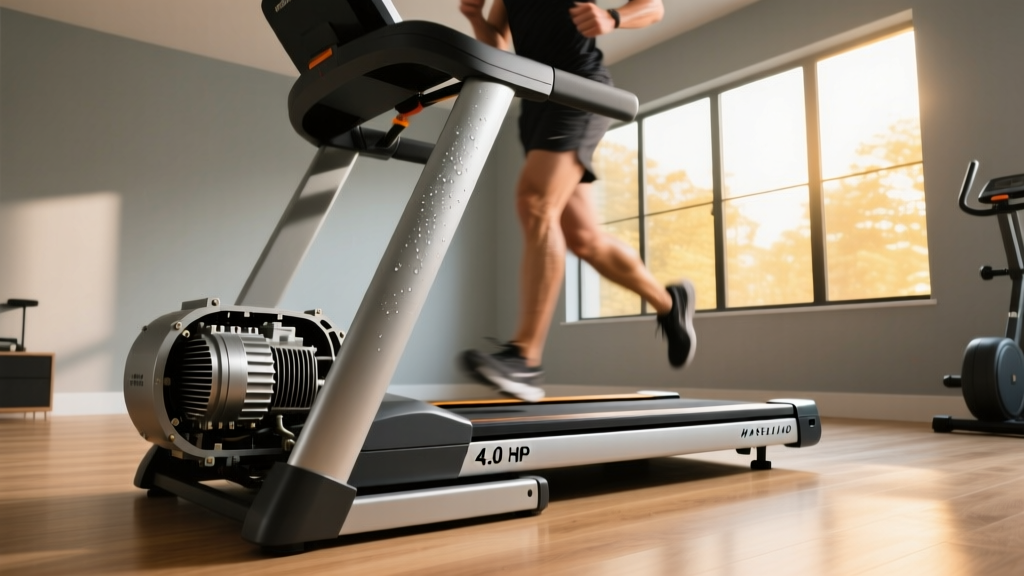
The most common reason a treadmill motor 'fails' is that it was undersized for the user from the moment it was unboxed. Many budget brands market their machines using 'Peak HP' rather than 'Continuous Horsepower' (CHP). Peak HP measures the absolute maximum output the motor can hit for a fraction of a second before overheating. CHP measures what the motor can sustain indefinitely during a workout.
⚠️ The Undersized Motor Trap: If a 240 lb runner uses a treadmill with a 2.5 Peak HP (but only 1.5 CHP) motor, the motor will draw excessive amperage to maintain belt speed. This causes the Pulse Width Modulation (PWM) controller to overheat, the thermal breaker to trip, and the motor windings to eventually melt. This isn't a defect; it's a sizing mismatch.The 2026 Motor Sizing Standard
To prevent premature motor burnout, match the Continuous Horsepower to your heaviest user's weight and primary activity level. Below is the definitive sizing matrix for modern home treadmills.
| User Weight | Walking (Under 4 mph) | Jogging (4 - 6 mph) | Running (6+ mph) | Example 2026 Models |
|---|---|---|---|---|
| Under 180 lbs | 2.0 CHP | 2.5 CHP | 3.0 CHP | Horizon T101 (2.5 CHP) |
| 180 - 240 lbs | 2.5 CHP | 3.0 CHP | 3.5 CHP | Sole F80 (3.5 CHP) |
| 240 - 300 lbs | 3.0 CHP | 3.5 CHP | 4.0+ CHP | Sole F85 (4.0 CHP) |
| 300+ lbs | 3.5 CHP | 4.0+ CHP | Commercial AC Motor | Matrix T7xe (AC Motor) |
Troubleshooting Matrix: Is Your Motor Actually Dead?
Before researching municipal bulk trash pickup, run through this diagnostic matrix. Most 'dead' motors are actually secondary failures caused by poor maintenance or cheap peripheral components. According to Sole Fitness maintenance guidelines, up to 80% of motor-related service calls are resolved without replacing the drive motor.
| Symptom | The Common Mistake (Assumption) | The Real Cause | The Fix (Cost) |
|---|---|---|---|
| Burning rubber/plastic smell | Motor windings are melting | High belt-to-deck friction causing the motor to overwork and overheat. | Apply 100% silicone treadmill lube ($12) |
| Trips household GFCI breaker | Motor is shorting to ground | Start-up amperage spike due to dry belt, or a failing motor capacitor. | Lube belt or replace start capacitor ($25) |
| Stuttering or hesitating belt | Motor is losing power | Worn motor brushes, dirty commutator, or misaligned reed switch. | Clean commutator with sandpaper or replace brushes ($15) |
| Console turns on, belt won't move | Motor is completely dead | Blown PWM motor controller board or broken drive belt. | Replace motor control board ($80-$150) |
How to Test the Motor Windings with a Multimeter
If you suspect the motor is genuinely fried, do not guess. Use a digital multimeter to test the DC motor. Disconnect the red and black motor leads from the control board.
- Test for Continuity (Resistance): Set your multimeter to Ohms (Ω). Place the probes on the red and black motor wires. A healthy 90V-130V DC treadmill motor should read between 10 and 30 Ohms. If it reads 'OL' (Open Line) or infinite, the internal windings are broken. The motor is dead.
- Test for Ground Short: Set the multimeter to continuity. Place one probe on the black wire and the other on the bare metal casing of the motor. It should read 'OL' (no continuity). If it beeps or shows a number, the windings have melted into the casing. The motor is a fire hazard and must be replaced or discarded.
The Final Resort: How to Throw Away a Treadmill Safely
If your multimeter confirms a grounded short, or if the cost of a replacement motor and PCB exceeds the value of the aging frame, it is time to dispose of the unit. However, you cannot simply drag a modern treadmill to the curb. The EPA classifies the console, PCBs, and LED displays as electronic waste (e-waste), which contains heavy metals like lead and cadmium. You must follow proper EPA electronics recycling protocols to avoid municipal fines.
Step-by-Step Treadmill Disposal Guide
Follow this teardown and sorting process to maximize scrap value and comply with local waste laws.
Step 1: Harvest the E-Waste (The Console and Electronics)
Unscrew the uprights and detach the main console. The PCB, LCD screen, and wiring harness must go to a certified e-waste drop-off center. Many municipal dumps have dedicated e-waste days, or you can use retail drop-off bins at stores like Best Buy. Never put the console in standard landfill trash.
Step 2: Extract the Copper (The Drive Motor)
Treadmill drive motors are heavy, and that weight is largely due to copper windings. A standard 3.0 CHP DC motor contains between 5 and 12 pounds of high-grade copper wire. If you take the intact motor to a local scrap metal yard, they will typically pay between $15 and $35 for it, depending on current copper market prices. Unbolt the motor from the front roller bracket and cut the wires close to the casing.
Step 3: Sort the Remaining Frame and Plastics
Once the electronics and motor are removed, you are left with a steel/aluminum frame, a rubber walking belt, and plastic shrouds.
- Steel Frame: Most scrap yards will accept the bare steel frame for a small payout (usually $5-$10).
- Rubber Belt and Plastics: These are non-recyclable in standard municipal programs. Bag the plastic motor shrouds and the rubber belt and place them in your standard household trash or schedule a municipal bulk-waste pickup for the remaining deck and frame if you cannot transport it to a scrap yard.
Expert Insight: If you are upgrading in 2026 and your old treadmill's motor still passes the multimeter test, consider parting it out on eBay. A working OEM replacement motor for a discontinued NordicTrack or ProForm model can sell for $120 to $250 to DIY repair technicians, completely offsetting the cost of your bulk-trash pickup fee.
Summary: Fix First, Scrap Second
Understanding the difference between Peak HP and CHP, and knowing how to properly lubricate your deck, will save 90% of treadmill motors from an early grave. Use the troubleshooting matrix above to isolate friction and electrical faults before giving up. But when the windings are truly fried, knowing exactly how to throw away a treadmill by separating e-waste from scrap copper ensures you dispose of the machine responsibly—and maybe even make a few dollars back in the process. For more deep-dives into cardio equipment maintenance, consult the Consumer Reports treadmill buying guide to ensure your next purchase has the correct CHP rating for your household.
More gear to consider
All reviews
Elliptical vs Treadmill: The Salvation Army Treadmill Donation Spike
Assault Bike vs Air Bike: Space Layouts & T Series 6.5 S Treadmill

Air Bike vs Assault Bike: ProForm 730cs Treadmill Market Shift

Does StairMaster or Incline Treadmill Burn More Calories? Home Guide
Nexus Treadmill Belt Maintenance in Small Space Layouts