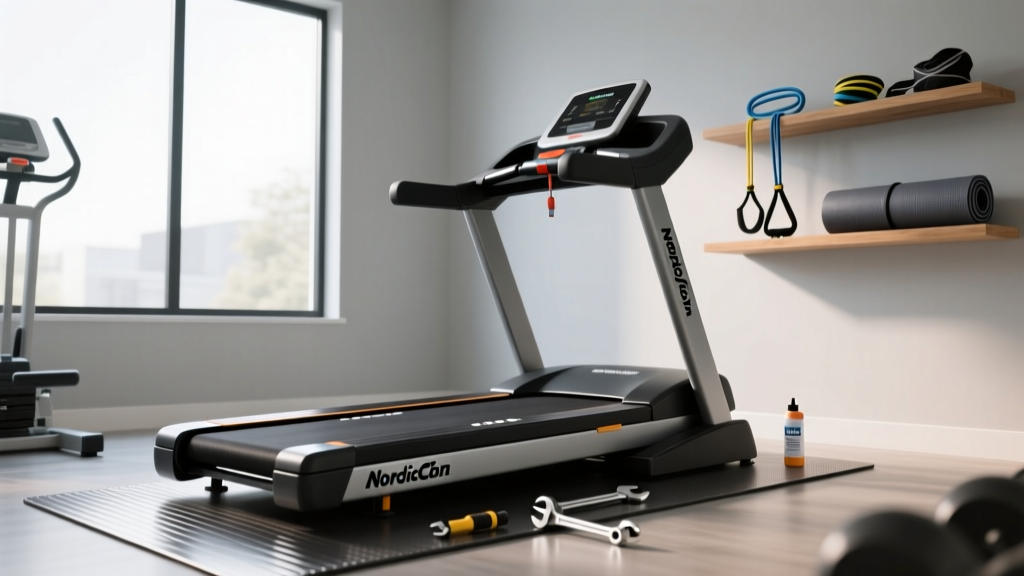
NordicTrack T 6.5 S Treadmill Details: Belt Maintenance & Budget Value
Analyze the true cost of ownership with our NordicTrack T 6.5 S treadmill details. Learn budget-friendly belt maintenance, lubrication, and repair costs.

The True Cost of Ownership: NordicTrack T 6.5 S Treadmill Details
As we navigate the 2026 fitness equipment market, the NordicTrack T 6.5 S remains a highly sought-after model on the refurbished and secondary market. Originally positioned as an entry-level workhorse, its compact footprint and reliable 2.6 CHP motor make it a staple for home gyms. However, when evaluating budget cardio machines, the initial purchase price is only a fraction of the financial equation. The true cost of ownership is dictated by how well you manage wear-and-tear components.
Understanding the critical NordicTrack T 6.5 S treadmill details—specifically its 18-inch by 50-inch tread belt and direct-drive motor system—is essential for protecting your investment. A neglected belt doesn't just degrade your running experience; it creates a cascading failure loop that can destroy the motor controller, turning a $400 budget treadmill into a $600 repair nightmare. This guide breaks down the exact economics of belt maintenance, lubrication protocols, and long-term value preservation for the T 6.5 S.
⚠️ The Friction Tax: Why the 2.6 CHP Motor is Vulnerable
The T 6.5 S utilizes a 2.6 Continuous Horsepower (CHP) motor. While adequate for walking and light jogging under its 300-pound weight capacity, this motor size operates with very little thermal headroom. According to equipment repair experts at Treadmill Doctor, a dry treadmill belt can increase the amp draw on the motor by up to 40%. When the motor works harder to pull a high-friction belt, it generates excess heat, eventually causing the lower control board (motor controller) to short out. Replacing a control board costs between $150 and $220 in 2026—nearly half the cost of a used T 6.5 S.
Budget-Friendly Lubrication: The $15 Fix That Saves Hundreds
The most cost-effective maintenance task you can perform is routine belt lubrication. The T 6.5 S deck is made of medium-density fiberboard (MDF) coated with a low-friction phenolic resin. Over time, this coating wears away, exposing the porous wood beneath. Without a barrier of 100% silicone lubricant, the PVC backing of the belt grips the raw wood, causing rapid degradation.
Step-by-Step T 6.5 S Lubrication Protocol
Do not use WD-40, household oils, or petroleum-based products. These will chemically break down the PVC belt backing and ruin the deck. You must use a 100% silicone treadmill lubricant, which costs roughly $12 to $15 per bottle and lasts for multiple applications.
- Power Down and Secure: Unplug the treadmill from the wall outlet. Remove the safety key to ensure the console cannot be accidentally activated.
- Loosen the Belt Tension: Using the provided Allen wrench (or a standard 6mm hex key), turn the left and right rear roller adjustment bolts counter-clockwise by exactly two full turns. This creates enough slack to lift the belt edge.
- Apply the Silicone: Lift the right edge of the belt near the middle of the deck. Squeeze a continuous zigzag line of 100% silicone lubricant across the width of the deck, using about 0.5 ounces. Repeat on the left side.
- Re-Tension the Belt: Turn both rear roller bolts clockwise by exactly two full turns to restore the original tension.
- Distribute the Lubricant: Plug the machine in, start it at 2.0 MPH, and walk on the belt for three minutes. Your footfalls will press the silicone evenly across the entire 18" x 50" surface area.
Treadmill Belt Maintenance Cost Breakdown (5-Year Projection)
To truly understand the value of the NordicTrack T 6.5 S, we must look at the data. Below is a comparative financial analysis of a properly maintained unit versus a neglected unit over a 5-year period of moderate use (3 hours per week).
| Maintenance Item | Proactive Schedule (Cost) | Neglected / Reactive (Cost) |
|---|---|---|
| 100% Silicone Lubricant | $45 ($15 x 3 bottles) | $0 |
| Aftermarket 18x50 Belt Replacement | $0 (Lasts 5+ years) | $55 (Year 3 failure) |
| MDF Deck Replacement | $0 | $130 (Grooved deck) |
| Motor Control Board (Lower PCB) | $0 | $185 (Amp spike burnout) |
| Total 5-Year Maintenance Cost | $45.00 | $370.00 |
Data sourced from 2026 average aftermarket parts pricing via Fitness Repair Parts and independent repair technician labor estimates. DIY installation assumes zero labor cost.
Diagnostic Troubleshooting: Belt Slippage and Tensioning
Even with perfect lubrication, the T 6.5 S belt will naturally stretch over the first 30 days of use. If you experience a 'hesitation' or 'slipping' sensation when your foot strikes the deck, the drive belt or the walking belt requires tensioning. Here is how to diagnose and fix the issue without over-tightening, which is a primary cause of premature roller bearing failure.
The Quarter-Turn Rule
Never adjust the rear roller bolts by more than a quarter-turn (90 degrees) at a time. Over-tightening places immense lateral stress on the front and rear roller bearings. If the bearings fail, you will hear a high-pitched whining or grinding noise, necessitating a full roller replacement ($60 to $90 per roller).
- Test: Walk on the treadmill at 3.0 MPH. Stomp firmly on the belt.
- Adjust: If the belt slips, stop the machine. Turn the LEFT rear bolt clockwise by 1/4 turn. Turn the RIGHT rear bolt clockwise by 1/4 turn.
- Re-Test: Walk again. Repeat only if necessary. Most T 6.5 S units require no more than two quarter-turn adjustments over their lifespan.
Deck Inspection: The Coin Test and Edge Fraying
How do you know if your maintenance routine has failed and the deck is compromised? Perform the 'Coin Test'. With the treadmill off, slide a standard US Quarter coin between the belt and the deck. If you feel deep, physical grooves carved into the MDF board, the phenolic coating is gone. No amount of silicone will fix a grooved deck; the friction will remain high, and the belt backing will tear. At this stage, a combined belt-and-deck kit (roughly $140 on the secondary market) is the only financially sound repair.
Additionally, inspect the lateral edges of the 18-inch belt. Minor fuzzing is normal. However, if you see structural fraying or exposed nylon mesh cords, the belt is at risk of snapping mid-stride. According to NordicTrack Support guidelines, operating a machine with a frayed belt voids any remaining secondary warranties and poses a severe trip hazard.
💡 Expert Summary: Maximizing the T 6.5 S Value Proposition
The NordicTrack T 6.5 S is a masterclass in budget fitness engineering, provided you respect its mechanical limits. By committing to a bi-annual silicone lubrication schedule and strictly adhering to the quarter-turn tensioning rule, you cap your 5-year maintenance costs at under $50. This transforms the T 6.5 S from a disposable piece of electronics into a decade-long cardiovascular asset, yielding one of the highest cost-per-use returns in the 2026 home gym market.
Frequently Asked Questions (FAQ)
Can I use liquid wrench or standard machine oil on the T 6.5 S?
No. Petroleum-based distillates will immediately dissolve the adhesives binding the PVC layers of the walking belt. This results in delamination, where the top rubber layer separates from the bottom fabric layer, rendering the belt useless. Always use 100% pure silicone.
How often should I lubricate the belt if I live in a dry climate?
If you live in an arid environment (e.g., Arizona, Nevada) or run your home heating heavily during winter, the ambient low humidity can accelerate the evaporation and migration of silicone. In these conditions, inspect and lubricate the T 6.5 S belt every 90 days instead of the standard 6-month interval.
What does an 'Error 1' or 'E1' code mean on the T 6.5 S console?
An E1 or Error 1 code typically indicates a motor control board failure or a speed sensor misalignment. In 80% of neglected budget treadmills, this error is triggered because a dry belt caused the motor to pull too many amps, tripping the board's internal safety limiter or blowing a capacitor. Lubricate the belt, reset the breaker, and test. If the code persists, the lower control board requires replacement.
More gear to consider
All reviews
Papan Treadmill Motor Guide: Sizing Horsepower for Home Gyms
Precor 956 Treadmill vs Walking Pads: 2026 Buyer Guide

LifeSpan Treadmill TR5500i: Office Use & Maintenance

Air Bike vs Assault Bike Guide: Plus What is Speed 4 on a Treadmill

Bike Types vs Treadmill Fat Burning Walking Workouts: Value Breakdown
