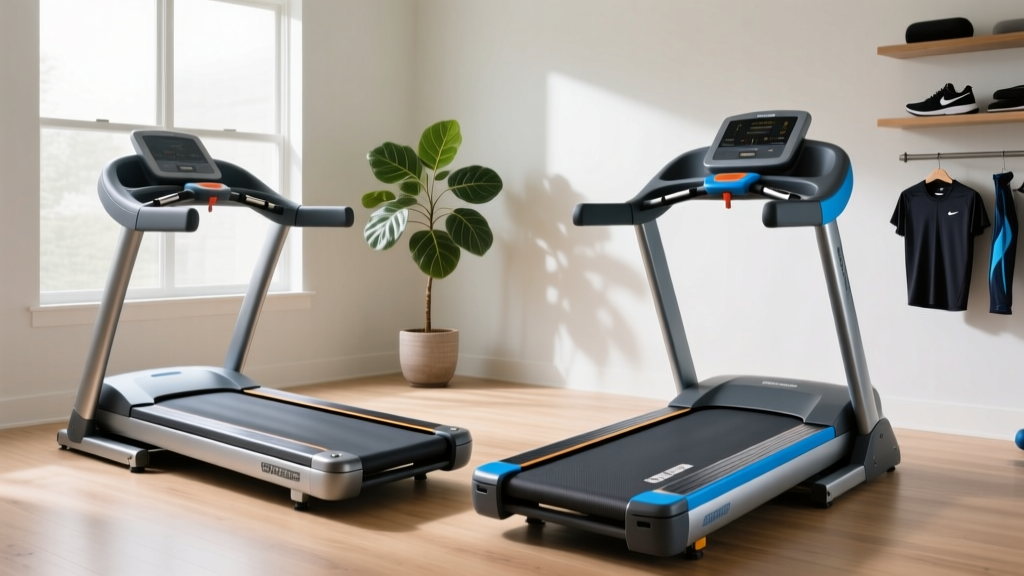
Curved vs Motorized: What Dictates the Lifespan of a Treadmill?
Discover how the lifespan of a treadmill compares between curved manual and motorized models. We break down costs, maintenance, and durability for 2026.

The Mechanical Reality: Curved vs. Motorized Treadmill Durability
When investing thousands of dollars in home fitness equipment, the lifespan of a treadmill is arguably the most critical metric to evaluate. As of 2026, the market is distinctly divided into two primary categories: traditional motorized treadmills and curved manual treadmills. While both serve the fundamental purpose of indoor cardiovascular training, their underlying engineering, mechanical stress points, and ultimate longevity differ drastically.
To determine which machine truly offers the best long-term value, we must look past the digital touchscreens and examine the drive systems, deck friction, and structural failure modes that dictate how long these machines actually survive in a home gym environment.
Motorized Treadmills: The Complexity Tax
Motorized treadmills, such as the highly rated Sole F80 or the NordicTrack Commercial Series, rely on a continuous loop belt driven by an electric DC (Direct Current) motor. The lifespan of a motorized treadmill typically ranges from 7 to 12 years, heavily dependent on maintenance and user weight.
Primary Failure Modes
- Motor Control Board (MCB) Burnout: The MCB regulates power from the wall to the drive motor. Dust accumulation, power surges, and excessive heat are the primary killers of the MCB. When an MCB fails, the treadmill abruptly stops, and replacement parts cost between $250 and $450.
- Deck Delamination and Friction: Motorized decks are typically made of MDF (Medium-Density Fiberboard) coated with a phenolic resin. If the belt is not lubricated with 100% silicone every 150 miles, friction generates immense heat. This heat melts the belt backing and delaminates the deck, requiring a $300+ deck and belt replacement.
- Drive Belt Snapping: The ribbed belt connecting the motor to the front roller stretches over time. A slipping drive belt forces the motor to overwork, drawing excess amperage and accelerating motor brush wear.
Expert Insight: According to Consumer Reports, the most common reason motorized treadmills end up in landfills before the 10-year mark is not the motor itself failing, but the catastrophic cost of replacing the integrated electronics and deck systems once the warranty expires.
Curved Manual Treadmills: The Kinetic Advantage
Curved manual treadmills, like the AssaultRunner Elite or the TrueForm Runner, feature a concave running surface made of 100+ individual rubber or urethane slats. They have no motor, no MCB, and no power cord. The user's kinetic energy drives the belt. Because of this mechanical simplicity, the lifespan of a curved treadmill frequently exceeds 15 to 20+ years.
Primary Failure Modes
- Roller Bearing Seizure: The slats glide on a track of ball-bearing roller wheels. Over years of use, dust and sweat can infiltrate the bearing seals, causing them to grind and eventually seize. Replacing a single bearing costs about $15 to $40, but ignoring it can scar the aluminum track.
- Slat Cracking: While the urethane slats on premium models are rated for immense impact (the AssaultRunner Elite boasts a 1,500 lb weight capacity), dropping heavy dumbbells or kettlebells directly onto the slats can cause micro-fractures or outright snapping.
- Resistance Mechanism Wear: Some curved models use magnetic or friction fans to simulate wind resistance. The physical fan blades or magnetic brackets can bend if impacted, though this is largely a cosmetic or minor functional issue rather than a machine-killing failure.
Head-to-Head Durability Matrix
The table below illustrates the expected lifecycle and replacement costs for critical components across both treadmill types, based on an average usage of 15 miles per week.
| Component / System | Motorized Treadmill (e.g., Sole F80) | Curved Manual (e.g., TrueForm Runner) | Estimated Replacement Cost (2026) |
|---|---|---|---|
| Drive System | DC Motor & Drive Belt (Fails in 8-12 yrs) | Gravity & Kinetic Energy (Indefinite) | $400 - $800 (Motor) |
| Running Surface | MDF Deck & PVC Belt (Fails in 5-8 yrs) | Urethane/Rubber Slats (Fails in 15+ yrs) | $250 - $600 (Deck/Belt) |
| Electronics | MCB, Optical Sensors, Console (Fails in 7-10 yrs) | Basic Magnetic Cadence Sensor (Indefinite) | $200 - $500 (Electronics) |
| Roller Bearings | Sealed Front/Rear Rollers (Fails in 10+ yrs) | Track Roller Wheels (Fails in 10-15 yrs) | $50 - $150 (Bearings) |
The Biomechanical Factor: How Running Form Impacts Wear
The lifespan of a treadmill is not solely dictated by its parts; it is heavily influenced by how the user interacts with the machine. Research published in the Journal of Sports Science and Medicine highlights distinct biomechanical differences between curved and motorized treadmills. On a motorized treadmill, the belt pulls the user's foot backward, which often encourages a heavy heel-strike. This repetitive, high-impact heel-strike sends severe shockwaves directly into the MDF deck, accelerating the breakdown of the phenolic coating and the cushioning elastomers beneath the deck.
Conversely, the concave shape of a curved manual treadmill naturally forces the runner into a mid-foot or forefoot strike. This biomechanical shift not only reduces joint impact for the runner—a key reason the American Heart Association supports varied, low-impact cardiovascular routines—but it also drastically reduces the vertical impact force transferred to the treadmill's slats and bearings, preserving the machine's structural integrity over decades.
Maintenance Protocols That Actually Extend Treadmill Lifespan
If you want to maximize your investment, generic advice like "keep it clean" won't suffice. You need precise, actionable maintenance protocols.
For Motorized Treadmills
- Precise Lubrication: Apply exactly 0.5 oz of 100% silicone treadmill lubricant under the belt every 150 miles or every 3 months. Never use WD-40 or petroleum-based products, which will instantly dissolve the belt backing.
- Tension Calibration: Check belt tension monthly. You should be able to lift the center of the belt exactly 2 to 3 inches off the deck. If it's tighter, you are choking the motor and frying the MCB; if it's looser, the belt will slip and burn the deck.
- Motor Hood Vacuuming: Every 90 days, unplug the machine, remove the motor hood cover, and use a soft brush vacuum attachment to remove dust from the motor fan and MCB heat sinks. Dust is an insulator that causes electronic thermal throttling and failure.
For Curved Manual Treadmills
- Slat Track Cleaning: Wipe down the side tracks where the slat wheels ride with a damp microfiber cloth weekly. Sweat contains salt, which is highly corrosive to the steel ball bearings inside the track wheels.
- Tension Bar Adjustment: Over the first 50 miles, the tension bars holding the slat belt will stretch. Use the included hex wrench to adjust the rear tension bolts exactly one full turn clockwise to remove belt sag without over-tightening the bearings.
- Bearing Audits: Once a year, spin the belt by hand and listen closely. A smooth hum is normal; any clicking, grinding, or popping indicates a failing bearing seal that must be replaced immediately to prevent track scarring.
The ROI Calculation: Upfront Cost vs. Long-Term Value
When evaluating the lifespan of a treadmill, we must amortize the initial purchase price and expected repair costs over the machine's usable life.
10-Year Amortization Breakdown
Premium Motorized Treadmill (e.g., $2,500 upfront)
Expected lifespan: 8 years.
Expected repairs (1 MCB, 1 Deck/Belt): $650.
Total 10-Year Cost: $3,150 (Requires purchasing a second treadmill in year 9).
Cost per year of use: ~$393.
Premium Curved Manual Treadmill (e.g., $5,500 upfront)
Expected lifespan: 20 years.
Expected repairs (Bearing set replacement in year 12): $120.
Total 10-Year Cost: $5,500 (Machine is only at 50% of its lifespan).
Cost per year of use: ~$275.
Final Verdict: Which Should You Buy?
The decision ultimately hinges on your budget, your running mechanics, and your tolerance for mechanical maintenance.
Choose a motorized treadmill if you prefer guided, screen-integrated workouts, require automated incline adjustments, or are primarily a walker/jogger who relies on the belt's momentum to maintain pace. Just be prepared to strictly adhere to the lubrication schedule and budget for electronic repairs in the machine's twilight years.
Choose a curved manual treadmill if you are a serious runner focused on biomechanical efficiency, HIIT sprinting, and zero-electronic maintenance. While the upfront barrier to entry is significantly higher (often starting around $3,500 for entry-level models and reaching $7,500 for commercial grades), the sheer mechanical longevity and drastically lower lifetime cost of ownership make it the undisputed champion of long-term durability. When it comes to the ultimate lifespan of a treadmill, fewer moving parts inevitably equals more years on the floor.
More gear to consider
All reviews
WalkingPad R2 Treadmill Setup & Cardio Noise Comparison

Elliptical vs Treadmill: Budget & ProForm Treadmill Maintenance Kit
Stair Climber Machine for Home Use Guide: Treadmill Serial Number Fix

Elliptical vs Treadmill Space: Matrix Lifestyle Treadmill Fit Guide
Sole vs Horizon Treadmill: Elliptical vs Treadmill Space Layouts
