Are Treadmill Heart Rate Monitors Accurate? Portable Cardio Guide
Discover if treadmill heart rate monitors are accurate and explore the best compact portable cardio equipment for space-optimized home gyms.

Treadmill heart rate monitors built into handrail grips are moderately accurate, typically deviating by 5 to 15 beats per minute (bpm) from medical-grade benchmarks. While they provide a sufficient baseline for casual walking, they struggle with high-intensity interval training due to motion artifacts and grip inconsistencies. For precise cardiovascular zone training, a dedicated Bluetooth chest strap remains the superior choice.
This guide is designed for home gym owners and cardio enthusiasts evaluating whether to rely on built-in machine sensors or invest in dedicated wearable monitors.
Key Takeaways
- Grip sensors deviate by 5 to 15 bpm during vigorous exercise.
- Chest straps maintain a 98.5% accuracy rate compared to clinical ECGs.
- Optical wrist watches offer a middle ground but suffer from cadence lock.
- Upgrade to a chest strap if training for specific heart rate zones.
How Treadmill Heart Rate Sensors Work
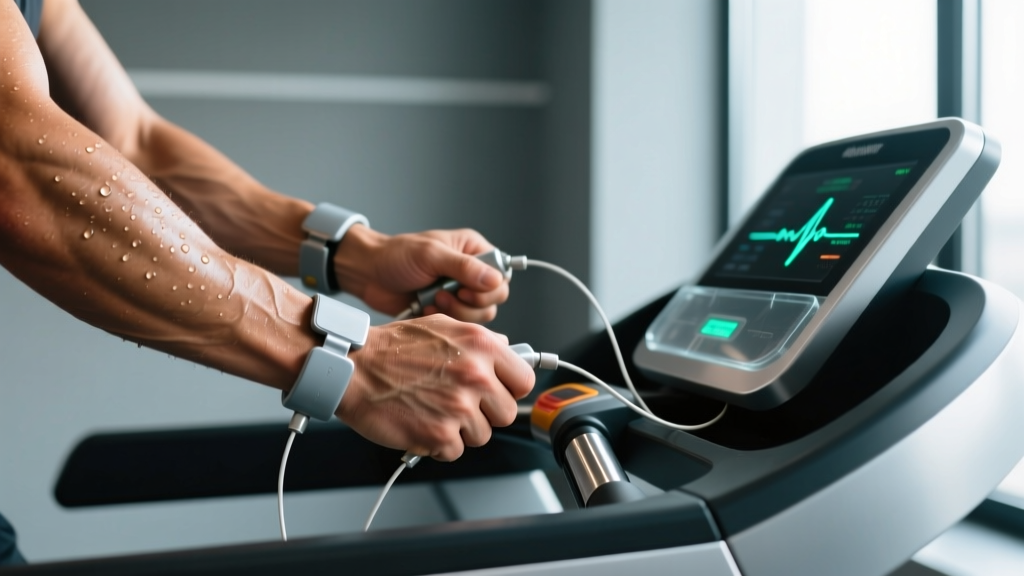
Modern treadmills utilize metal contact plates embedded in the handrails to measure your pulse. These plates act as dry electrodes, completing a circuit when both hands touch the metal surfaces simultaneously.
The console translates these electrical signals into a beats-per-minute readout. However, because the sensors are located on your hands rather than your chest, the electrical signal must travel through your arms and torso, making it highly susceptible to environmental interference.
Accuracy Comparison: Treadmill Grips vs. Wearables
Evaluating tracking hardware requires comparing the built-in treadmill sensors against dedicated wearable alternatives. The table below outlines the performance metrics of the three primary heart rate tracking methods available in 2026.
| Monitor Type | Technology | Average Deviation | Best Use Case |
|---|---|---|---|
| Treadmill Grip | Dry ECG | 5 to 15 bpm | Casual walking, warm-ups |
| Chest Strap | Wet/Dry ECG | 1 to 2 bpm | HIIT, zone training, running |
| Optical Wrist Watch | PPG | 3 to 8 bpm | Steady-state cardio, cycling |
Chest Strap Monitors
Devices like the Polar H10 Chest Strap sit directly against the sternum, capturing cardiac electrical activity at the source. Research published by the National Institutes of Health confirms that chest straps maintain a 98.5% accuracy rate when compared to clinical 12-lead ECG machines.
They transmit data via Bluetooth and ANT+ directly to the treadmill console, completely bypassing the flawed handrail sensors. This makes them the mandatory choice for athletes executing strict cardiovascular protocols.
Optical Wrist Wearables
Smartwatches such as the Garmin Forerunner 265 utilize optical sensors on the wrist. While highly advanced, they still face physical limitations during high-impact activities.
Wrist wearables provide excellent data for steady-state running but can lag during rapid interval transitions. They remain a strong secondary option if you find chest straps uncomfortable.
Factors That Skew Treadmill Readings
Even high-end commercial treadmills suffer from inherent design flaws when relying on handrail sensors. According to guidelines from the American College of Sports Medicine, several external variables severely degrade grip sensor reliability.
- Moisture and Sweat: A 3 millimeters layer of sweat can alter the electrical conductivity between your skin and the metal plate, causing sudden spikes or drops in the displayed heart rate.
- Grip Pressure: Squeezing the handrails too tightly creates muscle tension in the forearms, which generates electrical noise that the sensor misinterprets as cardiac activity.
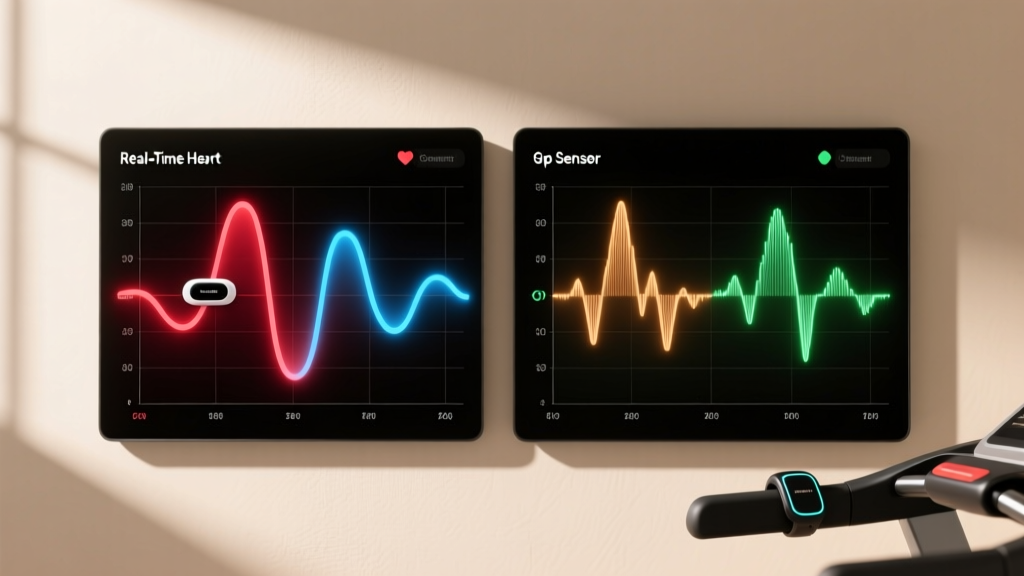
- Signal Delay: Treadmill consoles apply heavy algorithmic smoothing to prevent erratic number jumping. This results in a 45 seconds delay between your actual heart rate spike and the number displayed on the screen.
- Lotons and Oils: Skincare products create an insulating barrier on the palms, blocking the millivolt signals entirely.
If you are paying a $50 to $150 price range for a premium heart rate tracking ecosystem, relying on handrails negates the precision you are paying for.
Frequently Asked Questions
Why is my treadmill heart rate so high?
Treadmills often display artificially high heart rates due to electrical interference from the machine's motor or static electricity generated by the running belt. Muscle tension from holding the handrails tightly also creates electromyographic noise that the sensor mistakenly reads as a rapid heartbeat.
Do treadmills use chest straps?
Treadmills do not have built-in chest straps, but most modern consoles feature Bluetooth and ANT+ receivers. This allows you to pair an external chest strap to the treadmill, overriding the handrail sensors and displaying your precise chest strap data on the machine's screen.
What is the most accurate heart rate monitor for running?
The most accurate heart rate monitor for running is a dedicated ECG chest strap, such as the Polar H10 or Garmin HRM-Pro Plus. These devices measure electrical signals directly from the chest wall, eliminating the motion artifacts that plague optical wrist watches and treadmill grip sensors.
Final Verdict and Next Steps
Treadmill grip sensors offer moderate accuracy with a 5 to 15 bpm deviation, making them inadequate for strict zone training but acceptable for casual walking. To guarantee precise cardiovascular data, pair your treadmill with a dedicated chest strap via wireless protocols. Your next step is to check your treadmill console settings for Bluetooth or ANT+ compatibility, purchase a compatible chest strap, and link it before your next high-intensity session.
More gear to consider
All reviews
DIY VR Treadmill Belt Maintenance: A Budget & Value Breakdown
Exerpeutic Treadmill vs Walking Pads: 2026 Beginner Guide
Air Bike vs Assault Bike: Does Nike Run App Work on Treadmill?
Bowflex Treadmill 7 vs Rowers: Buying Guide & Technique Mistakes

YPOO Treadmill Motor Size Guide: HP vs CHP Explained