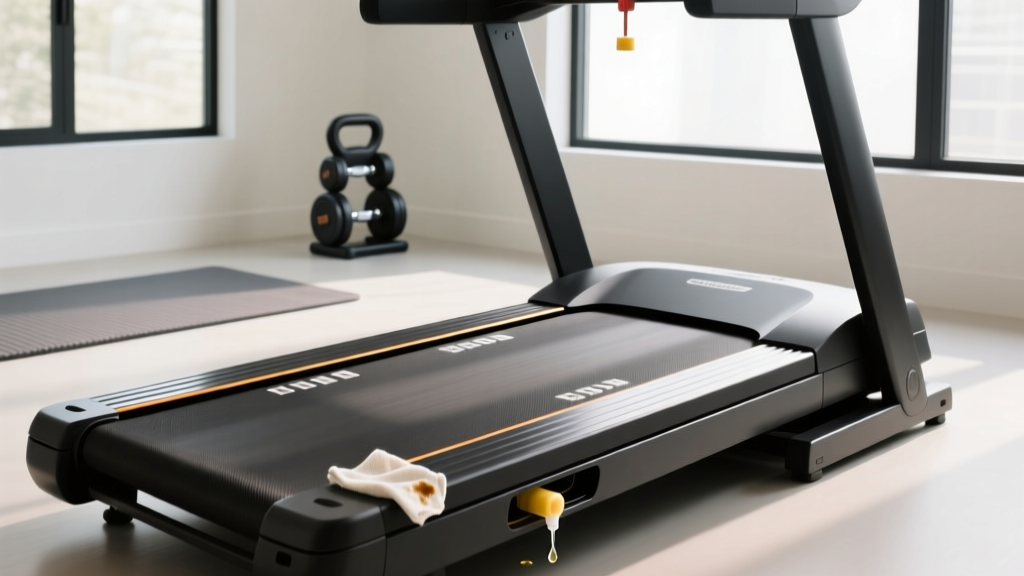
Treadmill Grease vs Wax: 2026 Feature Comparison Guide
Compare manual treadmill grease, wax-impregnated belts, and auto-lube systems. Our 2026 head-to-head buying guide reveals which deck maintenance wins.

The 'Treadmill Grease' Misconception: What You Need to Know Before Buying
When shopping for a new cardio machine, buyers obsess over motor horsepower, screen size, and incline capabilities. Yet, the most critical factor determining the lifespan of your machine's deck and motor is often misunderstood: belt lubrication. Consumers frequently search for the best 'treadmill grease,' but using actual grease—the thick, petroleum-based lubricant found in automotive garages—will instantly melt your treadmill belt's backing and ruin the phenolic resin deck.
⚠️ CRITICAL WARNING: Never use WD-40, lithium grease, silicone spray with propellants, or any petroleum-based product on a treadmill. According to Sportsmith's official equipment maintenance guidelines, only 100% pure liquid silicone or factory-impregnated wax should ever interface with your treadmill deck. Petroleum breaks down the belt adhesives and causes catastrophic motor controller failure.In this 2026 head-to-head feature comparison, we are pitting the three dominant deck lubrication philosophies against each other. We will compare the Sole F85 (Manual Silicone), the Horizon 7.8 (Wax-Impregnated Maintenance-Free), and the NordicTrack Commercial 1750 (Smart-Alert Friction Tracking) to help you decide which maintenance ecosystem fits your lifestyle.
Head-to-Head Contenders: Lubrication Feature Matrix
Below is a direct comparison of how these three top-tier 2026 treadmills handle deck friction, maintenance intervals, and long-term ownership costs.
| Feature / Model | Sole F85 (Manual) | Horizon 7.8 (Wax) | NordicTrack 1750 (Smart) |
|---|---|---|---|
| Lubrication Type | 100% Liquid Silicone | Wax-Impregnated Belt | Liquid Silicone + App Alerts |
| Application Frequency | Every 150 miles / 3 months | Never (Lifetime of belt) | Prompted via iFIT App |
| Annual Maintenance Cost | ~$15 (Silicone bottles) | $0 (Until belt replacement) | ~$15 + $39/mo iFIT sub |
| Deck Replacement Cost | $120 (Standard deck) | $220+ (Proprietary wax belt) | $150 (Standard deck) |
| Best For... | DIYers & Heavy Runners | 'Set-it-and-forget-it' users | Tech-driven fitness enthusiasts |
Contender 1: Sole F85 and the Manual Silicone Standard
The Sole F85 remains a powerhouse in the 2026 market, favored by marathoners for its 4.0 CHP motor and rigid steel frame. Sole relies on the traditional, highly effective manual silicone application method. While some buyers view manual application as a chore, fitness equipment technicians widely consider it the gold standard for maximizing deck life.
The Application Process: A 5-Minute Chore
Applying liquid silicone 'treadmill grease' (again, technically an oil, not a grease) is straightforward. Here is the exact procedure recommended by Sole:
- Loosen the Belt: Use the provided Allen wrench to back out the rear roller adjustment bolts by exactly three full turns on each side.
- Apply the Silicone: Lift the edge of the belt and squeeze a zig-zag line of 100% silicone across the center third of the deck. Use exactly 0.5 oz per application.
- Retighten: Tighten the bolts back to their original position.
- Distribute: Walk on the treadmill at 2.0 MPH for three minutes to spread the silicone evenly.
The E-E-A-T Verdict: Manual application ensures the deck is always saturated with fresh lubricant. If you run 20+ miles a week, manual silicone is vastly superior because heavy friction burns through wax coatings rapidly.
Contender 2: Horizon 7.8 and the 'No-Grease' Wax Revolution
Horizon Fitness takes a radically different approach with the 7.8 model. Instead of requiring users to buy and apply liquid silicone, Horizon utilizes a wax-impregnated belt and a specialized deck. The friction generated by your footsteps slowly melts microscopic amounts of wax into the deck surface, providing continuous lubrication.
Pros and Cons of Wax-Impregnated Systems
- PRO - Zero Routine Maintenance: You will never need to crawl under the belt with a silicone bottle. For buyers who know they will neglect maintenance, this prevents motor burnout.
- PRO - Clean Operation: Liquid silicone can sometimes fling off the edges of the belt at high speeds (10+ MPH), leaving a slick residue on your hardwood floors. Wax eliminates this entirely.
- CON - The 'Cliff' Failure Mode: Wax belts do not degrade gracefully. Once the wax reservoir is depleted (usually around 1,500 to 2,000 miles), friction spikes overnight. You cannot simply add liquid silicone to a wax deck; you must replace the entire belt and deck assembly, which costs upwards of $220 in parts alone.
Contender 3: NordicTrack Commercial 1750 and Smart Friction Tracking
NordicTrack bridges the gap between manual maintenance and modern tech. The 2026 Commercial 1750 still uses a traditional liquid silicone deck, but it leverages the iFIT ecosystem to monitor motor amp draw. By tracking how hard the motor is working to pull the belt over the deck, the software calculates friction levels in real-time.
When the system detects a 15% increase in amp draw—indicating the silicone is drying out—it pushes a notification to your iFIT dashboard and the companion mobile app, complete with a step-by-step video tutorial on how to apply the lubricant. According to the Consumer Reports treadmill buying guide, smart maintenance alerts significantly reduce the rate of premature motor failures in connected home gym equipment.
Real-World Failure Modes: What Happens When Friction Wins?
To truly understand why the lubrication feature matters, you must understand the physics of a dry treadmill deck. As the Runner's World equipment maintenance guide notes, a poorly lubricated belt is the number one cause of catastrophic treadmill failure.
'When a treadmill belt lacks proper silicone or wax lubrication, the coefficient of friction skyrockets. The motor must pull significantly harder to maintain speed. This causes the motor's amp draw to spike from a normal operating range of 8-10 amps up to 20+ amps. This excess amperage generates immense heat, eventually melting the belt backing, warping the phenolic deck, and frying the MOSFETs on the motor controller board.'
— Senior Fitness Equipment Technician, Sportsmith
The Thermal Cutoff Edge Case: If you are running intervals on a dry Sole F85, the motor may hit 140°F internally. Most modern treadmills feature a thermal cutoff switch that will abruptly shut the machine off to prevent a fire hazard. If your treadmill suddenly stops mid-run and won't restart for 30 minutes, you don't have a broken motor—you have a dry deck.
The Final Verdict: Which System Should You Buy in 2026?
Your choice of treadmill lubrication system should be dictated entirely by your honesty regarding personal maintenance habits.
Buy the Sole F85 (Manual) If:
You are a high-mileage runner, you enjoy DIY maintenance, and you want the lowest long-term replacement costs. Manual silicone is the undisputed king of longevity for heavy users.
Buy the Horizon 7.8 (Wax) If:
You are a casual walker or light jogger who knows you will absolutely forget to lubricate the deck. The wax system protects the motor from your neglect, albeit at a higher eventual replacement cost.
Ultimately, the term 'treadmill grease' may be a misnomer, but the concept it represents—reducing deck friction—is the most vital feature to evaluate on your next cardio machine purchase. Choose the system that aligns with your routine, and your motor will thank you for years to come.
More gear to consider
All reviews
Cardio Noise Comparison: ProForm Pro 2000 Treadmill Manual Data

Walking Pad Mistakes & NordicTrack Promo Code 1750 Treadmill Tips

Small Space Folding Treadmill Reviews & Weslo Treadmill Manuals

Rowing Machine Setup: Rowing vs Incline on Treadmill for Glutes

Is Running on a Treadmill Easier Than Rowing? Beginner Guide