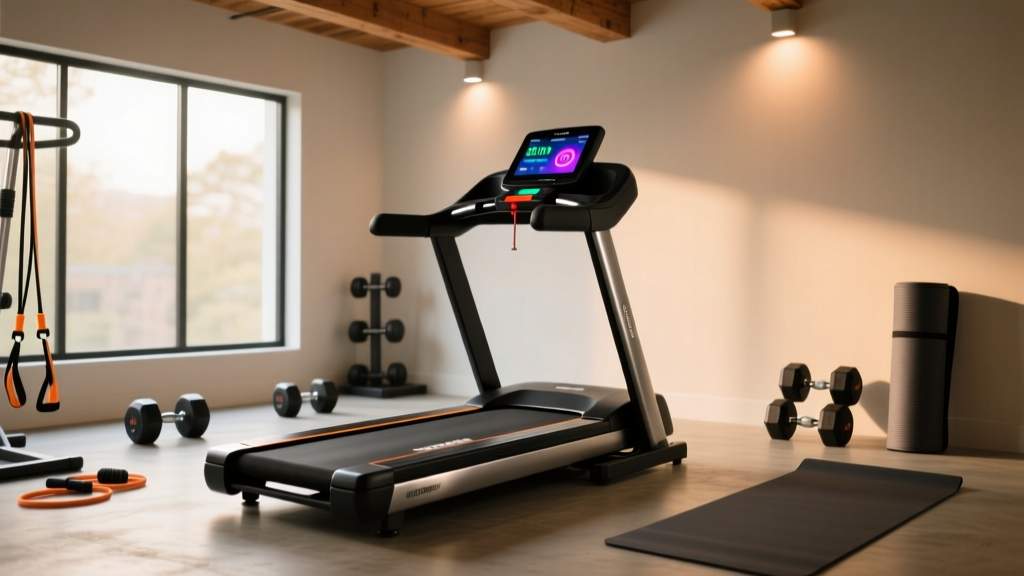
Can You Plug a Treadmill Into an Extension Cord? Portable Cardio
Wondering if you can plug a treadmill into an extension cord? Learn electrical safety rules and maintenance tips for compact portable cardio gear.

The Rise of Compact Portable Cardio Equipment
The fitness landscape in 2026 has shifted dramatically toward space-saving, compact portable cardio equipment options. From under-desk ellipticals to foldable walking pads, home office workers and apartment dwellers are prioritizing gear that can be tucked away under a sofa or bed. However, this portability introduces a unique logistical challenge: placement. Because these machines are frequently moved or positioned in the center of a room, they rarely align perfectly with wall outlets. This leads to one of the most frequently asked questions in our maintenance inbox: can you plug a treadmill into an extension cord to bridge the gap?
The short answer is a resounding no from a safety and warranty perspective. But the reality of compact motor mechanics, voltage drop, and long-term equipment longevity requires a much deeper explanation. In this guide, we will break down the electrical realities of portable cardio machines, the specific failure modes caused by improper power routing, and the mechanical maintenance required to keep your compact gear running for years.
⚠️ CRITICAL SAFETY WARNING: According to the Electrical Safety Foundation International (ESFI), extension cords are responsible for thousands of electrical fires annually. Major appliances and motorized fitness equipment should never be powered by standard, light-duty extension cords, as the sudden amperage spikes during startup can melt the cord's internal wiring and ignite surrounding materials.Can You Plug a Treadmill Into an Extension Cord? The Hard Truth
When users ask if they can plug a treadmill into an extension cord, they are usually referring to compact walking pads (like the WalkingPad R2 or C1) rather than massive commercial-grade treadmills. While a walking pad draws less continuous power than a full-size NordicTrack, the physics of electric motors remain the same.
When an electric motor starts from a dead stop—especially with a user's weight already on the belt—it experiences an inrush current. A compact walking pad with a 1.25 HP continuous duty motor might draw 6 to 8 amps during normal walking, but that inrush current can spike to 12 or 14 amps for the first two seconds. Standard household extension cords (typically 16 AWG or 18 AWG wire) are not rated for these spikes over long distances. The cord acts as a resistor, causing a voltage drop.
'Using an undersized extension cord with a motorized appliance causes the voltage at the appliance to drop. This forces the motor to draw higher amperage to compensate, leading to overheating, premature motor burnout, and potential fire hazards.' — National Fire Protection Association (NFPA)
Electrical Demands of Popular Portable Cardio Options
To understand why power routing matters for longevity, we must look at the specific electrical demands of the most popular compact portable cardio equipment options on the market today. Below is a breakdown of peak amperage and circuit requirements.
| Equipment Model | Type | Motor / Wattage | Peak Amp Draw | Safe Power Routing |
|---|---|---|---|---|
| WalkingPad R2 | Folding Treadmill | 1.25 HP (Continuous) | ~12 Amps (Inrush) | Direct Wall or 12 AWG Surge |
| Sunny Health SF-T723016 | Compact Treadmill | 2.0 HP (Peak) | ~14 Amps (Inrush) | Dedicated 15A Wall Circuit |
| Cubii JR2 | Under-Desk Elliptical | Magnetic / 120W | < 1.5 Amps | Any Standard Cord Safe |
| Horizon Evolve 3 | Compact Elliptical | 180W Generator | ~8 Amps | 14 AWG Surge Protector |
Notice the stark difference between motorized treadmills and magnetic resistance ellipticals. If you are using a low-wattage magnetic machine like the Cubii, standard extension cords pose virtually no electrical risk. However, for any motorized walking pad or compact treadmill, the inrush current demands heavy-duty wiring.
The Anatomy of a Voltage Drop: How Thin Cords Kill PCBs
Many users assume that if an extension cord fits the plug and the machine turns on, it is safe. This is a fatal flaw in equipment maintenance. When a 16-gauge extension cord restricts the flow of electricity, the voltage reaching the treadmill's control board (PCB) drops from 120V down to 105V or lower.
To maintain the required wattage to move the belt, the motor controller's MOSFETs (semiconductors that regulate power) are forced to stay open longer, drawing excess amperage. This generates immense heat on the PCB. Over a period of 3 to 6 months, this thermal stress degrades the solder joints and eventually fries the motor controller. Replacing a proprietary WalkingPad or Sunny Health PCB costs between $120 and $180, and using an extension cord will immediately void your manufacturer warranty, leaving you to foot the bill.
Mechanical Maintenance: Folding Hinges and Low-Clearance Motors
Beyond electrical safety, compact portable cardio equipment requires a highly specific mechanical maintenance routine that differs vastly from traditional, full-sized gym machines.
1. Belt Alignment on Folding Walking Pads
Compact treadmills feature a folding hinge in the middle of the deck. Over time, the micro-vibrations of walking can cause the belt to track slightly off-center, rubbing against the side rails. Because portable walking pads lack the heavy, adjustable rear-roller brackets of full-size treadmills, belt tensioning is highly sensitive.
- The Fix: Use an 8mm Allen wrench to adjust the rear roller bolts. Turn the bolt on the side the belt is drifting toward exactly one-quarter turn clockwise. Walk on the treadmill at 2.0 MPH for two minutes to let the belt self-center. Never adjust more than a quarter turn at a time, or you risk over-tensioning and snapping the motor drive belt.
2. Dust Mitigation for Floor-Level Intakes
The motorized base of a walking pad sits barely two inches off the ground. This places the motor's cooling intake fan directly in the room's 'dust zone.' In 2026, the leading cause of premature death for compact treadmill motors is not belt friction, but dust ingestion clogging the PCB cooling fins and motor brushes.
- The Fix: Every 60 days, unplug the machine and use a can of compressed air (or an electric duster) to blow out the motor intake vents located at the front base. Wipe the exposed deck area with a microfiber cloth to prevent surface dust from being sucked into the chassis during your next workout.
3. Proper Lubrication Protocols
Compact belts are thinner and generate more friction heat per square inch than commercial belts. You must use 100% pure silicone liquid lubricant. Never use WD-40, PTFE sprays, or household oils, as these will chemically degrade the PVC/rubber backing of the portable belt, causing it to delaminate and shred within weeks. Apply exactly 15ml of silicone under the belt, centered on the deck, every 150 miles of use.
Safe Power Routing Alternatives for Portable Gear
If your home office layout absolutely prevents you from plugging your compact treadmill directly into a wall outlet, you must abandon the idea of a standard 'extension cord' and instead invest in a heavy-duty appliance power routing solution.
- Use a 12 AWG or 10 AWG Appliance Cord: If you simply need length, purchase a heavy-duty 12-gauge (AWG) SJTW cord rated for 15 to 20 amps. These are typically used for window air conditioners and can safely handle the inrush current of a walking pad.
- Heavy-Duty Surge Protectors: Brands like Tripp Lite and APC offer surge protectors featuring 6-foot, 14 AWG integrated cords. While 14 AWG is the absolute minimum acceptable gauge for a 1.25 HP walking pad, it is vastly superior to the 16 AWG cords found on cheap power strips.
- Avoid Daisy-Chaining: The U.S. Consumer Product Safety Commission (CPSC) strictly warns against plugging a surge protector into an extension cord, or vice versa. This creates multiple points of resistance and exponentially increases fire risk.
Longevity Checklist for Compact Cardio Owners
To ensure your portable investment survives well past its 1-year warranty, follow this quick maintenance checklist:
- Power: Plug directly into a 15-amp dedicated wall circuit. If an extension is mandatory, use a 12 AWG appliance cord.
- Cleaning: Compressed air to the front motor intake every 60 days.
- Lubrication: 15ml of 100% silicone every 150 miles. Never use petroleum-based sprays.
- Storage: When folding a walking pad for under-bed storage, always lock the hinge pin. Storing it folded without the pin engaged puts constant torsion stress on the internal data ribbon cables, leading to dashboard connection errors.
Compact portable cardio equipment offers incredible convenience, but its small form factor means smaller tolerances for electrical and mechanical abuse. By respecting the amperage demands of your machine and adhering to a strict dust-and-lubrication maintenance schedule, your walking pad or compact elliptical will deliver reliable, quiet performance for years to come.
More gear to consider
All reviews
Treadmill Without Arms vs Stationary Bikes: Budget Breakdown

Club Series+ Treadmill Setup & Rowing Machine Guide

Is 30 Minutes on the Treadmill Good? 2026 Model Comparison
Treadmill Exercise Testing in the Wolff Parkinson White Syndrome: Feature Comparison
Best Motorised Treadmill 2026: Sole F80 vs Horizon 7.0 AT
