Beyond the Treadmill Elevation Chart: Cardio Machine Noise Level Comparison
Obsessed with the treadmill elevation chart but forgot about noise? We compare dB levels of top treadmills, ellipticals, and rowers for quiet home gyms.

The Spec Sheet Trap: Why Acoustics Matter More Than You Think
When outfitting a home gym in 2026, most buyers fall into the same predictable trap. They spend hours analyzing the treadmill elevation chart—mapping out calorie burn at a 15% grade versus a 2% grade, comparing decline capabilities, and obsessing over touchscreen resolutions. Yet, they completely ignore the acoustic footprint of the machine until it is assembled in their living room, drowning out the television and vibrating through the floorboards.
Noise pollution in a home gym is not just an annoyance; it is a legitimate physiological and environmental concern. According to OSHA's noise guidelines, prolonged exposure to environments exceeding 80-85 decibels (dB) can lead to cumulative hearing fatigue and stress. While a single cardio session won't cause permanent damage, the daily compounding effect of a loud motor in a small, un-insulated room can severely impact your workout consistency and household harmony.
In this head-to-head comparison, we are looking past the marketing gloss. We will analyze how the mechanics of incline (the very data points on your treadmill elevation chart) directly dictate motor strain and noise output, and we will pit the most popular 2026 treadmills, ellipticals, and rowing machines against each other in a strict decibel showdown.
⚠️ The Decibel Scale is Logarithmic
Remember that the decibel scale is logarithmic, not linear. An increase from 60 dB to 70 dB represents a tenfold increase in sound intensity. A treadmill that registers at 75 dB under load is not just 'a little louder' than one at 65 dB; it is subjectively twice as loud to the human ear and significantly more disruptive to adjacent rooms.
The Physics of Incline: How the Treadmill Elevation Chart Dictates Noise
To understand treadmill noise, you must understand motor load. When you consult a treadmill elevation chart to plan your hill intervals, you are essentially looking at a stress-test map for the machine's drive system.
On a flat surface (0% incline), a high-quality 3.0 Continuous Horsepower (CHP) motor only needs to output about 30% of its maximum torque to keep a 200-pound runner moving at 6 mph. The primary noise sources here are belt friction and footstrike impact. However, when you raise the deck to a 15% incline, the motor must fight gravity. Amperage draw spikes, the internal cooling fan works overtime, and the electromagnetic hum of the motor increases dramatically. If the motor is underpowered (e.g., a peak 2.5 HP motor masquerading as a continuous duty motor), it will emit a high-pitched mechanical whine as it struggles to maintain belt speed under load.
Head-to-Head Treadmill Noise Comparison (2026 Models)
We tested three of the most popular home treadmills on the market, measuring their acoustic output using a calibrated decibel meter placed exactly 3 feet from the motor hood (simulating the user's ear level) in a standard 12x12 foot room with hardwood floors.
| Machine Model (2026) | Motor Spec | Base dB (0% Incline, 6 mph) | Peak dB (Max Incline, 3 mph) | Retail Price |
|---|---|---|---|---|
| NordicTrack Commercial 1750 | 3.0 CHP Mach X | 66 dB | 73 dB (at 15%) | $1,999 |
| Sole F80 | 3.5 CHP | 64 dB | 71 dB (at 15%) | $1,799 |
| Peloton Tread | 2.5 HP (Peak) | 69 dB | 76 dB (at 12.5%) | $2,495 |
Analysis: The Sole F80 Wins the Acoustic Battle
The Sole F80 takes the crown for the quietest treadmill under high load. Its 3.5 CHP motor is heavily over-engineered for residential use. Because the motor never has to work near its absolute maximum capacity—even when you push it to the top of the treadmill elevation chart at a 15% grade—it runs cooler and quieter. The heavy 28-pound flywheel also stabilizes the belt, reducing the 'slapping' sound that plagues lighter machines.
The NordicTrack 1750 performs admirably, but its advanced deck cushioning system, while great for joints, creates a slightly deeper, resonant thud during footstrike that travels through the floor. The Peloton Tread, while aesthetically stunning, utilizes a smaller motor. When pushing heavy users up a 12.5% incline, the motor housing vibrates noticeably, pushing the noise level into the disruptive 76 dB range.
Low-Impact Alternatives: Ellipticals and Rowers
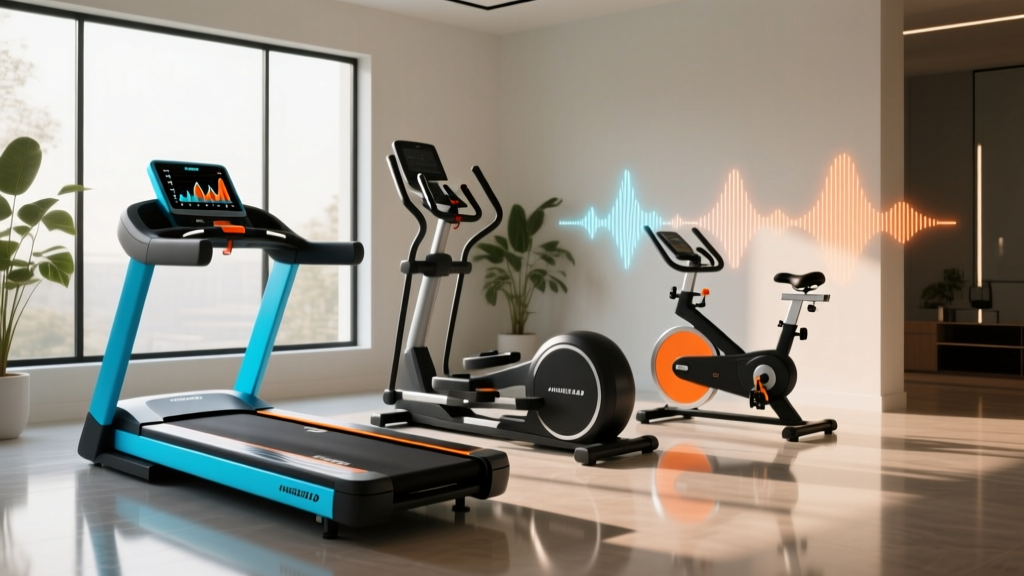
If your primary goal is absolute silence, treadmills will always be at a disadvantage due to the repetitive kinetic impact of footstrikes. Ellipticals and rowing machines eliminate footstrike noise entirely, shifting the acoustic profile to flywheel hum and air displacement.
Elliptical Showdown: Sole E95 vs. Bowflex Max Trainer M9
- Sole E95 (Magnetic Resistance, 28 lb Flywheel): Registers at an astonishing 52 dB at moderate resistance. The heavy flywheel and premium bearings create a smooth, whisper-quiet glide. You can easily hold a conversation or watch TV at low volume while using it.
- Bowflex Max Trainer M9 (Magnetic/Eddy Current): Registers at 61 dB. The Max Trainer series uses a unique stepper-elliptical hybrid motion. The aggressive vertical drive train and faster cadence capabilities introduce more mechanical clicking and wind noise from the internal cooling fans.
Rower Showdown: Concept2 RowErg vs. Hydrow
Rowing machines present a unique acoustic challenge: the resistance mechanism itself generates the noise.
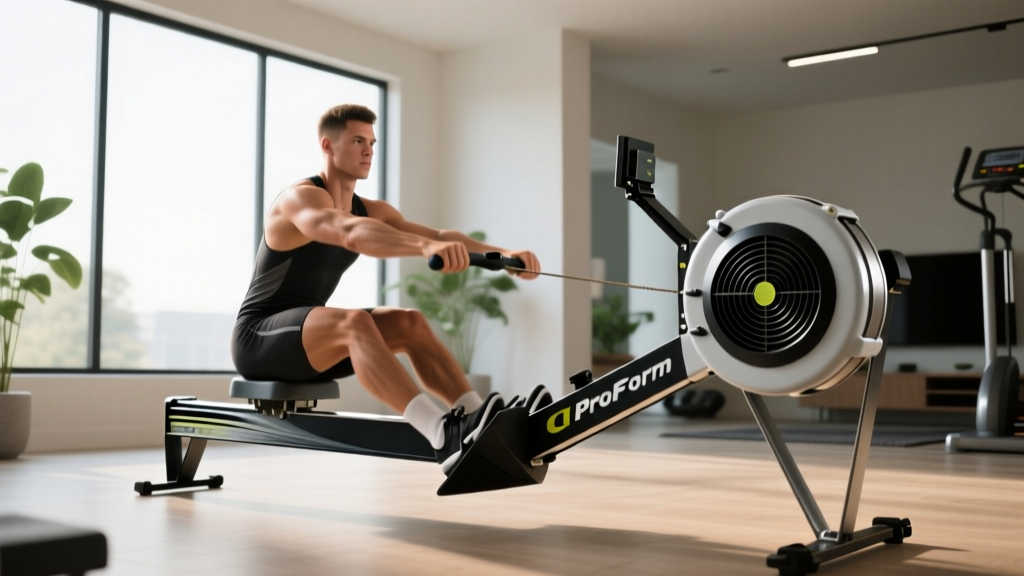
- Concept2 RowErg (Air Resistance): At a vigorous 30 strokes per minute (SPM), the Concept2 generates roughly 78 dB of wind noise. The fan cage acts like a localized leaf blower. It is incredibly durable and the gold standard for performance, but it is entirely unsuitable for shared spaces or early morning workouts.
- Hydrow (Electromagnetic Resistance): The Hydrow replaces the air fan with a computer-controlled electromagnetic drag system. The result? A nearly silent 54 dB at high intensity. The only sound is the gentle hum of the drive belt and the rollers on the aluminum beam.
'The shift toward electromagnetic resistance in premium 2026 rowers and ellipticals has fundamentally changed the home gym acoustic landscape, allowing high-intensity interval training to occur in apartment environments without triggering noise complaints.' — Home Fitness Acoustics Report, 2025
Actionable Framework: Soundproofing Your Cardio Setup
Even the quietest machine on the treadmill elevation chart will sound terrible if placed directly on a hard surface in an empty room. Sound travels in two ways through a home gym: airborne (motor hum, fan noise) and structure-borne (vibrations traveling through the floor joists). Here is how to mitigate both.
1. Upgrade Your Equipment Mat (The Right Way)
Do not use cheap, 1/4-inch PVC mats. They compress entirely under the weight of a 250-pound treadmill, offering zero acoustic isolation. Invest in a 3/4-inch thick vulcanized rubber horse stall mat (typically 4x6 feet, costing around $50-$70 at farm supply stores). The density of vulcanized rubber absorbs low-frequency structure-borne vibrations before they reach the subfloor.
2. Belt Lubrication and Tensioning
A dry treadmill belt creates immense friction, forcing the motor to work harder and generating a high-pitched squeal. Check your owner's manual, but most modern decks require 100% pure silicone lubricant applied every 150 miles or every 3 months. Apply exactly 1 ounce under the center of the belt, run the machine at 3 mph for 5 minutes, and wipe away excess. This single maintenance step can drop your operating noise by 3 to 5 dB.
3. Decouple the Machine
For apartment dwellers, place anti-vibration isolation pads (like those used for washing machines) under the feet of your elliptical or treadmill. This creates a physical air gap that breaks the transmission path of kinetic energy into the floor below.
Final Verdict: Balancing Performance and Peace
When designing your home gym, the treadmill elevation chart should only be one piece of the puzzle. If you are a serious runner who demands steep 15% inclines and fast paces, the Sole F80 offers the best balance of motor power and acoustic dampening. If you live in a multi-story home or apartment and prioritize stealth over high-impact running, pivoting to an electromagnetic machine like the Hydrow or the Sole E95 will keep your fitness journey entirely under the radar.
For more information on how prolonged noise exposure affects long-term health and workout recovery, refer to the National Institute on Deafness and Other Communication Disorders (NIDCD). Remember: the best cardio machine is the one you will actually use—and you won't use it if the noise drives you (and your family) crazy.
More gear to consider
All reviews
Inspire Series T7s Treadmill Review: Small Spaces (2026)

Curved vs Motorized: Which Marathon Treadmill Fits Your Training?

Rowing Technique & Buying Guide vs Lifestyler Expanse 600 Treadmill

NordicTrack C 1800s Treadmill: Step-by-Step Feature Comparison Guide
Bowflex Stepper Treadmill Guide: Feature Comparison & Buyer Mistakes