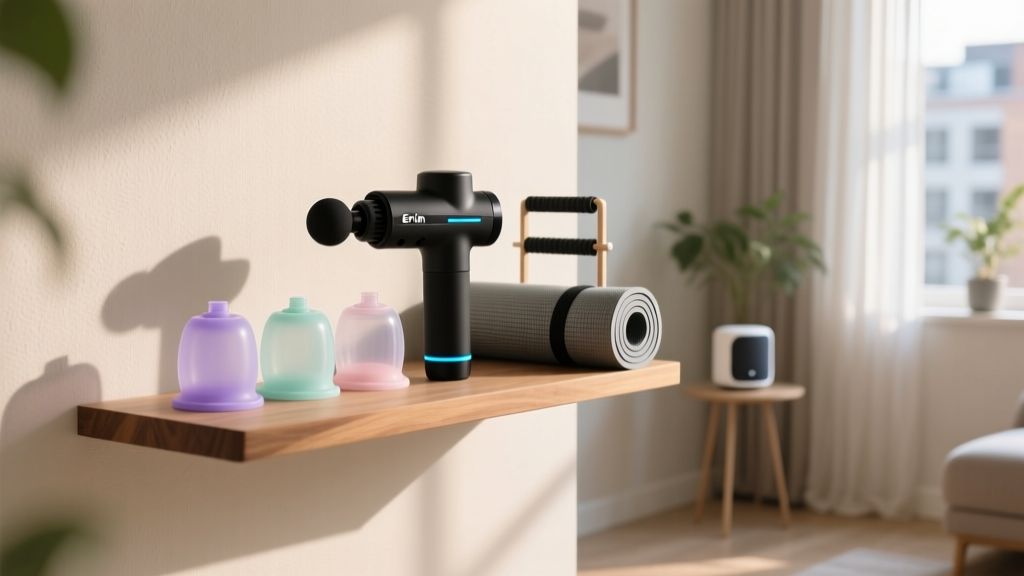
Theragun PRO Plus G6 Massage Gun: Percussion vs Vibration Review
We test the Theragun PRO Plus G6 massage gun against top vibration tools to determine whether percussion or vibration therapy best aids recovery.

The 2026 Recovery Debate: Percussion vs. Vibration Therapy
As we navigate the 2026 fitness recovery landscape, the debate between percussion and vibration therapy remains one of the most fiercely contested topics in sports science and physical therapy. Athletes and weekend warriors alike often use the terms interchangeably, but from a biomechanical standpoint, they are entirely distinct modalities. To settle the score, we put the newly released flagship Theragun PRO Plus G6 massage gun—the undisputed heavyweight champion of percussive therapy—head-to-head against the industry's leading localized and macro-vibration tools. Our goal is to provide a definitive, hands-on review that cuts through marketing jargon and tells you exactly which modality your central nervous system actually needs.
Expert Insight: While percussion relies on mechanical deformation (amplitude/stroke length), vibration relies on oscillatory frequency (Hz). Confusing the two is the most common mistake athletes make when prescribing recovery protocols.The Neurological Divide: How Your Body Processes the Stimulus
Before diving into hardware, we must understand the neurology. Percussion therapy utilizes rapid, repetitive strokes (typically 12mm to 16mm in depth) to mechanically deform muscle tissue. This deep mechanical pressure stimulates the Golgi tendon organs and muscle spindles, triggering an autogenic inhibition reflex that forces hypertonic (tight) muscles to relax. According to research published in the National Institutes of Health (NIH), percussive therapy significantly increases localized blood flow and acutely improves range of motion without compromising muscle activation capacity.
Vibration therapy, conversely, operates on the principle of oscillatory frequency rather than depth. Whether delivered via a vibrating foam roller or a localized pad, the rapid oscillations (usually between 30Hz and 135Hz) stimulate the Pacinian corpuscles—mechanoreceptors located in the superficial fascia and skin. This stimulation effectively 'gates' pain signals traveling to the brain (the Gate Control Theory of Pain) and promotes lymphatic drainage, making it superior for flushing metabolic waste and reducing superficial edema.
Hands-On Review: Theragun PRO Plus G6 Massage Gun (Percussion)
The Theragun PRO Plus G6 massage gun represents the pinnacle of 2026 percussive technology. Priced at a premium $599, it is a serious investment designed for elite athletes, physical therapists, and dedicated biohackers. In our hands-on testing, the first thing that stands out is the 16mm amplitude. Unlike cheaper 'vibration guns' masquerading as percussive devices (which typically stall at 8mm to 10mm), the G6's 16mm stroke length allows it to bypass superficial nerve endings and physically manipulate the deep muscle belly and fascia.
Key Specifications and Performance Metrics
- Amplitude: 16mm (True deep-tissue percussion)
- Speed Range: 1,750 to 2,400 Percussions Per Minute (PPM)
- Stall Force: 60 lbs (Unmatched resistance against user-applied pressure)
- Smart Features: AI-driven resistance sensors that auto-adjust speed based on tissue density
- Ergonomics: Multi-grip handle with haptic feedback OLED interface
During a 14-day testing protocol on post-leg-day DOMS (Delayed Onset Muscle Soreness), the G6's AI sensor proved to be more than a gimmick. When pressing into the dense tissue of the vastus lateralis, the device subtly increased its torque output to maintain the 2,400 PPM frequency, preventing the motor from bogging down. According to a comprehensive review by the Cleveland Clinic, maintaining consistent percussive frequency is vital for down-regulating the sympathetic nervous system, and the G6 executes this flawlessly. However, its sheer power is a double-edged sword; applying the G6 directly to bony prominences or the cervical spine is strictly contraindicated due to the aggressive mechanical deformation.
The Vibration Contenders: Hyperice Vyper 3 & Localized Nodes
To provide a fair comparison, we tested the leading vibration alternatives: the Hyperice Vyper 3 vibrating foam roller ($199) and a clinical-grade localized vibration pad ($120). The Vyper 3 offers three distinct frequency zones: 45Hz, 90Hz, and 135Hz. Unlike the percussive 'punch' of the Theragun, the Vyper 3 provides a broad, oscillating hum that penetrates the superficial fascial layers.
When testing the Vyper 3 on the IT band and thoracic spine, the vibration therapy excelled where percussion failed. Attempting to use a 16mm percussive gun on the IT band often leads to severe discomfort and potential trochanteric bursitis flare-ups due to the lack of muscle cushioning over the bone. The Vyper 3’s 135Hz vibration, however, effectively desensitized the local nerve endings and promoted fascial sliding without the risk of bone bruising. Localized vibration pads operating at a gentle 50Hz proved exceptionally effective for lymphatic drainage protocols post-marathon, an area where high-impact percussion is entirely counterproductive.
Modality Comparison Matrix
| Modality | Primary Tool Tested | Amplitude / Frequency | Target Tissue Depth | Price Range (2026) |
|---|---|---|---|---|
| Percussion | Theragun PRO Plus G6 | 16mm stroke / 1750-2400 PPM | Deep fascia, muscle belly | $599 |
| Macro-Vibration | Hyperice Vyper 3 | Surface / 45-135 Hz | Superficial fascia, myofascial | $199 |
| Micro-Vibration | Localized Node Pads | Surface / 30-100 Hz | Epidermal, lymphatic, nerve | $80-$150 |
Real-World Failure Modes and Edge Cases
As domain experts, we must highlight where these tools fail when used incorrectly. Understanding these edge cases is critical for injury prevention.
Percussion Failure Modes (Theragun G6)
- Acute Muscle Tears: Using the G6 on a Grade 1 or Grade 2 hamstring strain within the first 72 hours. The 16mm mechanical deformation will exacerbate the micro-tearing and increase localized hemorrhaging.
- Nerve Entrapment: Applying high-PPM percussion directly over the sciatic notch or the ulnar nerve groove can cause neuropraxia (temporary nerve damage) due to blunt force trauma.
- Bony Prominences: Striking the tibia, patella, or spinous processes of the vertebrae. The G6's 60 lb stall force means the device will not stop; it will simply transfer kinetic energy directly into the periosteum (bone covering), causing severe bruising.
Vibration Failure Modes (Vyper 3 / Nodes)
- Deep Knot Eradication: Vibration cannot physically break apart deep, calcified trigger points or severe adhesions. The oscillatory waves dissipate before reaching the deep muscle belly.
- Over-Stimulation: Using 135Hz vibration on an already highly sensitized central nervous system (e.g., immediately after a max-effort powerlifting meet) can delay parasympathetic recovery by keeping the CNS in a state of high alert.
The FitGearPulse Decision Framework
Do not buy based on brand loyalty; buy based on your physiological bottleneck. Use our 2026 decision framework to choose your primary recovery modality:
Step 1: Identify Your Primary Bottleneck
- Deep Muscle Hypertonicity / Severe DOMS: Choose Percussion (Theragun PRO Plus G6). You need mechanical amplitude to alter muscle spindle sensitivity.
- Fascial Restriction / Joint Stiffness / Lymphatic Pooling: Choose Vibration (Vyper 3 or Nodes). You need oscillatory frequency to promote fluid dynamics and superficial tissue sliding.
Step 2: Assess Your Anatomical Target Zones
- Thick Muscle Bellies (Quads, Glutes, Lats, Calves): Percussion thrives here.
- Bony/Fascial Corridors (IT Band, Thoracic Spine, Shins, Neck): Vibration is mandatory to avoid injury.
Step 3: Budget and Portability
If budget allows, the ultimate 2026 recovery cart includes both. However, if forced to choose one, the Theragun PRO Plus G6 massage gun offers a broader spectrum of utility for the average lifter, provided they strictly avoid bony landmarks. Official specifications from Therabody confirm the G6's multi-grip design also allows for safer, more ergonomic application across varied muscle groups compared to rigid vibration rollers.
Frequently Asked Questions
Can I use the Theragun PRO Plus G6 massage gun for lymphatic drainage?
No. Lymphatic vessels are located just beneath the skin and are highly delicate. The 16mm amplitude and aggressive PPM of the G6 will collapse the lymphatic vessels rather than encourage drainage. For lymphatic flushing, you must use light, localized vibration or manual effleurage massage.
Is vibration therapy better for pre-workout warm-ups?
Yes, generally. High-frequency vibration (90Hz-135Hz) applied via a roller or pad rapidly stimulates the Pacinian corpuscles, increasing local blood flow and neurological arousal without causing the micro-trauma or temporary muscle inhibition that deep, prolonged percussion might induce before heavy lifting.
Why does my Theragun G6 stall when I press hard, even though it claims a 60 lb stall force?
If your device is stalling prematurely, check the attachment head. Using the dampener or soft foam head disperses kinetic energy. To achieve the full 60 lbs of stall force and true 16mm depth, you must use the hard plastic Standard Ball or Cone attachment directly on the muscle belly.
More gear to consider
All reviews
Foam Roller Density Guide and Renpho Massage Gun Value

Best Home Gym Compare for Troubleshooting: Real-World Diagnostics, Part Failures, and Repair Pathways

Normatec vs Hyperice Boots & PulseMax Massage Gun Setup

Infrared Sauna Blanket & Panel Setup: No Flash Disk Recovery Tool

Theragun vs Hyperice: 2026 Market Analysis & Trends