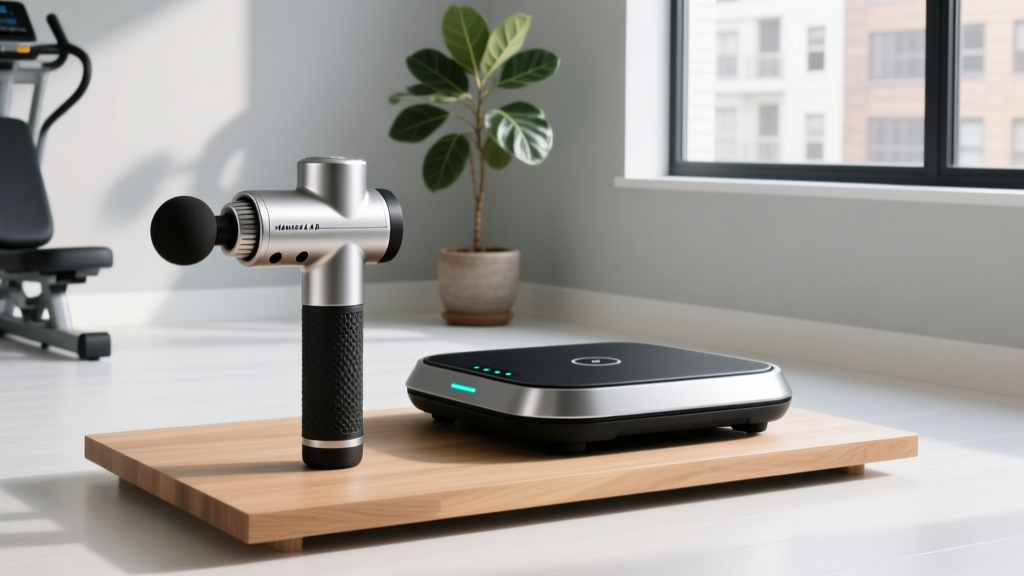
Foam Roller Density Guide & Therabody Theragun Relief Massage Gun Navy
Optimize your home recovery zone with our foam roller density and size guide, paired with the space-saving Therabody Theragun Relief massage gun navy edition.

Designing a dedicated recovery zone in a compact apartment or a constrained home gym requires a strategic approach to spatial planning. As of 2026, the shift toward minimalist, multi-functional fitness spaces means that bulky recovery equipment is out, and streamlined, high-yield tools are in. A complete myofascial release routine relies on two primary modalities: broad-tissue compression via foam rolling and targeted percussive therapy. This guide breaks down the exact dimensions, material densities, and layout strategies for foam rollers, while demonstrating how to anchor your space with the ultra-compact Therabody Theragun Relief massage gun navy edition for a complete, space-optimized recovery station.
The Spatial Footprint: Sizing Your Foam Roller for Small Zones
Foam rollers are traditionally categorized by length, but in a space-optimized layout, the footprint dictates usability. According to a comprehensive meta-analysis published in the Journal of Sports Science & Medicine, foam rolling significantly improves sprint performance and flexibility, but the efficacy relies on proper technique and surface area coverage, not necessarily the sheer size of the tool.
Dimensional Breakdown & Space Yields
- Standard (36-inch / 91cm): Ideal for clinical settings or large garages. Requires a minimum 40-inch horizontal storage rack. Verdict for small spaces: Avoid. It dominates visual space and creates tripping hazards in rooms under 150 square feet.
- Mid-Size (24-inch / 61cm): Allows for bilateral rolling (both legs simultaneously) and thoracic spine extension. Requires 26 inches of wall or floor space. Verdict: Good for dedicated spare rooms.
- Compact (18-inch / 45cm): The gold standard for urban home gyms. It provides ample surface area for the IT band, quads, and lats while fitting easily into standard closet shelves or under-bed storage bins. Verdict: Optimal for space-constrained layouts.
- Travel/Mini (12-inch / 30cm): Best for targeted calf or arm work. Easily stored in a drawer alongside percussive devices.
Density Matrix: Material Science & Firmness
Selecting the right density is critical for tissue adaptation. Soft rollers are primarily for lymphatic drainage and beginner acclimation, while firm rollers are necessary for breaking up dense fascial adhesions. However, material composition also dictates the lifespan and hygiene of the roller in tight, potentially humid home environments.
| Material Type | Density / Firmness | Lifespan (Heavy Use) | Space & Hygiene Profile |
|---|---|---|---|
| EVA (Ethylene-Vinyl Acetate) | Soft to Medium | 6 - 12 Months | Absorbs sweat; degrades and flattens quickly. Requires frequent replacement. |
| EPP (Expanded Polypropylene) | Medium to Firm | 3 - 5 Years | Closed-cell foam. Sweat-proof, lightweight, and retains shape. Best overall value. |
| ABS Core + EVA Wrap | Extra-Firm / Textured | 2 - 4 Years | Hollow core allows for internal storage of small tools (like massage balls). |
For a permanent home recovery station, an 18-inch EPP roller (typically priced between $35 and $55 in 2026) offers the best intersection of durability, hygiene, and firmness. The closed-cell structure prevents the absorption of ambient moisture, which is crucial if your recovery zone is located near a bathroom or in a basement.
The Compact Percussive Anchor: Therabody Theragun Relief Massage Gun Navy
Foam rolling addresses broad fascial networks, but it cannot isolate deep, localized trigger points like the piriformis or the medial head of the gastrocnemius. This is where percussive therapy becomes mandatory. However, professional-grade massage guns are notoriously heavy and require bulky charging docks that clutter small shelves.
Enter the Therabody Theragun Relief massage gun navy model. Designed specifically for entry-level users and space-conscious consumers, this device strips away the Bluetooth app-dependency and heavy chassis of the Pro series, focusing purely on ergonomic, grab-and-go functionality.
Technical Specifications & Spatial Benefits
- Stall Force: 11 kg (24 lbs). Sufficient for 85% of users to apply deep pressure without the motor stalling out.
- Speed Settings: 3 built-in speeds (1750, 2100, and 2400 PPMs). Eliminates the need for a smartphone screen, keeping the interface tactile and simple.
- Ergonomic Handle: The signature Therabody triangle handle allows for multiple grip positions, which is vital when trying to reach the lower back or scapula in a confined 4x4 foot space where you cannot freely rotate your body.
- Aesthetic & Storage: The navy colorway provides a sophisticated, low-contrast look that blends seamlessly into modern minimalist decor, avoiding the clinical 'gym equipment' vibe. Measuring roughly 9.5 x 7.5 x 2.8 inches, it slides effortlessly into a standard bedside drawer or a small woven basket on a floating shelf.
- Current Pricing: Retailing around $149, it represents a high-ROI addition to a compact recovery arsenal.
'Combining broad myofascial compression with targeted percussive therapy yields superior recovery outcomes. By utilizing a compact roller for the macro-tissue and a lightweight device for micro-trigger points, you can achieve clinical-level results in a fraction of the physical footprint,' notes recent sports therapy literature regarding at-home recovery protocols.
Layout Design: The 4x4 Foot Recovery Station
To integrate these tools effectively, you need a deliberate floor plan. Here is a step-by-step blueprint for a 16-square-foot recovery corner:
- The Foundation: Lay down a 4x4 foot high-density EVA interlocking mat (at least 3/4-inch thick). This provides the necessary cushioning for spinal rolling while protecting hardwood floors from the Theragun if dropped.
- Vertical Storage (The Wall): Install a minimalist steel wall rack at shoulder height (approx. 60 inches from the floor). Use this to hang your 18-inch EPP foam roller vertically. This keeps it off the floor and within immediate reach.
- The Drop Zone: Place a small, 12-inch wide woven basket or wooden tray on the floor in the corner of the mat. This is the designated 'drop zone' for the Therabody Theragun Relief massage gun navy edition and its two attachments (Standard Ball and Dampener). Keeping it in a tray prevents it from rolling away and defines its spatial boundary.
- Clearance Dynamics: Ensure there is at least 24 inches of clearance from the edge of the mat to any furniture. When using the Theragun on your hamstrings while seated on the floor, your leg will extend outward; this clearance prevents you from kicking a coffee table or wall.
FAQ: Space Optimization & Recovery Gear
Can I store my foam roller and Theragun in the same case?
Most 18-inch foam rollers do not come with cases, and the Theragun Relief includes a soft pouch rather than a hard shell. For space optimization, purchase a separate 20-inch cylindrical mesh bag. You can easily slide the foam roller in, and tuck the Theragun and its charger into the mesh side pockets, creating a single, unified storage tube that can slide under a bed or stand upright in a closet.
Does the Theragun Relief have enough power compared to larger models?
With an 11kg stall force, the Relief is roughly 30% less powerful than the Theragun PRO (which boasts 27kg). However, for targeted trigger point work in a small home setup, 11kg is more than adequate for the calves, glutes, and shoulders. The trade-off in absolute power is offset by a 40% reduction in weight and a significantly smaller storage footprint.
How do I clean these tools in a small, multi-use room?
Because space-optimized rooms often serve dual purposes (e.g., home office and gym), hygiene is critical. Wipe down your EPP foam roller with a 70% isopropyl alcohol solution weekly. For the Theragun Relief's navy matte finish, use a slightly damp microfiber cloth with a mild, non-abrasive soap to prevent the breakdown of the soft-touch coating. Avoid harsh chemical sprays, which can degrade the plastics over time.
By carefully selecting an 18-inch EPP roller and pairing it with the ergonomic, drawer-friendly Therabody Theragun Relief massage gun navy model, you can build a world-class recovery zone that respects the spatial limitations of modern living. For more insights on building your home setup, explore the broader Therabody official lineup to compare percussive options.
More gear to consider
All reviews
Best Home Gym Compare for Troubleshooting: Real-World Diagnostics, Part Failures, and Repair Pathways

Theragun vs Hyperice vs Aldi Massage Gun Maintenance

Heat Pads, Wraps, or Massage Gun for Shin Splints? (2026)

2026 Cold Plunge Budget: Smart Hubs vs a Windows 10 Recovery Tool

Space-Saving Recovery Zones: Cupping & Massage Gun Trigger Points