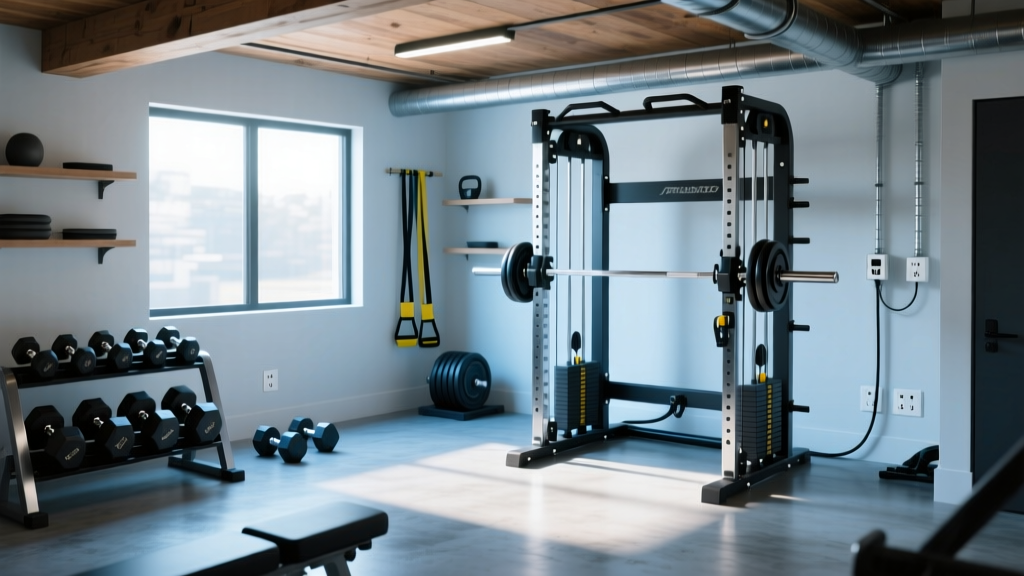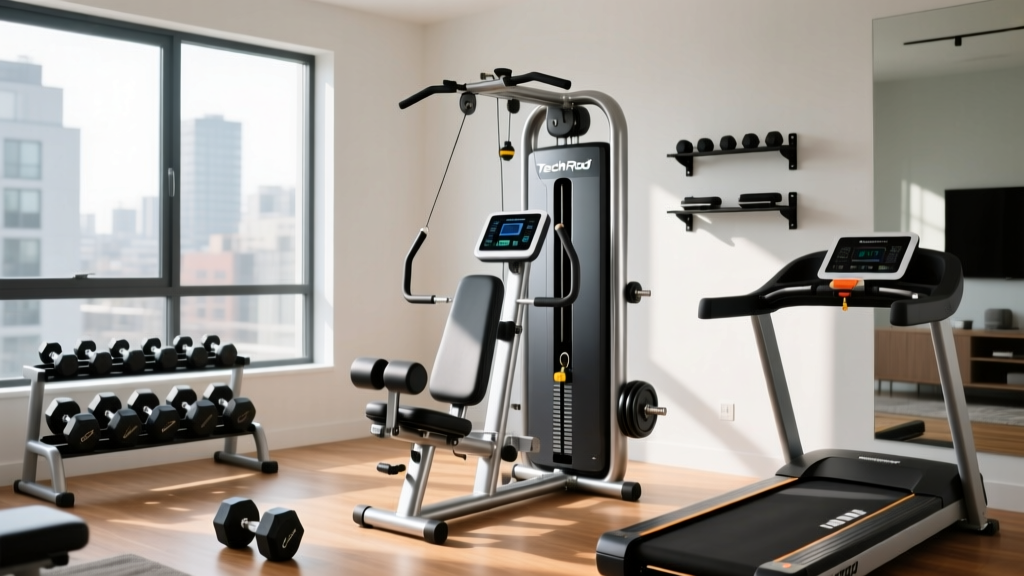
2026 Electrical & Safety Guide for Your TechRod Home Gym
Discover the 2026 electrical and safety requirements for installing a TechRod home gym. Learn circuit specs, load capacities, and smart surge protection.

The 2026 Market Shift: Why Smart Gyms Demand Industrial-Grade Power
The residential fitness market has undergone a radical transformation over the last three years. As of 2026, the shift from mechanical iron stacks to electromagnetic and digital resistance systems is no longer a niche trend—it is the industry standard. At the forefront of this movement is the TechRod home gym ecosystem, utilizing advanced servo-motor technology to deliver variable resistance, eccentric overloads, and real-time biomechanical tracking. However, this market evolution has introduced a critical blind spot for consumers: residential infrastructure.
Traditional home gyms required minimal electrical support—perhaps a standard 15-amp shared circuit for a treadmill and a fan. Modern digital cable machines operate more like industrial CNC equipment than fitness gear. When a TechRod system catches a dropping load during an eccentric phase, the servo motors generate massive inrush current spikes. Failing to upgrade your home's electrical and structural framework to meet these new demands doesn't just risk tripping a breaker; it risks catastrophic hardware failure, data corruption, and severe physical injury.
This trend report and technical guide breaks down the exact electrical, structural, and environmental safety requirements for installing a TechRod home gym in 2026, ensuring your investment is both high-performing and code-compliant.
TechRod Home Gym Electrical Specifications & Circuit Mapping
According to the Electrical Safety Foundation International (ESFI), high-draw motorized equipment should never share a circuit with other major appliances. The TechRod home gym's dual-servo motor architecture requires a dedicated power line to handle peak wattage without voltage sag.
⚠️ Critical Warning: The Shared Circuit Failure ModePlugging your TechRod into a shared bedroom or garage circuit alongside a space heater, air compressor, or secondary refrigerator will cause voltage drops during peak resistance transitions. This leads to servo-motor desynchronization, which can result in the cable snapping back or dropping the weight stack instantly.
Required Electrical Infrastructure
- Circuit Breaker: Dedicated 20-Amp breaker (Standard 15-Amp breakers will trip during heavy eccentric loading phases).
- Wiring: 12 AWG copper wire (Do not use 14 AWG, which is rated only for 15A and poses a fire risk under continuous 20A smart-gym loads).
- Receptacle: NEMA 5-20R (The T-slot neutral blade configuration prevents accidental plugging into lower-rated circuits).
- Voltage Stability: 120V ± 5%. If your home experiences frequent brownouts, a line-interactive UPS is mandatory.
2026 Smart Fitness Power Draw Comparison
Understanding where the TechRod sits in the broader market helps contextualize its electrical demands. Below is a comparative analysis of peak power draws among leading digital and motorized fitness systems.
| Equipment Type | Continuous Draw | Peak Inrush (Eccentric Catch) | Minimum Circuit |
|---|---|---|---|
| TechRod Pro (2026 Model) | 850W | 1,900W | 20A Dedicated |
| Tonal 2 | 700W | 1,400W | 15A Dedicated |
| Vitruvian Trainer+ | 400W | 900W | 15A Shared OK |
| Standard Motorized Treadmill | 600W | 1,200W | 20A Dedicated |
Market Note: Hiring a licensed electrician to run a new 20A dedicated line with 12 AWG wire typically costs between $450 and $850 in 2026, depending on drywall repair and panel proximity.
Structural Safety: Managing Dynamic Cable Loads
Electrical safety is only half the equation. The structural integrity of your mounting surface is paramount. A common misconception is that a digital weight stack is 'lighter' because there is no physical iron. In reality, the TechRod home gym generates immense kinetic force. When a user performs a rapid drop-set or the machine applies an eccentric overload (pushing the weight down faster than gravity), the dynamic force on the wall brackets can exceed 2.5 times the displayed digital weight.
According to structural fastener guidelines published by the American Wood Council (AWC), standard drywall anchors and lightweight toggle bolts are entirely insufficient for dynamic lateral and vertical sheer forces. You must anchor directly into structural framing.
The 2026 Mounting Hardware Standard
To safely support a TechRod system generating up to 250 lbs of digital resistance per arm, adhere to the following structural specifications:
- Stud Identification: Use a high-density magnetic or radar stud finder to locate the exact center of two adjacent wooden or steel studs (typically 16 inches on center). Do not rely on acoustic knock-testing.
- Fastener Specs: Use 3/8-inch x 3-inch structural lag screws (e.g., Simpson Strong-Tie SDWS) for wood studs. For metal studs, you must use specialized toggle-strap systems rated for minimum 300 lbs of shear strength per anchor, combined with a plywood backing board to distribute the load.
- Pull-Out Strength: Each lag bolt must achieve a minimum pull-out strength of 450 lbs. Pre-drill pilot holes using a 7/32-inch bit to prevent splitting the stud, which compromises sheer integrity.
- The Plywood Backer Board: We highly recommend mounting a 3/4-inch sanded plywood sheet (painted to match your wall) across three studs, then mounting the TechRod to the plywood. This distributes the dynamic torsion across a wider surface area, preventing drywall crush and stud twisting over time.
"The most frequent cause of smart-gym structural failure isn't the machine snapping—it's the drywall crumbling under repetitive micro-vibrations and eccentric torque. Distributing the load via a structural backer board is the single most effective safety upgrade a homeowner can make."
— Structural Engineering Brief on Residential Fitness Equipment, 2025
Climate Control and Thermal Safety for Digital Motors
Electromagnetic resistance generates significant heat. The TechRod's internal servo motors and logic boards rely on active internal cooling fans. If the ambient room temperature exceeds 85°F (29°C), the system's thermal throttling protocol will engage, artificially capping your maximum resistance to prevent motherboard meltdown.
💡 Pro-Tip: Airflow MappingDo not install the TechRod in a tight corner or recessed alcove. The 2026 installation manual mandates a minimum 14-inch clearance on both lateral sides and 24 inches above the primary chassis for proper thermal exhaust. Pair this with a wall-mounted oscillating fan rated for at least 400 CFM directed at the lower chassis vents.
Smart Surge Protection and Data Line Defense
Modern smart gyms are essentially high-performance computers. A standard $15 power strip offers zero protection against the micro-surges and dirty power that degrade sensitive logic boards over time. The National Fire Protection Association (NFPA) emphasizes that degraded power strips are a leading cause of residential electrical fires, particularly when paired with high-draw motorized equipment.
For a TechRod home gym, you must invest in a Medical-Grade or High-Joule Smart Surge Protector (minimum 3,000 joules, clamping voltage under 400V). Furthermore, because the TechRod relies on cloud-based AI coaching and firmware updates, a surge traveling through your hardwired Ethernet line (if used) can fry the network interface card. Ensure your surge protector includes RJ45 data-line pass-through protection, or utilize a fiber-optic to Ethernet converter to physically isolate your machine from external grid surges.
Step-by-Step Pre-Installation Safety Audit
Before unboxing your equipment, complete this mandatory 2026 compliance checklist to ensure your space is ready for a digital-weight ecosystem:
- Panel Capacity Check: Open your main electrical panel. Ensure you have two adjacent open slots for a new 20A breaker. If the panel is maxed out, budget an additional $1,500–$2,500 for a sub-panel installation.
- Voltage Drop Test: Have an electrician perform a voltage drop test on the new line under load. A drop of more than 3% under a simulated 1,500W load requires upgrading the wire run to 10 AWG.
- Clearance Zone Marking: Tape off a 6-foot radius semicircle on the floor. Ensure no doors, HVAC vents, or low-hanging light fixtures infringe on the cable's maximum extension path.
- Wi-Fi 6E Validation: The TechRod requires a stable 5GHz or 6E band connection for real-time telemetry. Run a speed test at the exact mounting location; if latency exceeds 40ms or drops below 50 Mbps, install a dedicated mesh node in the gym space.
Conclusion: Future-Proofing Your Investment
The transition to a TechRod home gym represents a premium investment in your health and the future of fitness technology. However, treating this advanced machinery like a traditional piece of furniture is a critical error. By upgrading to a dedicated 20-amp electrical circuit, reinforcing your wall studs with structural lag hardware, and managing the thermal environment, you ensure that your smart gym operates safely, accurately, and reliably for years to come. As the market continues to push the boundaries of digital resistance, your home's infrastructure must evolve to support the heavy lifting.
More gear to consider
All reviews
Best Weider Home Gym Models for a Budget Setup Under $500 (2026)

MB 1000 All In One Home Gym: 2026 Garage Flooring & Ventilation Setup

Home Gym Workout Schedule: Complete Setup & Floor Plan Guide
Weider Pro 9635 Home Gym Safety & Electrical Mistakes to Avoid
Outdoor Home Gym Setup: Weather Care & Home Gym Neon Sign Tips