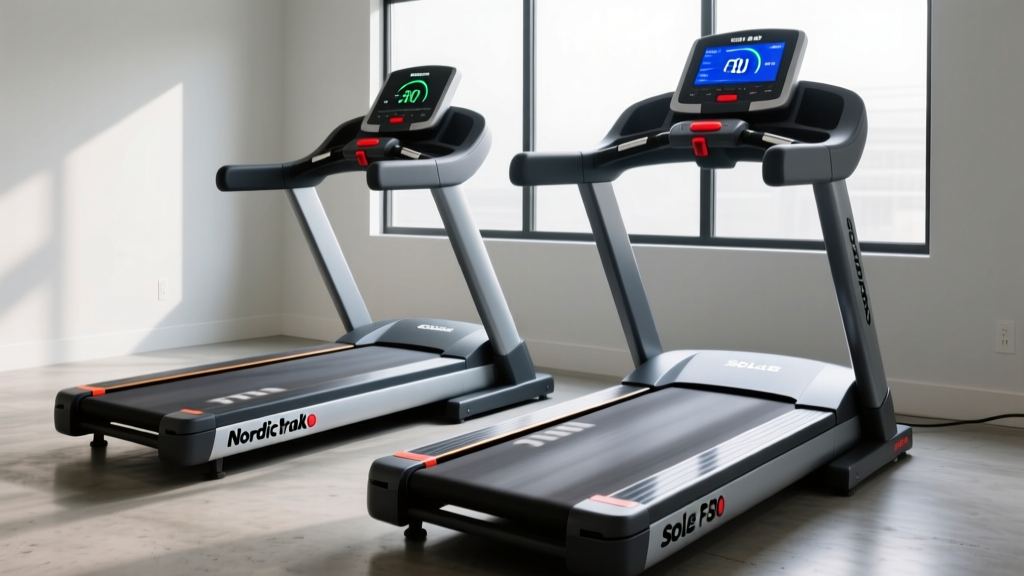
T Series 8 Treadmill Motor Guide: Sizing & Troubleshooting
Master treadmill motor sizing and troubleshoot common issues with our expert guide, featuring a deep dive into the NordicTrack T Series 8 treadmill.

When investing in home cardio equipment, the motor is the undisputed heart of the machine. Yet, it remains the most misunderstood component among consumers. Misinterpreting motor specifications or ignoring early warning signs of mechanical stress can lead to premature failure, voided warranties, and expensive repairs. In this comprehensive guide, we decode treadmill horsepower metrics, analyze the popular NordicTrack T Series 8 treadmill as a real-world case study, and provide a masterclass in troubleshooting common motor and drive system failures.
Decoding Treadmill Horsepower: The CHP vs. HP Trap
The fitness equipment industry is notorious for misleading marketing jargon, and nowhere is this more prevalent than in motor sizing. To make an informed decision, you must understand the critical distinction between Peak Horsepower (HP) and Continuous Duty Horsepower (CHP).
Expert Insight: Peak vs. Continuous DutyPeak HP: This is the maximum horsepower the motor can achieve for a fraction of a second under zero load. It is a marketing metric with no practical value for daily use.
Continuous Duty HP (CHP): This is the horsepower the motor can sustain continuously over a long workout session under a loaded condition. Always base your purchasing decision on the CHP rating.
Most home treadmills utilize Direct Current (DC) brushed motors. These motors rely on a Pulse Width Modulation (PWM) controller board to regulate voltage. When you step on the belt, the motor experiences a load. If the CHP is too low for your body weight and speed, the PWM controller must push excessive amperage through the motor windings to maintain belt speed. This results in rapid heat buildup, degradation of the internal carbon brushes, and eventual thermal shutdown.
Case Study: Analyzing the T Series 8 Treadmill Motor
To contextualize these concepts, let us examine the NordicTrack T Series 8 treadmill, one of the most popular budget-to-mid-range cardio machines on the market, typically retailing between $499 and $599. Understanding its specific motor architecture helps illustrate how sizing dictates user experience.
- Motor Rating: 2.6 CHP (Continuous Duty)
- Motor Type: DC Brushed, PWM Controlled
- Max User Weight Capacity: 300 lbs
- Speed Range: 0 to 10 MPH
- Incline: 0% to 10% (Powered by a separate linear actuator motor)
The 2.6 CHP motor in the T Series 8 treadmill is perfectly calibrated for walkers and light joggers weighing under 250 lbs. Under these conditions, the motor operates at an efficient amperage draw of 3 to 5 Amps. However, if a 290 lb user attempts to run at 8 MPH on a 10% incline, the amperage draw can spike to 9 or 10 Amps. While the machine's 300 lb weight capacity suggests it can handle the load, sustained high-amperage draws will drastically reduce the motor's lifespan and trigger the internal thermal cutoff switch. According to guidelines from the American Heart Association, matching equipment specifications to your specific biomechanical output is crucial for both safety and equipment longevity.
Motor Sizing Matrix: Matching HP to User Biomechanics
Use the following matrix to determine the minimum CHP required for your specific use case. Remember, if you are on the borderline between two categories, always size up to the next half-horsepower increment.
| User Weight | Walking (Under 4 MPH) | Jogging (4-6 MPH) | Running (6+ MPH) |
|---|---|---|---|
| Under 150 lbs | 2.0 CHP | 2.5 CHP | 2.75 CHP |
| 150 - 200 lbs | 2.5 CHP | 2.75 CHP | 3.0 CHP |
| 200 - 250 lbs | 2.75 CHP | 3.0 CHP | 3.5 CHP |
| 250 - 300+ lbs | 3.0 CHP | 3.5 CHP | 4.0+ CHP |
Troubleshooting Guide: Diagnosing T Series 8 Motor Failures
When your treadmill begins to act erratically, the immediate instinct is to blame the motor. However, in 70% of cases, the motor is a victim of secondary system failures. Here is how to accurately troubleshoot the most common issues affecting the T Series 8 treadmill and similar DC-motor machines.
1. The 'Jerky Belt' Phenomenon (Friction vs. Motor)
Symptom: The belt hesitates, stutters, or jerks rhythmically when you step on it, but runs smoothly when empty.
Diagnosis: This is rarely a failing motor armature. It is almost always excessive deck friction. When the belt dries out, the friction coefficient spikes. The PWM controller detects the drop in RPM and surges voltage to compensate, causing the belt to lurch forward, then slow down, creating a jerky sensation.
The Fix: Perform a belt deflection test. Lift the belt in the dead center of the deck; you should have exactly 2 to 3 inches of clearance. If it is tighter, loosen the rear roller bolts by a quarter-turn. Next, apply 100% pure silicone treadmill lubricant (never use WD-40 or petroleum-based products, which destroy the belt backing). Apply 15ml of silicone under the belt, run the machine at 2 MPH for 3 minutes, and the stuttering should vanish.
2. Thermal Overload and Mid-Workout Shutdowns
Symptom: The treadmill shuts off abruptly after 20-40 minutes of use, accompanied by a faint burning smell or a completely dead console.
Diagnosis: DC treadmill motors are equipped with a thermal cutoff switch, typically rated for 115°C (240°F). If the motor housing lacks proper ventilation, or if the internal cooling fan is clogged with dust and pet hair, the windings overheat and trip the switch to prevent a fire.
The Fix: Unplug the machine and wait 30 minutes for the thermal switch to reset. Remove the motor hood (usually secured by 4 to 6 Phillips-head screws). Use a vacuum with a brush attachment to clean the motor fins and the cooling fan. Ensure the treadmill is placed at least 12 inches away from walls to allow for adequate rear exhaust airflow, a safety standard frequently cited by the Mayo Clinic in their home gym safety guidelines.
3. Error Codes (E01, E02) and Electrical Faults
Symptom: The console displays an E01 (Speed Sensor) or E02 (Motor Overcurrent) error code immediately upon startup or when increasing speed.
Diagnosis: An E01 usually indicates that the optical or magnetic speed sensor on the front roller is misaligned or covered in dust. An E02 indicates the controller board is reading an amperage draw that exceeds safe limits, often pointing to a shorted motor armature.
The Fix (Multimeter Test): Unplug the treadmill. Disconnect the red (M+) and black (M-) motor wires from the lower controller board. Set your digital multimeter to Ohms (Ω). Place the probes on the M+ and M- terminals of the motor itself. A healthy T Series 8 motor should read between 1.0 and 5.0 Ohms. If the multimeter reads 'OL' (infinite resistance), the internal circuit is broken. If it reads 0.0 Ohms, the windings are shorted. In either case, the motor must be replaced (OEM replacement motors typically cost between $120 and $180).
Preventative Maintenance Framework
To maximize the lifespan of your treadmill's drive system, implement this strict maintenance schedule:
- Monthly Lubrication: Check the belt-to-deck friction. Apply 100% silicone lubricant every 150 miles or every 3 months, whichever comes first.
- Quarterly Belt Alignment: Stand behind the treadmill while it runs at 3 MPH. Watch the belt track. If it drifts left, tighten the left rear bolt by 1/8th of a turn. Never adjust both sides simultaneously.
- Bi-Annual Carbon Dust Cleaning: DC motors use carbon brushes that slowly wear down, leaving conductive black dust inside the motor hood. Vacuum this dust every 6 months to prevent it from bridging the gap between electrical contacts on the controller board, which can cause catastrophic short circuits.
- Surge Protection: Always plug your treadmill into a dedicated 120V/15A outlet equipped with a high-joule surge protector. Voltage spikes from the grid can instantly fry the sensitive MOSFETs on the PWM controller board.
Warning: Never attempt to bypass a blown thermal fuse or thermal cutoff switch with a standard wire jumper. The thermal switch is a critical fire-prevention device. Bypassing it removes the only safety net preventing the motor windings from melting and igniting the surrounding plastic motor hood.
Understanding the mechanical and electrical realities of your equipment transforms you from a passive consumer into an informed owner. By respecting the 2.6 CHP limits of the T Series 8 treadmill and adhering to rigorous friction-management protocols, you can easily extract a decade of reliable performance from your investment.
More gear to consider
All reviews
Elliptical vs Treadmill: Home Cardio & Water Treadmill Dog Rehab

Maintaining Upright, Recumbent & Spin Bikes vs. a SureFit Treadmill

Treadmill Tray vs Bike Desk: 2026 Upright, Recumbent & Spin Trends
Cardio Machine Noise: Home Gym vs Treadmill for Horses
Noise Level Comparison: Does Apple Watch Count Steps on Treadmill?