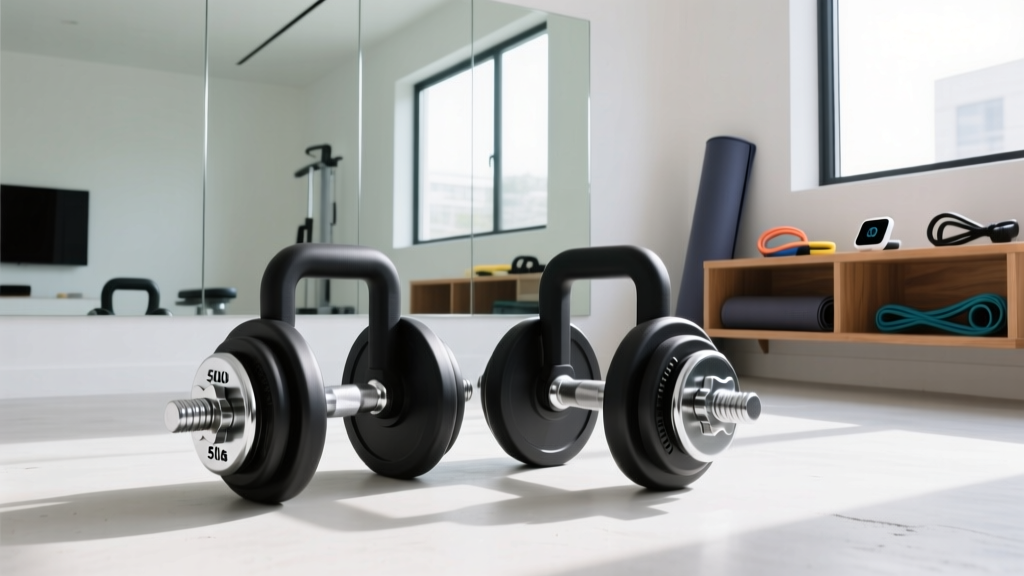
Straight Handle Dumbbell Layouts: Rubber Hex vs Urethane Space Guide
Optimize your gym layout with our space-saving guide. We compare rubber hex vs urethane straight handle dumbbell storage, dimensions, and rack density.

The Geometry of Storage: Why Handle Shape Dictates Gym Layouts
When designing a high-efficiency home gym or a boutique commercial fitness space in 2026, every square inch of floor and rack real estate commands a premium. While most facility planners obsess over the footprint of power racks and cardio machines, the micro-geometry of free weight storage is often overlooked. Specifically, the choice between a contoured ergonomic grip and a straight handle dumbbell fundamentally alters your horizontal rack density, while the material—rubber hex versus urethane—dictates your vertical tier spacing and long-term spatial stability.
This guide breaks down the exact spatial mathematics, material friction coefficients, and layout frameworks required to optimize your dumbbell storage, ensuring you maximize usable workout area without sacrificing equipment accessibility.
💡 The Straight Handle Advantage: Contoured (ergo) dumbbell handles feature a thicker mid-section designed for grip comfort. However, when placed on a 3-tier horizontal rack, the saddles must be spaced wider to prevent the handles from colliding, or the dumbbells must be stored at an inefficient angle. A straight handle dumbbell maintains a uniform cylindrical grip, meaning horizontal rack spacing is dictated purely by the diameter of the weight heads. This allows you to increase horizontal rack density by roughly 12% to 15% compared to ergo handles.Rubber Hex Dumbbells: The Budget Space Maximizer
Rubber-coated cast iron hex dumbbells remain the default choice for budget-conscious garage gyms and high-volume commercial facilities. From a spatial perspective, the hexagonal head design offers a distinct advantage: floor stackability. If you lack the budget or wall space for a dedicated 3-tier rack, rubber hex dumbbells can be interlocked and stacked safely in a corner footprint measuring just 24 by 24 inches.
Spatial Drawbacks on Racks
However, when transitioning to a rack-based layout, rubber hex dumbbells present unique spatial challenges. The high-friction coefficient of vulcanized rubber causes the heads to "snag" on the UHMW (ultra-high-molecular-weight polyethylene) plastic liners commonly used on modern dumbbell rack saddles. To prevent users from having to violently yank the weights free—which poses a safety hazard in tight spaces—facility designers must increase the vertical tier clearance.
- Standard Vertical Clearance Required: 8.5 inches between tiers.
- Horizontal Spacing (50lb Straight Handle): 6.75 inches per dumbbell.
- Average Cost Efficiency: $1.50 to $2.20 per pound.
For a comprehensive look at the dimensional tolerances of commercial-grade rubber options, refer to the Rogue Rubber Hex Specifications, which highlight the exact head diameters that dictate your rack width requirements.
Urethane Dumbbells: High-Density Commercial Layouts
Polyurethane (urethane) is the undisputed champion of high-density, premium gym layouts. Unlike rubber, which is poured and vulcanized, urethane is a highly engineered elastomer that offers superior dimensional stability and a significantly lower coefficient of friction.
Maximizing Vertical and Horizontal Density
Because urethane glides smoothly against rack saddles without catching, facility planners can reduce the vertical tier spacing from 8.5 inches down to 7.5 inches. Over a standard 3-tier rack, this saves 3 inches of vertical height, allowing the top tier to sit lower and improving the ergonomic retrieval angle for shorter athletes—a key consideration in National Strength and Conditioning Association (NSCA) facility design guidelines regarding universal accessibility.
Furthermore, when paired with a straight handle dumbbell configuration, urethane heads can be machined to tighter tolerances. The Rogue Fitness Urethane Lineup features precision-cast heads that sit virtually flush against one another on the rack, eliminating the "dead air" gaps common with cheaper rubber molds.
Spatial Comparison Matrix: Rubber Hex vs. Urethane
The following matrix illustrates the exact spatial and financial differences when outfitting a 5 lb to 50 lb set (10 pairs) using straight handle configurations.
| Metric | Rubber Hex (Straight Handle) | Urethane (Straight Handle) |
|---|---|---|
| Material Friction | High (Snags on UHMW plastic) | Low (Glides smoothly) |
| Min. Vertical Tier Spacing | 8.5 inches | 7.5 inches |
| 50lb Head Diameter | ~6.5 inches (varies by mold) | ~6.25 inches (precision cast) |
| Horizontal Rack Width (7 bells) | ~49 inches | ~45.5 inches |
| Cost per Pound (2026 Avg) | $1.75 - $2.20 | $4.50 - $5.50 |
| Floor Stackability | Excellent (Interlocking Hex) | Poor (Round/Contoured Heads) |
Designing Your Rack Layout for Maximum Efficiency
To fully leverage the spatial benefits of a straight handle dumbbell, your rack layout must be engineered with precision. Here is a step-by-step framework for optimizing a 5-50lb set in a constrained environment:
- Select a 3-Tier Horizontal Rack over an A-Frame: While A-frames have a smaller floor footprint (roughly 22" x 22"), they consume valuable vertical airspace and force users to bend and twist, requiring wider surrounding clearance zones for safety. A 3-tier horizontal rack placed against a wall utilizes "dead space" and requires only 36 inches of frontal clearance for safe retrieval.
- Calculate Exact Saddle Spacing: If using urethane straight handle dumbbells, set your rack saddles to accommodate a 6.5-inch horizontal pitch. This prevents the handles from touching while eliminating wasted lateral space.
- Implement Tiered Weight Grouping: Place the 5-20 lb dumbbells on the top tier, 25-40 lb on the middle, and 45-50 lb on the bottom. This aligns the center of gravity with the user's natural lifting mechanics, reducing the spatial footprint needed for the "clean and lift" motion.
- Utilize Wall-Mounted Saddles for Overflow: If floor space is entirely maxed out, heavy straight handle dumbbells (55lb+) can be stored on individual wall-mounted single-tier saddles, turning unused drywall into high-density storage.
The Hidden Space Killer: Material Degradation Over Time
When planning a gym layout, most buyers calculate spatial requirements based on Day 1 dimensions. However, environmental factors drastically alter equipment footprints over a 5-to-10-year lifecycle.
"Rubber is a porous, organic-based material that oxidizes when exposed to UV light and fluctuating humidity. Over time, rubber hex dumbbells can experience micro-expansions and surface tackiness. This degradation destroys the tight spatial tolerances of your rack layout, causing weights to stick together and snag on saddles, effectively forcing you to widen your rack spacing years after the initial installation."
Urethane, conversely, is highly resistant to UV degradation, oxidation, and temperature fluctuations. A urethane straight handle dumbbell purchased in 2026 will maintain its exact factory-machined dimensions and low-friction surface well into the 2030s. For commercial gym owners or home gym enthusiasts building a "forever space," the premium paid for urethane is often justified by the preservation of your meticulously planned spatial layout.
Environmental Spatial Constraints: Off-Gassing
Space optimization isn't just about physical dimensions; it's also about air volume and ventilation. Cheap imported rubber hex dumbbells are notorious for off-gassing volatile organic compounds (VOCs). In a small, unventilated garage gym (under 200 square feet), this odor can render the space unusable without installing active exhaust systems, which take up physical space and require structural modifications. Premium urethane is virtually odorless upon unboxing, preserving the usability of micro-gyms without the need for bulky air purification infrastructure.
Final Verdict for 2026 Gym Builds
If your primary constraint is budget and floor-stacking capability, the rubber hex straight handle dumbbell remains a viable, space-efficient tool, provided you have the ventilation to handle off-gassing and the rack clearance to accommodate high-friction rubber.
However, if your goal is maximum horizontal and vertical rack density, long-term dimensional stability, and a premium user experience, investing in a urethane straight handle dumbbell set is the superior spatial optimization strategy. By shaving inches off both tier heights and horizontal saddle spacing, urethane allows you to fit a full commercial-grade weight range into a footprint that would typically only accommodate a beginner's set.
More gear to consider
All reviews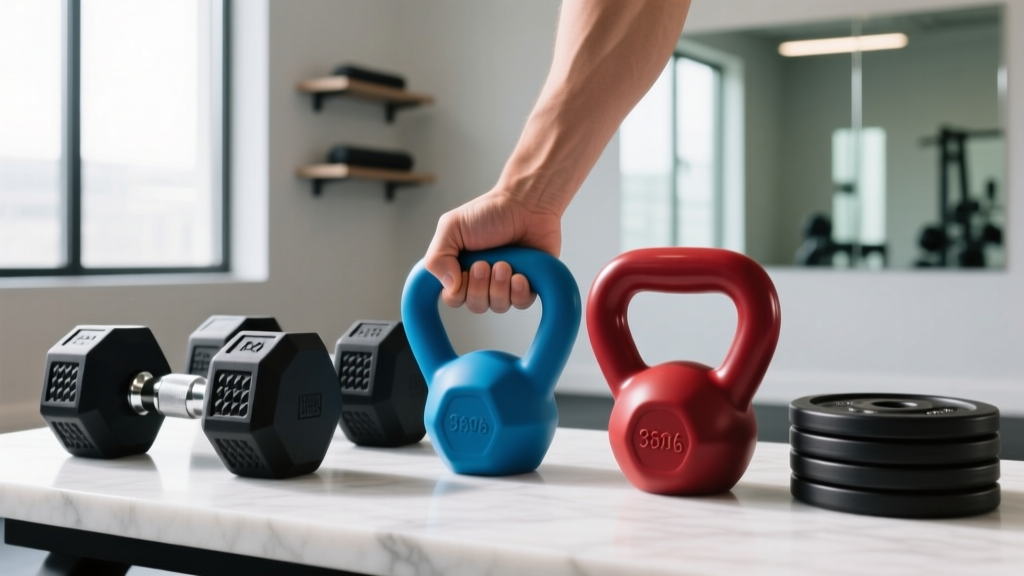
Rubber Hex vs Urethane for Dumbbell Shoulder Lifts: Value Analysis
Olympic Barbell Weight and Knurling: Upgrading Your 15 Minute Workout with Dumbbells

Rubber Hex vs Urethane for Dumbbell Jumping Squats: Expert Review

Barbell Collar Types: A Dumbbell Manufacturer's Troubleshooting Guide
EZ Curl Bar vs Straight Bar: Dumbbell Shoulder Gym Layouts