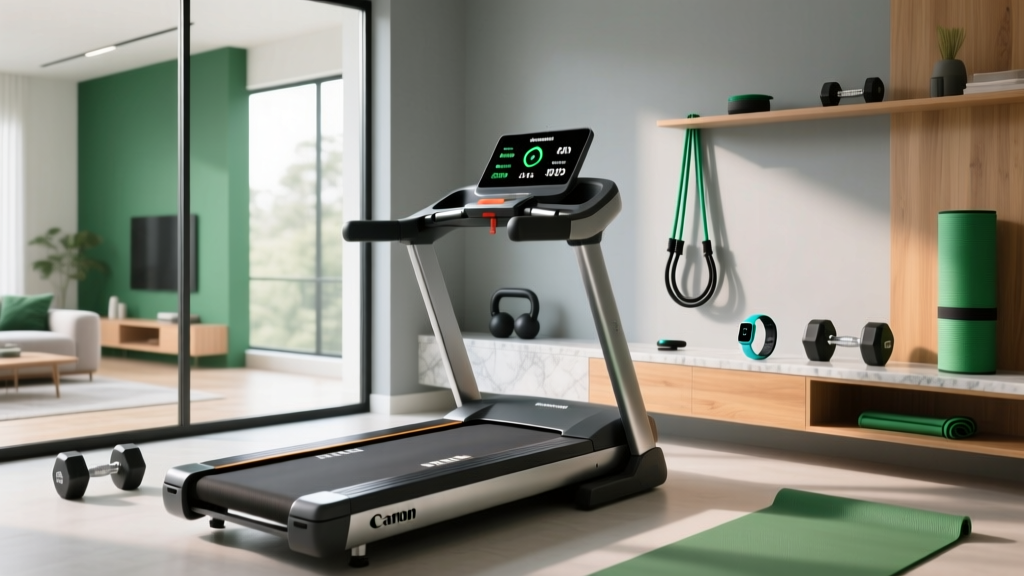
Layout Guide: Bike Types vs NordicTrack X16 Treadmill Dimensions
Compare upright, recumbent, and spin bike footprints against NordicTrack X16 treadmill dimensions to optimize your 2026 home gym layout.

The Spatial Baseline: Why We Measure Against the X16
Designing a high-performance home gym in 2026 requires a ruthless approach to space optimization. When mapping out your floor plan, the NordicTrack X16 treadmill dimensions serve as the ultimate stress-test for your available square footage. As a premier incline trainer, the X16 demands a massive physical footprint—measuring approximately 70.5 inches long, 30 inches wide, and 72.5 inches high, while tipping the scales at 340 pounds. More importantly, its 40% maximum incline capability radically alters its volumetric footprint during use, requiring significant vertical and anterior clearance.
If your home gym can comfortably accommodate an incline trainer of this magnitude alongside secondary cardio equipment, you have a luxury of space. However, for most home fitness enthusiasts, integrating a secondary cardio modality requires strategic compromises. This is where understanding the spatial nuances of stationary bike types (upright, recumbent, and spin) becomes critical. By contrasting these bike categories against the sprawling baseline of the X16, we can engineer a layout that maximizes utility without sacrificing safety or traffic flow.
⚠️ Incline Trainer Clearance Warning: According to facility safety guidelines outlined by the National Strength and Conditioning Association (NSCA), dynamic equipment requires specific clearance zones. For the X16 at max incline, the front deck rises over 20 inches. If you have standard 8-foot ceilings, a tall user on the X16 risks head strikes. Always calculate the 'peak dynamic height' before placing secondary bikes directly in front of your treadmill.Stationary Bike Types: A Spatial Analysis
Not all bikes are created equal when it comes to floor plan integration. The choice between an upright, recumbent, or indoor cycling (spin) bike will dictate your room's traffic flow, visual weight, and usable square footage.
1. Upright Bikes: The Vertical Compromise
Upright bikes mimic traditional bicycles, placing the rider in a standard seated position over the bottom bracket. Models like the Schwinn IC4 (approx. $799) or the Peloton Bike+ ($2,495) are staples in this category.
- Footprint: Generally the smallest 2D base. The Schwinn IC4 measures just 48.7" L x 21.2" W.
- Layout Advantage: They can be tucked into narrow alcoves or placed flush against a wall (with screen clearance).
- The Catch: Verticality. The handlebars and seat posts extend high, creating visual clutter. Furthermore, out-of-saddle riding requires lateral clearance that isn't reflected in the static base dimensions.
2. Recumbent Bikes: The Horizontal Sprawl
Recumbent bikes, such as the NordicTrack Commercial VR25 ($1,199) or the Sunny Health SF-RBE9715 ($499), feature a bucket seat with a backrest and forward-placed pedals. They are the gold standard for lumbar support and rehabilitation.
- Footprint: Exceptionally long. The VR25 demands 63.5" L x 25.5" W. While the width is manageable, the length rivals compact treadmills.
- Layout Advantage: Low visual profile. Because they sit close to the ground, they don't block windows, mirrors, or television sightlines.
- The Catch: They destroy linear floor space. You cannot easily push a recumbent bike into a corner or slide it under a desk. They require dedicated, permanent floor real estate.
3. Spin / Indoor Cycling Bikes: The Compact Powerhouse
Indoor cycling bikes prioritize performance, heavy flywheels (or advanced magnetic resistance), and aggressive riding geometries. The Keiser M3i ($2,195) and Bowflex VeloCore ($1,999) represent the premium end of this spectrum.
- Footprint: Highly optimized. The Keiser M3i boasts a remarkably compact 48" L x 26" W footprint, with a V-frame base designed specifically to minimize floor contact while maximizing stability.
- Layout Advantage: Unmatched density of utility. They offer the highest caloric burn per square foot of any home cardio machine.
- The Catch: High dynamic movement. Spin classes involve aggressive side-to-side movements and standing climbs. You must allocate a 'dynamic halo' of at least 20 inches on either side of the handlebars to prevent drywall damage from stray elbows or handlebar strikes.
Spatial Footprint & Clearance Matrix
To visualize how these machines interact within a room anchored by a massive incline trainer, review the comparative matrix below. Data reflects 2026 manufacturer specifications and standard safety clearances recommended by the American College of Sports Medicine (ACSM).
| Machine Type & Model | Base Dimensions (L x W) | Static Weight | Total Layout Zone Needed* |
|---|---|---|---|
| Baseline: NordicTrack X16 | 70.5" x 30" | 340 lbs | 118.5" x 78" (inc. clearances) |
| Upright: Schwinn IC4 | 48.7" x 21.2" | 112 lbs | 96.7" x 69.2" |
| Recumbent: NordicTrack VR25 | 63.5" x 25.5" | 165 lbs | 111.5" x 73.5" |
| Spin: Keiser M3i | 48" x 26" | 85 lbs | 96" x 74" |
*Total Layout Zone includes the machine base plus 24 inches of lateral clearance on both sides and 36 inches of posterior clearance for safe mounting, dismounting, and emergency egress.
Layout Design Frameworks for Mixed-Cardio Rooms
When your home gym houses both an X16 incline trainer and a secondary bike, simply pushing machines against the walls is a recipe for a cramped, unusable space. Instead, utilize the Cardio Triangle Workflow, a concept heavily discussed in modern spatial planning guides by experts at Garage Gym Reviews.
- The Anchor Point (The X16): Place the X16 on the longest uninterrupted wall. Because of its length and incline mechanics, it cannot float in the center of the room. Ensure the front of the treadmill faces the room's primary focal point or window, but keep it at least 4 feet away from any glass to account for the deck's upward trajectory.
- The Perpendicular Flank (Upright/Spin Bikes): Position your upright or spin bike on a wall perpendicular to the treadmill, facing the same general direction. This allows both users to share a single wall-mounted television or fan array without sightline obstruction. Spin bikes are ideal here due to their narrow profiles.
- The Parallel Anchor (Recumbent Bikes): If using a recumbent bike, place it parallel to the X16 but on the opposite side of the room, facing inward. Because recumbent users are seated low and reclined, placing them in the center of the room or facing a side wall prevents the 'tunnel vision' effect and keeps the room's central airspace feeling open.
Edge Cases: Floor Joists, Glare, and Traffic Flow
Space optimization isn't just about 2D floor plans; it's about environmental integration. Consider these real-world edge cases when finalizing your 2026 layout:
"The most common mistake in home gym layout is ignoring point-load weight distribution. A 340-pound treadmill and a 165-pound recumbent bike placed side-by-side on an upper-floor bedroom can exceed the live-load deflection limits of standard 2x10 floor joists, causing structural bounce during high-impact runs."
Ventilation and Screen Glare
The X16's massive 14-inch HD touchscreen and the interactive displays on premium bikes like the Peloton Bike+ are highly susceptible to window glare. When mapping your layout, draw a line from your primary windows to the screens. Position your spin or upright bike so the rider's body casts a shadow on the screen during peak morning or evening workout hours. Furthermore, do not place a recumbent bike directly in the path of a floor fan meant for the treadmill; the recumbent rider's low profile will block airflow to the treadmill user.
The 'Drop Zone' Reality
Upright and spin bikes require users to dismount quickly during high-intensity interval training (HIIT) or spin classes. If you place a spin bike in a corner with only 12 inches of lateral clearance, a rider bailing out of a sprint will kick your drywall. Always prioritize the 24-inch lateral 'Drop Zone' over squeezing in an extra piece of storage furniture.
Final Verdict on Space Optimization
If your home gym is built around the monumental NordicTrack X16 treadmill dimensions, your secondary cardio choice must act as a spatial counterbalance. Choose an upright bike if you need to tuck equipment into narrow architectural niches. Opt for a recumbent bike only if you have abundant linear floor space and prioritize lumbar support over spatial efficiency. Select a spin bike if you demand maximum performance and caloric output per square foot, provided you can allocate the necessary lateral clearance for dynamic movement. By respecting the volumetric footprints and clearance zones of these distinct machine types, you can engineer a home gym that feels expansive, safe, and meticulously designed.
More gear to consider
All reviews
Garmin Watch Treadmill Run vs Upright, Recumbent & Spin Bikes

Small Space Folding Treadmills & Sole Treadmill Serial Number Guide
Rowing Machine Setup: No NordicTrack T 6.5 S Treadmill Manual Needed
Air Bike vs Assault Bike vs Treadmill AFG: Value Guide

Urevo Foldable Treadmills: Belt Maintenance & Value Analysis