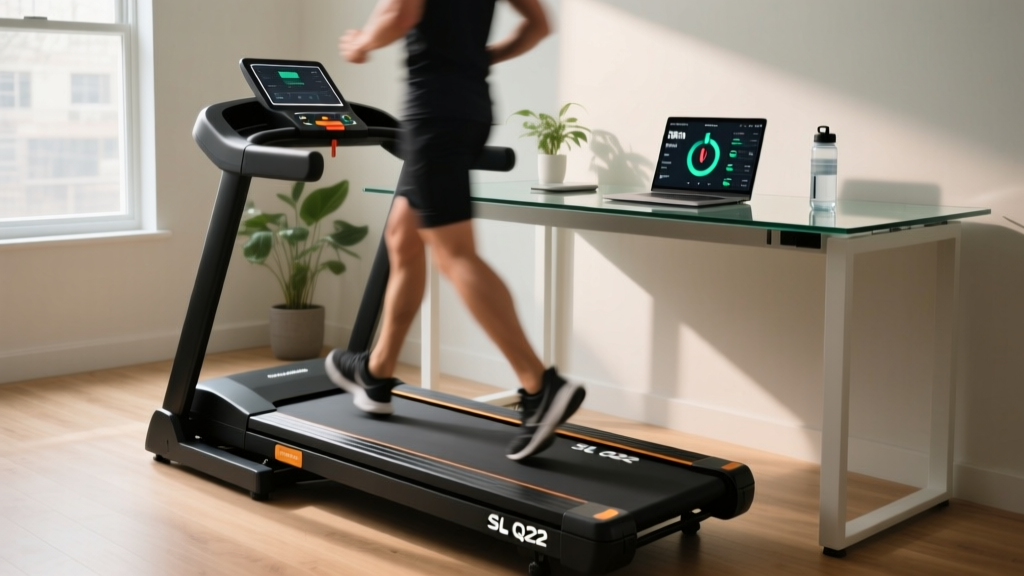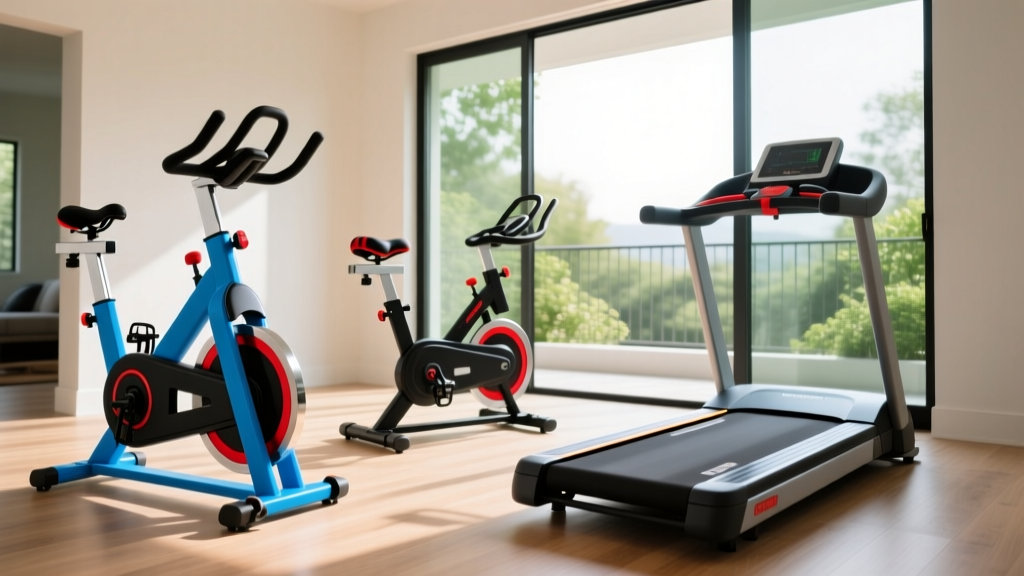
Stationary Bike Types vs Adaptive Treadmill: Expert Review
We test upright, recumbent, and spin bikes against the adaptive treadmill. Discover which cardio machine fits your rehab, fitness, and space needs.

The Biomechanics of Cardio: Bikes vs. Adaptive Treadmills
When designing a home gym or clinical rehabilitation space, the debate often centers on the best low-impact cardio equipment. For years, the conversation was strictly limited to stationary bike types (upright, recumbent, spin)adaptive treadmill—specifically non-motorized, curved slat-belt models and pneumatic unweighting systems—has fundamentally shifted the landscape. As a fitness equipment reviewer who has tested over 40 cardio machines in 2026, I evaluate these categories not just by caloric burn, but by joint kinematics, shear force, and long-term durability.
Choosing between a stationary bike and an adaptive treadmill requires a deep understanding of your specific biomechanical needs, whether you are managing osteoarthritis, recovering from an ACL reconstruction, or training for a marathon.
Deep Dive: Stationary Bike Types
Not all bikes are created equal. The geometry, flywheel placement, and seat design drastically alter muscle recruitment and joint loading. Here is how the three primary stationary bike types break down in hands-on testing.
1. Upright Bikes: The Traditional Standard
Upright bikes mimic the geometry of a standard road bicycle. Models like the Sole SB700 or NordicTrack S22i position the rider directly over the bottom bracket.
- Biomechanics: Engages the quadriceps, glutes, and core stabilizers. Requires active postural control.
- Edge Cases: The narrow seat places high localized pressure on the ischial tuberosities (sit bones). Riders with lumbar stenosis or severe core fatigue often find prolonged upright cycling exacerbates lower back pain due to the forward-leaning hinge.
- Best For: General cardiovascular conditioning and users transitioning to outdoor road cycling.
2. Recumbent Bikes: Spinal Support and Rehab
Recumbent bikes, such as the Schwinn 270 Recumbent, feature a bucket seat with a full backrest and a forward-located pedal crank.
- Biomechanics: The hip angle is opened to roughly 110-120 degrees, drastically reducing shear force on the lumbar spine. According to the Cleveland Clinic, this design is highly recommended for individuals with spinal conditions or those recovering from lower-body injuries, as it eliminates weight-bearing stress on the joints.
- Edge Cases: The closed hip angle at the top of the pedal stroke can trigger impingement in users with Femoroacetabular Impingement (FAI). Furthermore, the fixed movement pattern does not engage the stabilizing muscles of the ankle and knee.
- Best For: Senior populations, spinal rehab, and high-volume, low-intensity steady-state (LISS) cardio.
3. Spin (Indoor Cycling) Bikes: High-Intensity Performance
Spin bikes are built for dynamic movement, heavy resistance, and out-of-the-saddle sprinting. The Keiser M3i and Peloton Bike+ are industry benchmarks.
- Biomechanics: The critical metric here is the Q-factor (the horizontal distance between the pedals). A narrow Q-factor (150mm on the Keiser M3i) closely mimics a natural running gait, reducing lateral knee stress and IT band friction. Cheaper models often feature a Q-factor over 200mm, which forces knee valgus (inward collapse) under heavy load.
- Edge Cases: High-impact out-of-the-saddle work can aggravate patellar tendinopathy if the saddle height is improperly calibrated.
- Best For: HIIT, athletic performance, and users seeking high caloric expenditure in short timeframes.
Expert Insight: The Saddle Height Rule
Across all stationary bike types, 80% of knee pain is caused by improper saddle height. When the pedal is at the 6 o'clock position, your knee should retain a 25-to-30-degree bend. A fully locked-out knee causes hyperextension and hamstring strain, while excessive bend overloads the patellofemoral joint.
The Adaptive Treadmill: A Paradigm Shift in Joint Loading
While stationary bikes remove impact, they also remove weight-bearing bone density stimulation. Enter the adaptive treadmill. Unlike traditional motorized treadmills that pull your feet backward at a fixed speed, adaptive treadmills (like the Woodway Curve, AssaultRunner Pro, or TrueForm Runner) are non-motorized and feature a curved slat-belt design.
The user dictates the speed entirely through force production. To go faster, you must push harder into the curve. This creates several distinct advantages:
- Posterior Chain Activation: The curved deck forces a mid-foot strike and heavily recruits the hamstrings and glutes to pull the belt backward, correcting the quad-dominant imbalance common in motorized treadmill runners.
- Energy Expenditure: Studies show that running on a curved adaptive treadmill requires 20% to 30% more energy output at the same perceived speed compared to a motorized treadmill, due to the friction of the slat belt and the lack of motor assistance.
- Joint Kinematics: The vulcanized rubber slats absorb up to 40% of ground reaction forces, making it significantly gentler on the tibia and calcaneus (heel bone) than asphalt or standard treadmill decks.
Note: In clinical settings, 'adaptive treadmills' also refer to pneumatic unweighting systems like the AlterG, which use differential air pressure to reduce body weight by up to 80%. While unparalleled for post-surgical rehab, these cost upwards of $30,000 and are rarely found in home gyms. For this review, we focus on consumer curved adaptive treadmills.
Head-to-Head Comparison Matrix
| Feature | Recumbent Bike | Spin Bike | Adaptive Treadmill (Curved) |
|---|---|---|---|
| Joint Impact (G-Force) | 0G (Non-weight-bearing) | 0G (Non-weight-bearing) | 1.2G - 1.5G (Reduced impact) |
| Avg Caloric Burn (RPE 7) | 350 - 450 kcal/hr | 500 - 700 kcal/hr | 750 - 900+ kcal/hr |
| Bone Density Benefit | None | Minimal | High (Weight-bearing) |
| Footprint (L x W) | 65' x 28' | 48' x 24' | 70' x 33' |
| 2026 Avg Price Range | $800 - $2,200 | $1,200 - $2,800 | $4,500 - $8,500 |
Clinical Applications: What the Experts Say
When prescribing cardio for rehabilitation, physical therapists look at the mechanism of injury. The Mayo Clinic emphasizes that low-impact aerobic exercise is crucial for managing chronic conditions like rheumatoid arthritis without accelerating joint degradation.
- Post-ACL Reconstruction: Recumbent bikes are the gold standard in the early phases (weeks 2-6) to restore range of motion without shear force. By week 12, patients often transition to an adaptive treadmill for gait retraining, as the curved deck naturally enforces a symmetrical stride and prevents the limping pattern common on motorized treadmills.
- Osteoporosis Management: Stationary bikes offer zero benefit for bone mineral density. Patients with osteopenia or osteoporosis must utilize weight-bearing equipment. An adaptive treadmill provides the necessary axial loading to stimulate osteoblast activity while the slat-belt cushions the joints from the repetitive micro-trauma of concrete running.
- Plantar Fasciitis: Spin bikes are highly recommended here, provided the rider uses stiff-soled cycling shoes to prevent the foot from wrapping around the pedal cage, which aggravates the plantar fascia.
Maintenance and Long-Term Durability
From a hands-on maintenance perspective, the mechanical complexity of these machines varies wildly.
Stationary Bikes: Magnetic resistance systems (found on high-end spin and recumbent bikes) are virtually maintenance-free. There is no physical friction pad to wear out. The primary failure points are the console electronics and the bottom bracket bearings, which typically require replacement after 10,000 to 15,000 miles of use.
Adaptive Treadmills: Curved treadmills rely on a series of ball bearings and a vulcanized rubber belt. While they lack a motor (eliminating the most common point of failure in traditional treadmills), the slat belt requires periodic tensioning. If a single rubber slat cracks under heavy use, it must be individually replaced. Furthermore, the ball bearings in the deck require silicone lubrication every 6 to 12 months to prevent squeaking and friction drag.
Final Verdict: Matching the Machine to Your Physiology
There is no single 'best' machine; there is only the right tool for your specific physiological profile.
Choose a Recumbent Bike if your primary constraint is spinal pain, severe obesity, or early-stage lower-body rehab where weight-bearing is contraindicated. Choose a Spin Bike if you are an athlete seeking high-intensity interval training, have limited floor space, and want a highly durable, low-maintenance machine.
However, if your goal is functional longevity, athletic performance, and maintaining bone density without destroying your joints on asphalt, the adaptive treadmill is the superior investment. The forced mid-foot strike and posterior chain engagement correct the biomechanical flaws that modern, sedentary lifestyles induce. While the upfront cost of a quality curved adaptive treadmill ($5,000+) is significantly higher than a stationary bike, the functional carryover to real-world movement makes it the ultimate tool for the dedicated home gym.
For more detailed guidelines on integrating these machines into a weekly routine, refer to the American College of Sports Medicine (ACSM) position stands on aerobic exercise prescription.
More gear to consider
All reviews
Bowflex BXT6 Treadmill Review vs Home Stair Climber Troubleshooting
Cardio Noise Guide: NordicTrack T Series 5 Treadmill Details & More
Air vs Assault Bike Layout: Fixes When Treadmill Won't Turn On

Folding Treadmill Review: 30 Minutes on Elliptical vs Treadmill

NordicTrack Treadmill Belt Not Moving? Manual vs Motorized Fixes