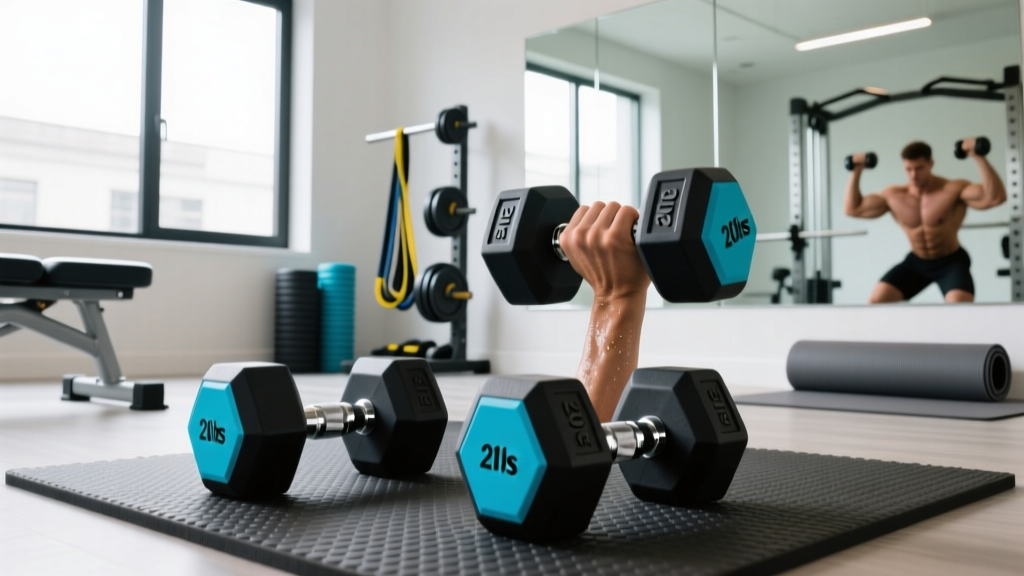
The Standing Incline Fly Dumbbell Myth: Adjustable Set Review
We debunk the standing incline fly dumbbell myth, compare top 2026 adjustable sets, and provide a step-by-step guide to proper chest fly mechanics.

The Biomechanics Paradox: Debunking the 'Standing Incline' Myth
If you have been searching for the perfect standing incline fly dumbbell routine, you have likely stumbled into a common fitness paradox. As beginners navigate the vast sea of chest exercises, search engines often mash together two highly effective but biomechanically distinct movements: the incline dumbbell fly and the standing cable fly.
Here is the hard truth about physics and free weights: you cannot perform a true 'standing incline fly' with dumbbells. Dumbbells rely entirely on gravity, which only pulls straight down. To target the clavicular head (upper chest) with dumbbells, you must change your body's angle relative to gravity by using an incline bench. If you stand perfectly upright with dumbbells, a standard fly motion only targets the anterior deltoids (front shoulders), not the chest.
Expert Insight: The Gravity Vector
To target the upper chest while standing, you must use cables (which allow for horizontal-to-vertical resistance vectors) or perform a standing low-to-high dumbbell scoop. For a true isolation fly targeting the upper pecs, an adjustable incline bench paired with a high-quality set of adjustable dumbbells is mandatory.
In this 2026 guide, we will break down exactly how to perform both the true incline dumbbell fly and its standing alternative. More importantly, we will review the best adjustable dumbbells on the market, specifically analyzing how their physical shape and weight increments impact isolation fly movements.
2026 Adjustable Dumbbell Comparison Matrix for Fly Movements
Not all adjustable dumbbells are created equal, especially when it comes to chest flys. The physical footprint of the dumbbell dictates whether your hands can touch at the peak contraction, and the weight increment system determines if you can safely micro-load for isolation work. Below is our expert comparison of the top three models available this year.
| Model (2026 Editions) | Max Weight | Shape Profile | Fly Suitability | Retail Price |
|---|---|---|---|---|
| Nuobell 80lb | 80 lbs | Compact / Traditional | Excellent (No clanking) | $429 |
| PowerBlock Sport 9.0 | 90 lbs | Rectangular / Cage | Fair (Restricts deep stretch) | $449 |
| Bowflex SelectTech 1090i | 90 lbs | Bulky / Blocky | Good (Clanks at peak) | $599 |
Why the Nuobell Wins for Chest Flys
The Nuobell 80lb utilizes a patented twist-grip mechanism that keeps the weight plates tightly compressed. Because it perfectly mimics the silhouette of a traditional iron dumbbell, your hands can come together at the top of an incline fly without the bulky plastic housings colliding. Furthermore, it offers 2.5 lb micro-jumps up to 50 lbs. According to the EXRX Target Muscle Directory, isolation movements like flys require precise load management; jumping 5 lbs at a time (as seen on heavier Bowflex models) often leads to form breakdown and anterior deltoid takeover.
The PowerBlock Caveat
PowerBlock dumbbells are virtually indestructible and ideal for pressing movements. However, their rectangular 'cage' design physically restricts the bottom stretch position of a fly. The cage will hit your forearms or chest before the pectoral muscle reaches maximum elongation, slightly reducing the hypertrophic stimulus of the exercise.
Step-by-Step: The True Incline Dumbbell Fly
To properly target the upper chest, you must use an adjustable bench set to a 30-to-45-degree angle. Setting the bench higher than 45 degrees shifts the primary load away from the clavicular pecs and onto the front deltoids.
- The Setup: Set your bench to 30 degrees. Grab your adjustable dumbbells (start light, around 15-20 lbs per hand to master the stretch). Sit back and lie down, pressing the weights up directly over your collarbone, not your nipples.
- The Grip: Use a neutral grip (palms facing each other). Keep a slight, 'soft' bend in your elbows. Imagine you are hugging a large barrel; your arm angle should remain locked throughout the movement.
- The Eccentric (Lowering): Slowly lower the dumbbells out to the sides in a wide arc. Take 3 full seconds to lower the weight. Stop when you feel a deep stretch in your upper chest or when your elbows are just below the plane of your torso. Do not overstretch the shoulder capsule.
- The Concentric (Lifting): Squeeze the chest muscles to bring the dumbbells back up along the exact same arc. Exhale as you lift. Stop just before the dumbbells touch to keep constant tension on the pecs.
Step-by-Step: The Standing Low-to-High Dumbbell Scoop
If you do not have an incline bench and are forced to train standing, you cannot do a standard fly. Instead, you must perform the standing low-to-high scoop (sometimes called a standing cross-body raise) to align the resistance vector with the upper chest muscle fibers.
- The Stance: Stand with feet shoulder-width apart, knees slightly bent. Hold a lighter adjustable dumbbell in each hand down by your sides, palms facing forward (supinated grip).
- The Lean: Hinge forward at the hips by about 15 degrees to stabilize your torso. Engage your core tightly to prevent lower back arching.
- The Scoop: Keeping your arms relatively straight but not locked, scoop the dumbbells up and inward, bringing them together at chest-height or slightly higher. Think about trying to touch your opposite shoulder with each dumbbell.
- The Squeeze: Hold the peak contraction at the top for 1 full second. You should feel the tension specifically in the upper shelf of your chest. Slowly lower back to the starting position.
Form Check: If you feel this primarily in your front shoulders, you are likely swinging the weight or using too heavy a load. Drop the weight by 5 lbs and focus entirely on the mind-muscle connection. For more on proper joint alignment, refer to the ACE Fitness Exercise Library.
Crucial Buying Advice: Micro-Loading for Isolation
When investing in adjustable dumbbells for a home gym in 2026, buyers often obsess over the maximum weight (e.g., 90 lbs). However, for fly movements, the minimum weight and increment jumps are vastly more important.
Isolation exercises like flys involve a long lever arm (your extended arm), which places immense mechanical disadvantage on the shoulder joint and pec insertion. Most beginners cannot safely perform strict incline flys with more than 20 to 30 lbs per hand. If your adjustable dumbbells only adjust in 5 lb increments (like the standard Bowflex 552), jumping from 20 lbs to 25 lbs represents a massive 25% increase in load. This almost guarantees a breakdown in form, turning the fly into a sloppy, shoulder-dominant press.
The Fix: Prioritize adjustable sets that offer 2.5 lb increments in the lower weight ranges. The Nuobell series and the PowerBlock (with the optional micro-load add-on kit) allow for these vital half-steps, ensuring continuous progressive overload without sacrificing joint health or exercise mechanics.
Frequently Asked Questions (FAQ)
Can I do an incline fly on the floor?
No. A floor fly severely limits your range of motion because your elbows will hit the ground before your chest muscles achieve a full stretch. If you lack an incline bench, the standing low-to-high scoop detailed above is a far superior alternative for targeting the upper chest.
Why do my adjustable dumbbells clank together at the top of the fly?
This is a common issue with dial-based adjustable dumbbells that feature wide, bulky plastic end-caps. To fix this, simply stop the concentric phase of the movement 2 inches before the dumbbells touch. This not only prevents the annoying clanking sound but also maintains continuous mechanical tension on the pectoral muscles, which is superior for hypertrophy.
Are cables better than dumbbells for chest flys?
Biomechanically, cables offer a distinct advantage: constant tension throughout the entire range of motion. Dumbbells lose tension at the very top of the movement when the weight is stacked directly over the shoulder joint. However, a high-quality set of adjustable dumbbells remains the most space-efficient and cost-effective way to build a complete home gym, provided you control the eccentric lowering phase to maximize muscle damage.
More gear to consider
All reviews
EZ Curl Bar vs Straight Bar: Upgrading Dumbbell Forearm Exercises

Olympic vs Standard Weight Plates: Buying Guide & Dumbbell High Pull Muscles Worked

EZ vs Straight Bar: Expert Review & Single-Arm Dumbbell Snatch
Dumbbell Jump Squats & Rack Care: Storage Tips for Longevity

Budgeting Bumper vs Iron Plates + Top Shoulder Workout with Dumbbells