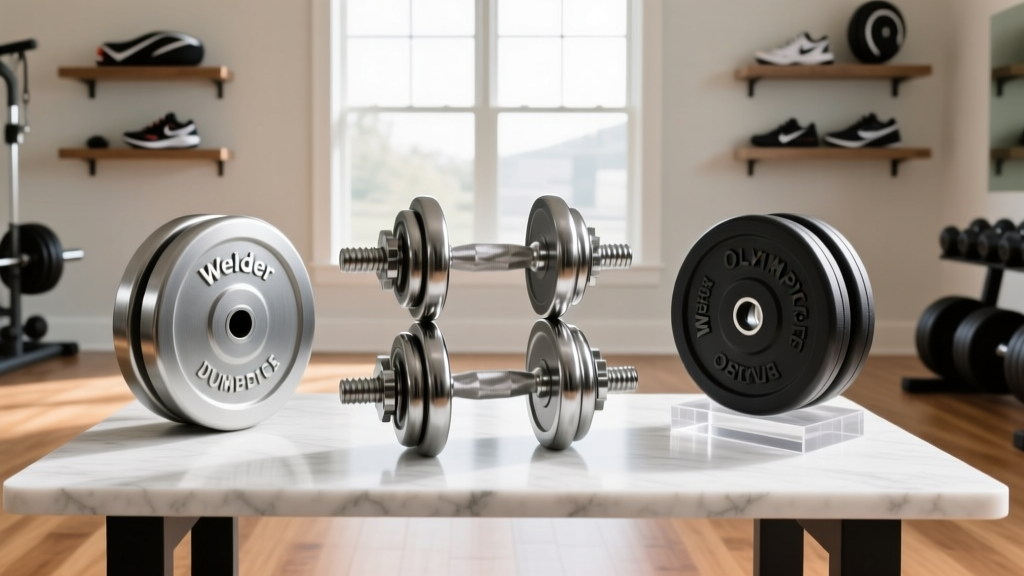
Standard vs Olympic Plates: Upgrading Your Weider Dumbbell Set
Compare Olympic vs standard weight plates for your home gym. Learn which pairs best with a weider dumbbell set, plus 2026 pricing and adapter tips.

The Home Gym Crossroads: Standard vs. Olympic Mechanics
Every dedicated home gym owner eventually faces the same equipment crossroads. You likely started your fitness journey with an accessible, budget-friendly weider dumbbell set featuring standard 1-inch cast iron plates. It is a fantastic entry point for building foundational strength. However, as your lifts progress past the 50-pound mark per hand, the limitations of standard equipment become glaringly obvious. The bars flex, the star collars strip, and the plates clatter loudly against the floor.
This brings us to the ultimate free weight debate: Should you double down on standard weight plates, or invest in the commercial-grade Olympic ecosystem? In this 2026 in-depth buying guide, we break down the exact metallurgical differences, compatibility hacks, and cost-per-pound metrics to help you make the right upgrade for your training space.
Expert Insight: The primary difference is not just the weight; it is the sleeve diameter and the resulting load distribution. Standard plates feature a 1-inch (25.4mm) center hole, while Olympic plates utilize a 2-inch (50.8mm) hole. This 100% increase in diameter fundamentally changes the barbell's structural integrity and rotational mechanics.Core Specifications: 1-Inch vs. 2-Inch Ecosystems
Before analyzing specific brands, we must establish the mechanical baseline. According to equipment manufacturing standards detailed by CAP Barbell's technical specifications, the center hole diameter dictates the entire ecosystem of bars, racks, and dumbbell handles you can use.
| Feature | Standard Plates (1-Inch) | Olympic Plates (2-Inch) |
|---|---|---|
| Center Hole | 1 inch (25.4mm) | 2 inches (50.8mm) |
| Bar Sleeve Diameter | 25mm (Solid Steel/Iron) | 50mm (Hollow/Solid Steel) |
| Max Load Capacity | ~200-300 lbs (before bar flex) | 500-1,000+ lbs (Commercial rated) |
| Drop Tolerance | Low (Cast iron chips/cracks) | High (Bumpers absorb shock) |
| Collar Type | Threaded Star Collars | Spring Clips / Lock-Jaws |
Deep Dive: Standard Plates and the Weider Ecosystem
Standard plates are typically cast from grey iron and painted or coated in a thin layer of enamel. The classic weider dumbbell set usually includes 14-inch threaded dumbbell handles and a pair of 5-foot threaded barbell bars.
The Pros of Standard Gear
- Cost-Effective Entry: Standard cast iron remains the cheapest weight per pound on the market, often hovering around $1.00 to $1.25 per pound in 2026.
- Compact Footprint: 1-inch dumbbell handles are significantly shorter and lighter than Olympic dumbbell handles, making them easier to store in small apartments.
- Lighter Handle Weight: A standard 14-inch threaded handle weighs roughly 5.5 lbs. An Olympic dumbbell handle can weigh 12 to 15 lbs before you even add a plate, which alters the starting weight for isolation exercises like lateral raises.
The Failure Modes of Standard Plates
The primary failure mode of standard equipment is bar flex and thread stripping. When you load a 1-inch solid steel dumbbell handle past 80 pounds per hand, the leverage exerted on the sleeve causes the steel to bow. Furthermore, the threaded star collars used to secure standard plates frequently suffer from stripped threads if over-tightened or cross-threaded during heavy sweat sessions. If you are performing heavy floor presses or drop-sets, standard cast iron plates will chip your flooring and crack upon impact.
Deep Dive: Olympic Plates for Serious Lifters
Transitioning to Olympic plates opens up the commercial fitness ecosystem. As highlighted by Rogue Fitness's extensive weight plate catalog, Olympic plates come in three primary variants: Cast Iron, Rubber-Coated, and Urethane Bumpers.
"The 50mm sleeve diameter of Olympic bars and dumbbell handles allows for a thicker, hollow-core steel construction that resists bending under loads exceeding 500 pounds, a physical impossibility for standard 1-inch solid steel."
Why Olympic Dominates Heavy Lifting
- Rotational Sleeves: Olympic dumbbell handles and barbells feature rotating sleeves with bushings or bearings. This prevents the torque of the weight plates from tearing your wrists during dynamic movements like cleans or snatches.
- Drop Safety: Olympic bumper plates (made of dense virgin rubber) are engineered to be dropped from overhead. They protect both your subfloor and the steel barbell sleeves from catastrophic shock damage.
- Quick Changes: Olympic spring collars allow for 2-second weight changes, compared to the 30-second twisting required for standard star collars.
The Adapter Dilemma: Can You Mix Standards?
A common question from lifters who already own a weider dumbbell set but want to buy heavier, more durable Olympic plates is whether they can mix the two. The short answer is: Yes, but with severe compromises.
You can purchase 2-inch to 1-inch adapter sleeves (usually sold in pairs for about $15-$20). These slide over your 1-inch dumbbell handles, allowing you to load Olympic plates. However, this introduces two major problems:
- Reduced Sleeve Length: The adapter takes up valuable sleeve real estate. A standard 14-inch dumbbell handle already has limited loading space. Adding an adapter might restrict you to only two 10-pound Olympic bumper plates per side.
- Leverage and Wobble: Adapters rarely fit with zero-millimeter tolerance. The resulting micro-wobble at the end of a heavy dumbbell press can destabilize your wrist and ruin your mind-muscle connection.
2026 Market Pricing & Cost Per Pound Analysis
Understanding the financial commitment is crucial for your home gym build. Below is the current 2026 market average for weight plates across different materials and standards.
| Plate Type | Standard (1-Inch) | Olympic (2-Inch) |
|---|---|---|
| Basic Cast Iron | $1.00 - $1.30 / lb | $1.50 - $2.00 / lb |
| Rubber Coated | $1.50 - $1.80 / lb | $2.20 - $3.00 / lb |
| Urethane / Bumper | N/A (Not manufactured) | $3.50 - $5.50 / lb |
Final Verdict: Which Should You Buy?
If your training is strictly focused on moderate-rep bodybuilding, isolation movements, and you are operating on a strict budget or in a very tight spatial footprint, sticking with your weider dumbbell set and adding more standard cast iron plates is a logical, cost-effective choice. Standard gear remains perfectly adequate for lateral raises, bicep curls, and tricep extensions where loads rarely exceed 50 pounds per hand.
However, if your programming includes heavy floor presses, dumbbell bench presses over 80 pounds, or any Olympic lifts, the standard ecosystem will fail you. The upgrade to Olympic plates and corresponding 2-inch dumbbell handles is not just a luxury; it is a necessary safety and performance intervention. Invest in a set of Olympic urethane or rubber-coated plates, pair them with solid steel rotating dumbbell handles, and secure them with heavy-duty lock-jaw collars. Your joints, your flooring, and your long-term strength progression will thank you.
More gear to consider
All reviews
Beyond Ab Workouts with Dumbbells: Cast Iron vs Competition Kettlebell Guide
Storing Thomas Inch Dumbbells: Rack & Storage Value Analysis

Power Rack vs Squat Rack vs Squat Stand: Total Body Workout with Dumbbells
Rubber Hex vs Urethane: Care Tips for Your 5 Minute Dumbbell Workout
Olympic Barbell Setup & Plank Dumbbell Drag Muscles Worked Guide
